
— The intended image of a “civilized community that respects international law” that British authorities try to project in multilateral forums crumbled before the cameras of Chilean television.
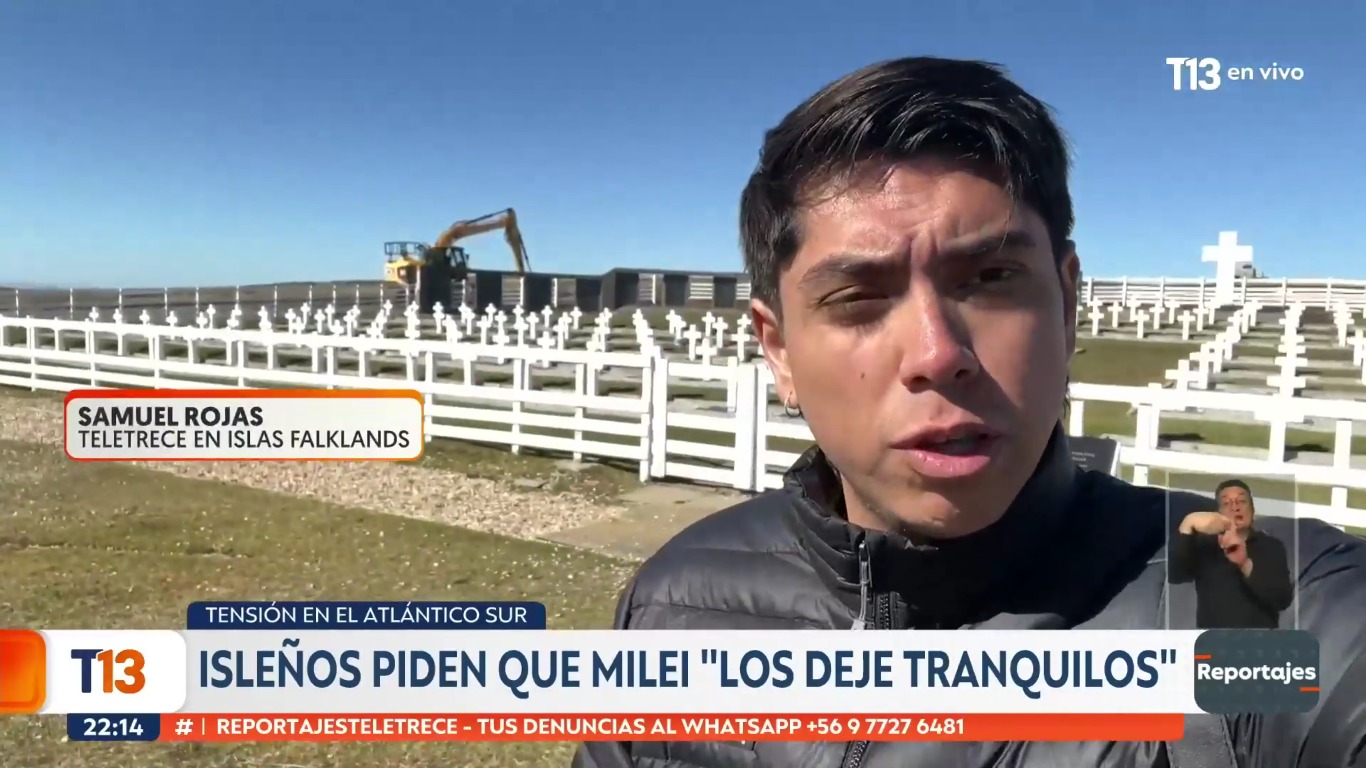
During a report broadcast by the Teletrece (T13) news channel in the Malvina Islands , the special correspondent documented the degrading actions carried out by members of the colonial enclave against the Argentine Cemetery in Darwin: the systematic removal of plaques, commemorative tributes and objects of devotion left by relatives of Argentine combatants, which are thrown outside the perimeter as waste material .
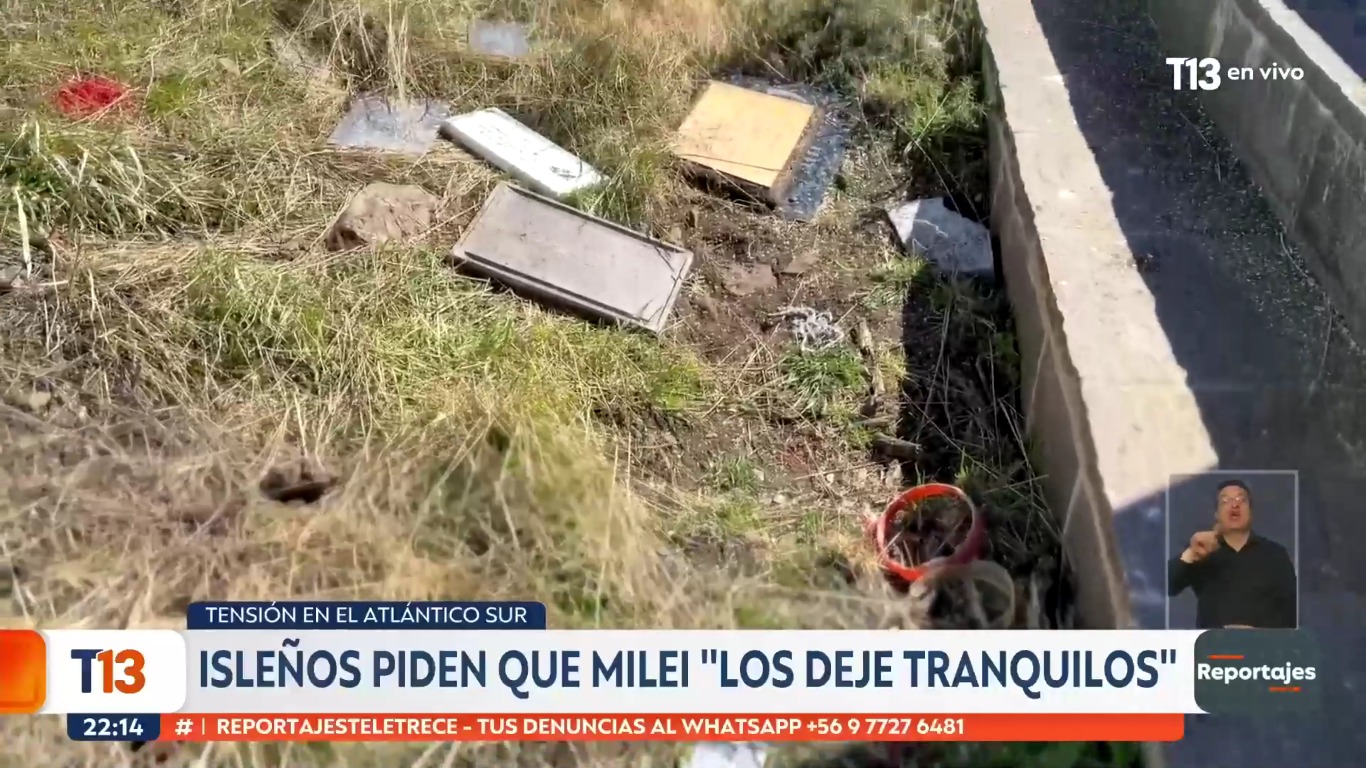
The video footage starkly revealed what lies behind the large cross in the cemetery. Far from the solemnity and humanitarian respect that the memory of the fallen demands, the footage exposed an improvised garbage dump in the grassy area outside, where commemorative plaques from Patagonian towns, family mementos, rosaries, and votive ribbons lay discarded.
The confession on air: censorship of the word “Malvinas”
T13 journalist Samuel Rojas , stationed next to the white fence where the graves lie, bluntly recounted the justification put forward by the island administration for such a desecration:
“Some of the plaques that some of the Argentine visitors probably bring are left behind the cross. Why? Because most of them have slogans related to the name Malvinas, something that is not accepted here; that is why they are thrown here, because that is considered an offense and a provocation here in the Malvinas.”
The close-up images revealed the extent of the vandalism against the memorials: a recently placed acrylic plaque by a radio station in Comodoro Rivadavia, bearing the inscription " The people of Comodoro Rivadavia to Our Heroes. 'The Malvinas Unite Us' - April 2026," was clearly visible among the weeds. It had been ripped from its original location and discarded in the mud. Next to it lay broken ribbons, elastic bracelets, and shattered ceramics.
The cynicism of the usurper: intolerance even towards the dead
The scene encapsulates the ideological root of the occupation in the South Atlantic . While British veterans and settlers declared to the same Teletrece microphones that President Javier Milei should "leave them alone" so that a Chilean ship could lower the cost of fruits and provisions brought from the mainland , in the hills of Darwin, the daily hostility toward the land where Argentine combatants rested was being concealed.
This is not partisan slogans or acts of vandalism by unknown individuals: it is a deliberate directive from the colony that prohibits families traveling thousands of kilometers to honor their loved ones from mourning and remembering their history. The mere mention of the archipelago's indisputable geographical name and the cartographic representation of the Argentine islands is intolerable to those who maintain an illegitimate usurpation supported by military force.
The outrage takes on a greater gravity in light of international humanitarian law and the mandates of the International Red Cross, which guarantee the integrity of military cemeteries and the dignified preservation of the memories that accompany those who fell in combat.
The images broadcast by the Chilean channel expose a reality that British diplomatic discourse in London and New York usually glosses over: that of a colony that does not tolerate Argentine sovereignty in the courts of the world, nor at the bottom of the sea, nor in the peat of Darwin, and that has not the slightest ethical decency when it comes to desecrating the memory of the soldiers who gave their lives for it.
Uncontrolled construction: heavy machinery operating right up to the edge of graves
The images broadcast by Chilean television not only exposed the deliberate disposal of plaques and mementos thrown into the grasslands; they also revealed a physical intervention on the perimeter of the property where the Argentine soldiers rest.
The panoramic camera footage shows a yellow backhoe positioned flush with the white fence behind the cenotaph. The machine's boom is extended over the exact boundary of the military cemetery, removing soil just meters from the main cross. At the same time, workers can be seen using shovels in the immediate surrounding area.

This soil manipulation—if carried out without supervision or prior notification to the commissions of relatives of those killed in the Malvinas War, or to humanitarian organizations—will only deepen the gravity of the outrage. The strip of land disturbed by heavy machinery borders directly on the open-air garbage dump where the colonial administration discards the censored offerings bearing the word “Malvinas.”
Tags
Other news about Malvinas
Fisheries enforcement: the colonial bureaucracy that guards the business of the sea in the South Atlantic
Standard Chartered digitizes banking in the British colony in the Malvina Islands
The Malvina Islanders plan to invest USD 390 million in a construction plan for 2026-2030


