The nuclear-powered aircraft carrier USS Nimitz (CVN-68) , the oldest and most iconic warship in the United States Navy, is currently underway, carrying out its last major mission before being retired from service. As part of the "Southern Seas 2026" deployment, the lead ship of its class is heading towards the Strait of Magellan . This presents a technical challenge for a 100,000-ton vessel, in a global context steeped in geopolitical and military symbolism.
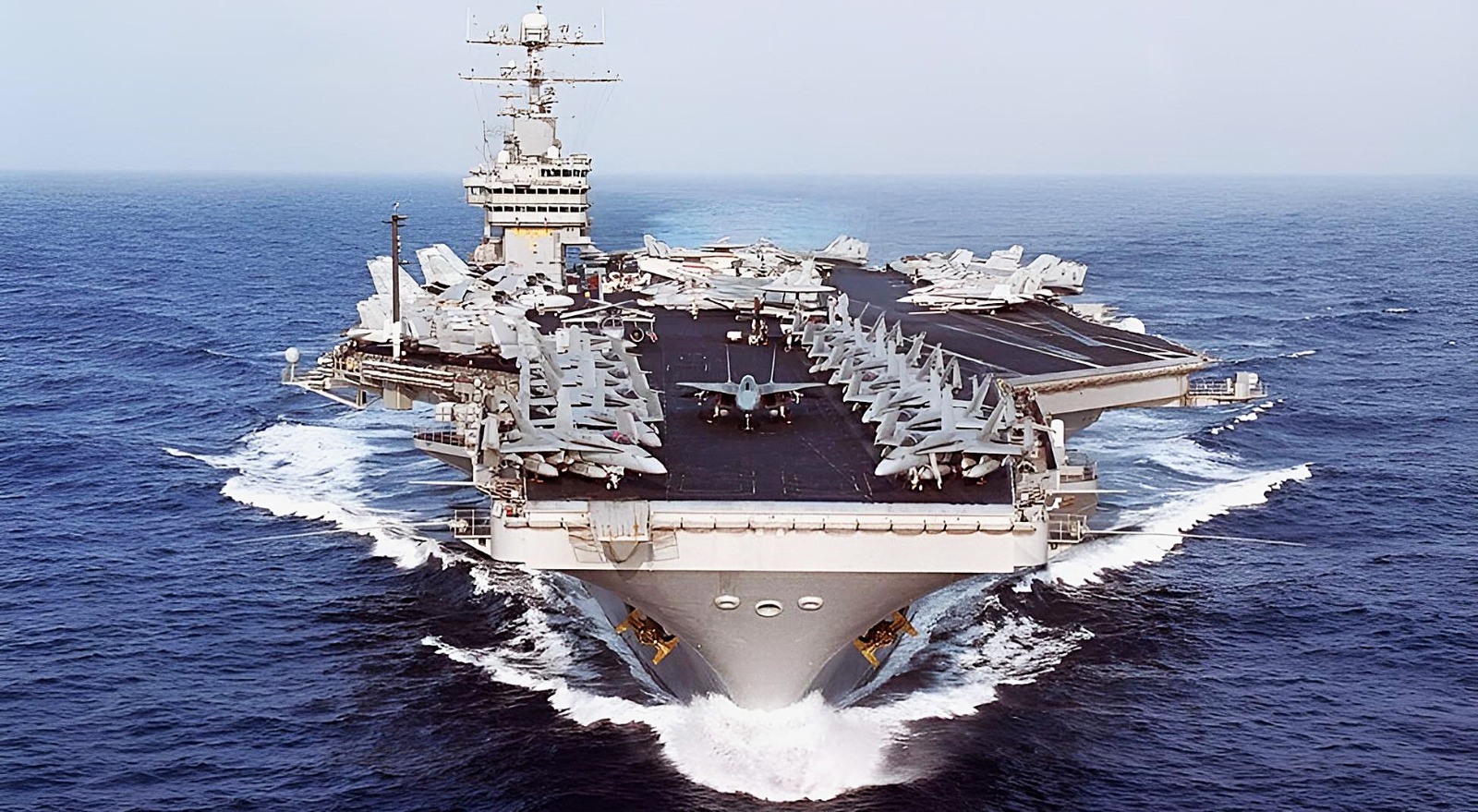
The arrival in Chilean waters is scheduled for this Friday, April 17 , with a planned stop in Valparaíso . After this engagement, the Nimitz will head south to navigate the narrows of the Strait that separates the South American continent from Tierra del Fuego.
This crossing is a highly significant event, both journalistically and strategically. While the USS George Washington performed a similar maneuver in 2024, seeing the Nimitz —the ship that gave its name to an entire era of aircraft carriers—once again sail the waters of Magellan before its retirement in 2027 marks the end of a cycle that began almost 40 years ago, when the same ship transited these southern waters in 1987.
Navigating through the Strait, instead of the Drake Passage, also responds to the need to strengthen interoperability with the Chilean Navy and guarantee a strong visual presence on a key route for trade and hemispheric security.
For our region, and specifically for Tierra del Fuego , the passage of this aircraft carrier escorted by the destroyer USS Gridley (DDG 101) is no small event. It places the focus of the major powers on the southern straits, an area of vital interest for Argentine sovereignty and the monitoring of natural resources.
After leaving the Strait, the Nimitz will continue its journey through Argentina, Brazil and Uruguay, before its final destination in Norfolk , where it will be decommissioned after half a century of service.
The Chronology of Aircraft Carriers in the Bi-Oceanic Passage
The transit of an aircraft carrier through the Strait of Magellan is a highly precise technical operation. Because the Nimitz -class carriers (333 meters long and nuclear-powered) exceed the dimensions of the Panama Canal , circumnavigation around its southern end has become a mandatory rite of passage for their transoceanic deployments.
1. USS Nimitz (CVN-68): The pioneer of its class first crossed the Strait in 1987 , during its relocation from the East Coast to the Pacific. In 2026 , it made history by retracing that route on its final farewell voyage, closing a four-decade chapter in Southern Ocean waters.
2. USS Carl Vinson (CVN-70): It passed through the waters of Tierra del Fuego in May 1983 , during its maiden voyage "around the world." It was one of the first nuclear-powered superpowers to demonstrate that the Strait was a viable and strategic route for the rapid deployment of forces to the Indian and Pacific Oceans.
3. USS Ronald Reagan (CVN-76): In June 2004 , this ship made a memorable transit. It was a massive deployment that included exercises with the Chilean Navy and marked the presence of the most modern naval technology of the early 21st century in the Patagonian channels.
4. USS George Washington (CVN-73): It is one of the most frequent visitors. It crossed in 2008 for its deployment to Japan, repeated the feat in 2015 during Operation Southern Seas, and more recently in June 2024. Its voyages are characterized by the performance of complex interoperability exercises with the navies of the Southern Cone.
For the U.S. Navy, the Strait is not just a logistical route; it is a unique training ground . Navigating its channels, surrounded by 1,500-meter mountains and unpredictable currents, tests the skill of elite sailors. But above all, it underscores the enduring importance of the southern tip of South America on the global stage: a passage that, from Magellan to the present day, remains the key to the world's two great oceans.
Tags
Other news about Tierra del fuego
The Municipality of Río Grande put a roof on the building of the Malvinas Dignity Tent
The Investigating Commission was formed regarding the British radar installed in Tierra del Fuego
The turbines and components for the new power plant in Ushuaia are already en route from China.