Un informe del CFI: "Consorcio Público-Privado: Modernización de la Gestión y Administración de Tierra del Fuego"; fechado en Noviembre de 2023 y desarrollado por el organismo a pedido del gobierno de Tierra del Fuego para privatizar escalonadamente el puerto de Ushuaia; constituye una advertencia técnica demoledora sobre el estado de la infraestructura portuaria. El documento de 162 páginas, no trata solamente de un análisis externo; fue un trabajo coordinado entre el CFI y la propia gestión provincial, recibido y avalado por el viceministro jefe de gabinete, Jorge Canals, lo que otorga al Ejecutivo el conocimiento pleno de la situación desde fines de 2023.
En su página 8 (16 del PDF), el informe es taxativo sobre la gravedad de la situación: calificada por la propia Dirección Provincial de Puertos de Tierra del Fuego, de “COLAPSO TOTAL”. Describiendo un estado de abandono que hoy, en retrospectiva, adquiere una connotación delictiva.
En dos párrafos se advierte lo que sabía y oculta hasta este momento el propio gobierno:
En un estudio reciente de la Dirección Provincial de Puertos se afirma: “Se observa un estado crítico en la infraestructura del muelle comercial, particularmente en los sistemas de defensas y en la carpeta de rodamiento. La falta de inversión sostenida ha llevado a una situación de saturación logística que pone en riesgo la seguridad de las operaciones navales y de la vida humana."
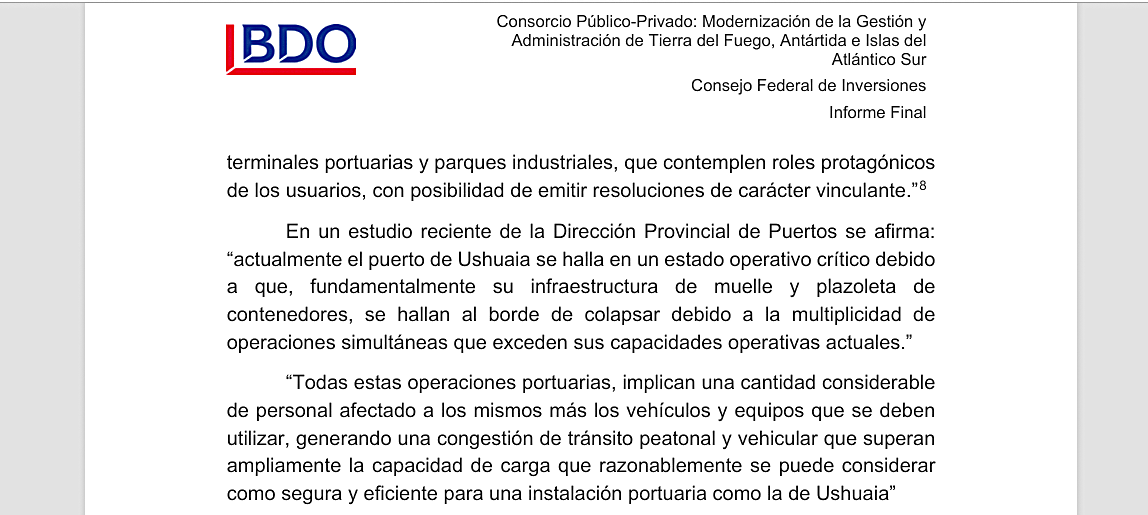
“…por un sin número de inconvenientes de comunicación, iluminación, accesos, estacionamientos, circulación, seguridad, competencias, etc., que conforman una situación en conjunto que se puede definir como de COLAPSO OPERATIVO.”
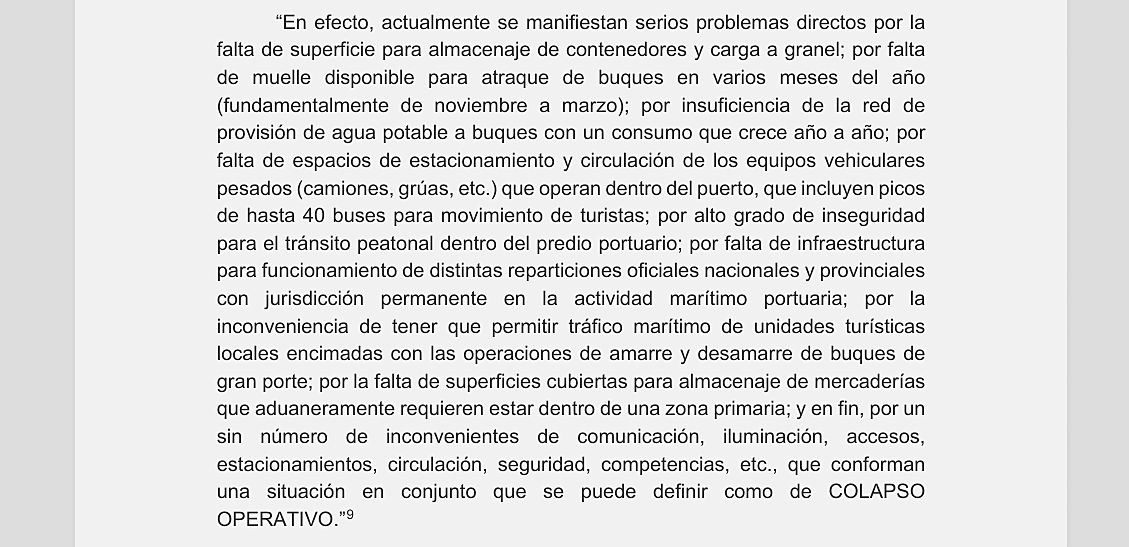
Estos dos párrafos, son la prueba de que el Gobierno tenía el "certificado de defunción" del muelle en su escritorio mientras públicamente mantenía y mantiene un discurso de normalidad, ante un flujo anual que superan las 600 recaladas de buques por año.
Las maniobras del vaciamiento
Lo que vuelve este escenario criminal, es la secuencia de acciones que siguieron al informe. En lugar de declarar la emergencia y volcar los recursos necesarios para salvar el puerto, el Gobernador Melella y sus funcionarios ejecutaron una maniobra de vaciamiento.
En agosto de 2025, a sabiendas del "estado crítico" documentado por el CFI, el Gobierno impulsó una la ley para confiscar los caudales del superávit portuario y transferirlos a la caja general de la OSEF. Fue una decisión política de retiro de fondos, en un salvataje fallido. Se intentó deliberadamente desfinanciar el mantenimiento de la principal infraestructura estratégica de la provincia marítima, para cubrir los sucesivos fracasos de su gestión política. Esta acción fue la que le brindó, además; más fundamentos a la Administración Libertaria para que a través la Agencia Nacional de Puertos (ANPyN), desembarcaran con una la intervención federal a las 23:58 del 20 de enero de este año.
El Manual DROMI-CAVALLO de los 90
Todo indica, que no estamos ante un caso de "ineficiencia", sino ante una posible figura de incumplimiento de los deberes de funcionario público. Si el Estado recibe un informe técnico que advierte -por información suministrada por la DPP- de un peligro inminente, y meses después, intenta quitarle los recursos destinados a mitigar ese peligro; la responsabilidad penal es ineludible.
El proyecto de Sociedad Anónima (S.A.) enviado por Melella a la legislatura bajo la Ley 19.550 —aunque hoy rechazado— es la culminación de este plan. Son las cartas tiradas arriba de la mesa de una jugada que les salió mal cuando Milei les arrebató el Puerto.
Igualmente han quedado al descubierto. El gobierno fueguino están aplicando contra la propia Tierra del Fuego, el manual utilizado en los años 90 por Domingo Cavallo y Roberto Dromi, para privatizar YPF, Aerolíneas Argentinas, Entel y Gas del Estado: vaciar el ente público, deteriorarlo, llevarlo a su mal funcionamiento y proponer una estructura privada para "salvarlo".
Tags
Otras noticias de Tierra del fuego
La Legislatura fueguina sepultó definitivamente la Reforma Constitucional de Melella
Excombatientes de Ushuaia llaman al repudio nacional contra la propuesta de "soberanía compartida"
Reforma Constitucional a presión: Melella acelera la ruptura institucional de Tierra del Fuego