Por la Redacción de Agenda Malvinas
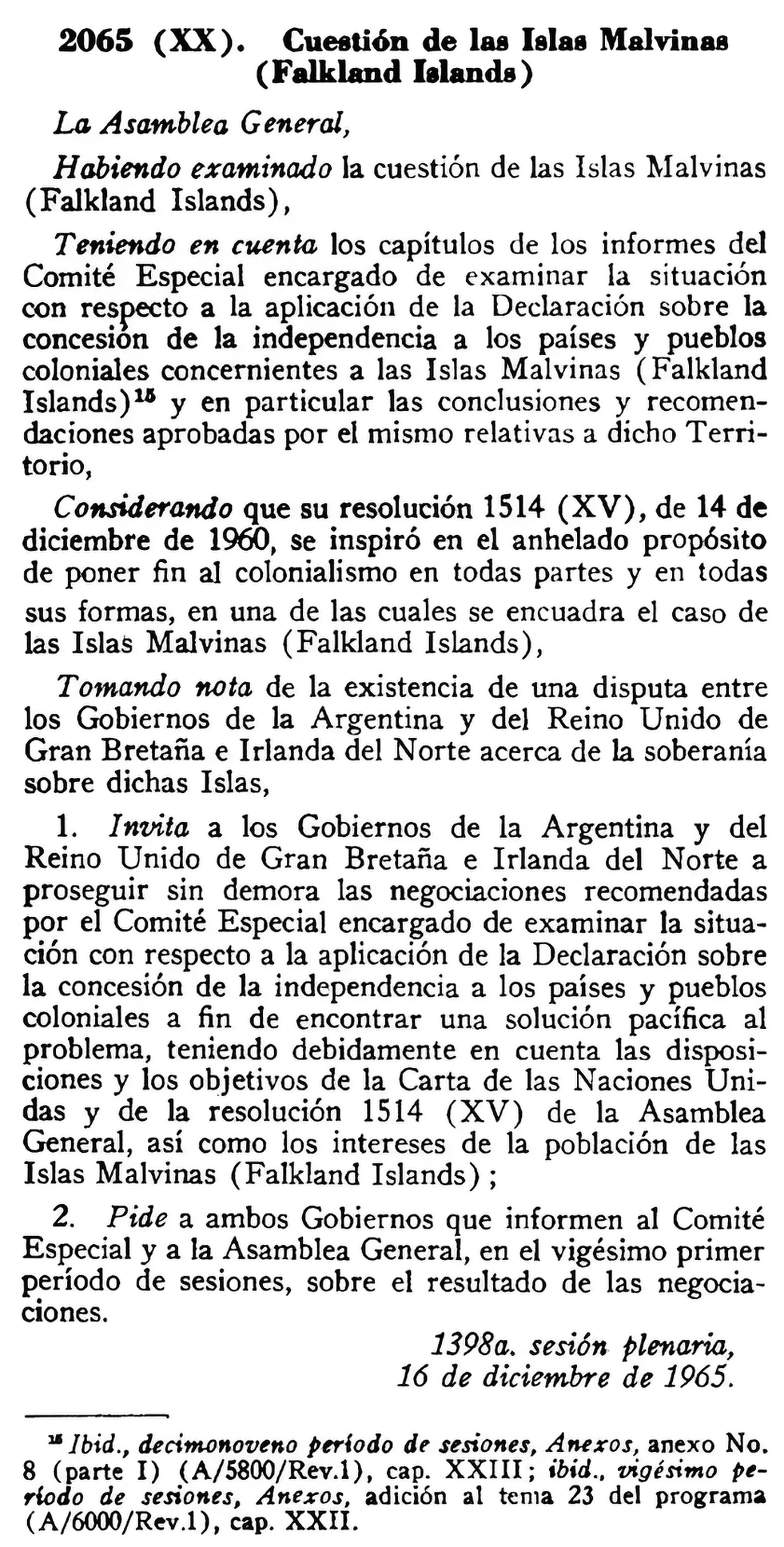
El 16 de diciembre de 1965, la diplomacia argentina lograba su mayor hito en los estrados internacionales: la aprobación de la Resolución 2065 (XX) de la Asamblea General de las Naciones Unidas. Hoy, a seis décadas de aquel documento que desnudó el anacronismo colonial británico en el Atlántico Sur, la realidad nos impone un análisis crudo: mientras Argentina sostiene su reclamo con el Derecho Internacional en la mano, Londres ha transformado la "disputa de soberanía" en un enclave militar y extractivista que desafía la integridad territorial de la provincia de Tierra del Fuego, Antártida e Islas del Atlántico Sur y de la Nación entera.
El corazón de la 2065: Intereses vs. Deseos
La importancia histórica de la 2065 radica en que la ONU reconoció que las Malvinas no son un caso de autodeterminación, sino de integridad territorial quebrantada. Al establecer que las negociaciones deben tener en cuenta los "intereses" de los habitantes y no sus "deseos", la comunidad internacional validó la tesis del Embajador José María Ruda: no hay un "pueblo" sojuzgado, sino una población trasplantada por una potencia ocupante.
Sin embargo, tras el conflicto de 1982, el Reino Unido ha utilizado la sangre derramada para intentar enterrar la 2065, y desde 1989 la democracia argentina se lo permite. Londres pretende imponer el "derecho a la autodeterminación" de una comunidad cuya economía depende hoy de la licencia ilegal de nuestros recursos ictícolas y petroleros, y de la proyección hacia la Antártida.
Seis décadas de dilación y una "Fortaleza Malvinas"
Desde Agenda Malvinas hemos advertido de forma sistemática que el tiempo no corre a favor de la diplomacia pasiva. En estos últimos siete años, hemos documentado cómo el Reino Unido ha pasado de la "actitud evasiva" mencionada por Cancillería en los años 70, a una ofensiva estratégica sin precedentes:
1. Militarización: La base de Mount Pleasant/Monte Agradable, no es solo un puesto defensivo; es la mayor infraestructura militar de la OTAN en el Atlántico Sur, con capacidad de proyección hacia el continente y el sector antártico.
2. Saqueo Ictícola: La venta de licencias de pesca por parte del gobierno colonial —que Argentina solo denuncia de forma intermitente— constituye una violación flagrante a la Resolución 31/49, que insta a las partes a no introducir modificaciones unilaterales.
3. Hidrocarburos: El avance del proyecto "Sea Lion" es el golpe de gracia a la retórica de la "buena voluntad". La extracción de petróleo en aguas en disputa es el símbolo final del colonialismo corporativo.
El peligro del "nuevo enfoque" y la desmalvinización
El relato oficial de Cancillería destaca las etapas de negociación, incluyendo el Memorándum de 1968 y el fallido condominio de 1974. No obstante, observamos con preocupación los ciclos de "revinculación" que, bajo el paraguas del diálogo, terminan facilitando la logística británica.
La Resolución 2065 exige negociar la soberanía. Cualquier acuerdo que priorice la "cooperación económica" o las "medidas prácticas de comunicación" sin poner la soberanía como eje irrenunciable, no es diplomacia: es una concesión que consolida el estatus de la ocupación. Como hemos denunciado desde este portal, los intentos de reeditar pactos de "cooperación" en materia de pesca o vuelos, sin que Londres acepte sentarse a la mesa de la 2065, solo sirven para aliviar el costo de mantenimiento de la colonia británica.
Conclusión: Hacia una política de Estado federal y activa
A 60 años de aquel hito de Ruda y la diplomacia nacional, la Resolución 2065 no debe ser leída como una efeméride nostálgica, sino como un instrumento de lucha jurídica vigente.
La cuestión Malvinas no puede ser gestionada solo desde los escritorios de Buenos Aires con comunicados de rigor cada 10 de junio o 16 de diciembre. Requiere una vigilancia constante sobre el terreno, un control estricto de nuestros espacios marítimos y una sanción efectiva a las empresas que operan ilegalmente en nuestro territorio.
La soberanía no se negocia; se ejerce. Y mientras Gran Bretaña siga ignorando el mandato de las Naciones Unidas, la Argentina debe profundizar la presión internacional y el costo de la ocupación colonial. La 2065 nos dio la razón hace 60 años; la historia y la geografía nos la dan todos los días. La pregunta para la dirigencia argentina sigue siendo la misma: ¿Estamos dispuestos a hacer cumplir el mandato de 1965 o seguiremos administrando la espera mientras el Reino Unido consolida su presencia y gobierna de facto las Islas Malvinas y vastos espacios del Atlántico Sur, en pleno siglo XXI?
Este artículo forma parte del compromiso de Agenda Malvinas por la defensa de la soberanía nacional y la visibilización de la problemática del Atlántico Sur.
Tags
Otras noticias de Nacionales
La Nación explica cómo la “Ley de Soberanía” de Milei avanza sobre la libertad de prensa y los consensos democráticos
Milei gestiona una bilateral con Donald Trump para poner la disputa por Malvinas sobre la mesa
La consultora Vox Populi detectó un apoyo mayoritario a las medidas de Milei sobre Malvinas, pero con fuerte sospecha electoral