
Agenda Malvinas, tuvo acceso al Falkland Islands Newsletter, una publicación del Falkland Islands Association, que da cuenta, que el 27 de abril de 1997, fue el día cero en que Desire Petroleum comenzó a perforar del primer pozo, en la búsqueda de petróleo en aguas de las Malvinas. La decisión de unilateral ilegalidad, se produjo luego de la “Declaración Conjunta sobre Cooperación en Actividades Costa Afuera en el Atlántico Sudoccidental”, alcanzado en Nueva York de 27 de septiembre de 1995, entre el canciller Guido Di Tella y el secretario del Foreign Office británico, Malcolm Rifkind.
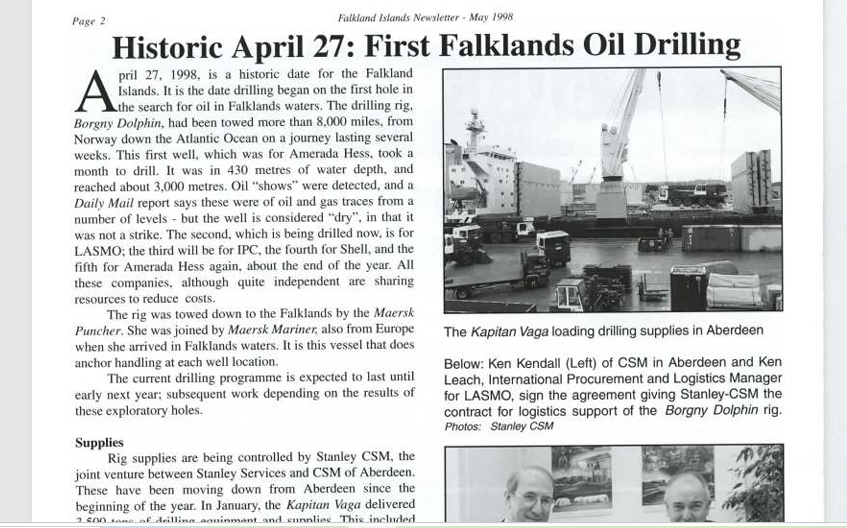
Esta primera perforación se hizo a través de la plataforma Borgny Dolphin, la cual fue remolcada desde Noruega hasta las Islas a través del Océano Atlántico, en un viaje de 13.500 kilómetros y que duró varias semanas.
“El futuro de las Islas Malvinas es brillante. Una plataforma petrolera comenzó a perforar el primer pozo exploratorio en aguas del norte de las Malvinas a finales de abril”; relata con sumo entusiasmo la publicación colonial.
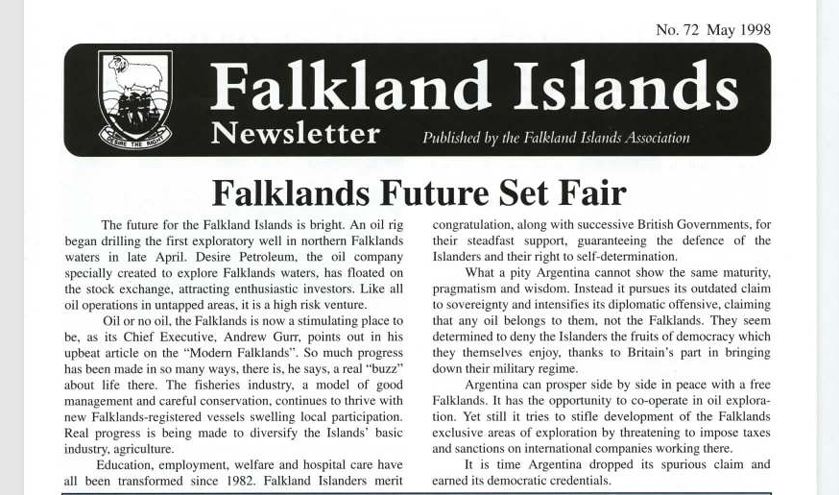
Concretamente, ese primer pozo, fue requerido por la empresa estadounidense Amerada Hess, quien integraba el primero consorcio del área PL001 hoy en manos de Navitas Petroleum y Eco Atlantic Gas & Oil. “Estaba a 430 metros de profundidad de agua (marina) y alcanzó unos 3.000 metros. Se detectaron "muestras" de petróleo, y un informe del Daily Mail dice que eran trazas de petróleo y gas de varios niveles, pero el pozo se considera "seco", en el sentido de que no fue un hallazgo comercial. El segundo, que se está perforando ahora -indica la publicación de esa fecha-, es para LASMO; el tercero será para IPC, el cuarto para Shell y el quinto para Amerada Hess de nuevo, hacia finales de año. Todas estas empresas, aunque bastante independientes, están compartiendo recursos para reducir costes”.
El boletín informativo abunda en datos y precisiones; indica que la plataforma fue remolcada hasta las Malvinas por el Maersk Puncher. Donde se le unió el Maersk Mariner, también procedente de Europa. Un segundo buque que tuvo como tarea, realizar el manejo de anclas en cada ubicación de pozo.
La cadena de suministros
Los suministros para esa perforación fueron movilizados por Stanley CSM, la empresa conjunta entre Stanley Services y CSM de Aberdeen. “Estos se han estado enviando desde Aberdeen (Reino Unido) desde principios de año (1997). En enero (1997), el Kapitan Vaga entregó 3.500 toneladas de equipo de perforación y suministros. Esto incluía dos grúas, carretillas elevadoras, camiones y remolques, equipos de cabeza de pozo y 80 contenedores que se utilizarán para llevar suministros a la plataforma. En marzo, el Aleksandrov descargó consumibles como productos químicos y lodo de perforación. Otro buque, el Pantelis K, entregó más suministros recientemente”; enumera el boletín de la colonia británica.
Las protestas argentinas que no llegaron a ningún lado
En la misma publicación se hace referencia, que “Argentina envió una nota de protesta a la Embajada británica” (en Buenos Aires) amenazando en “imponer impuestos y medidas punitivas a las empresas que cooperen con las Malvinas a pesar del Acuerdo Petrolero de 1995”. Indicando, además; que el gobierno Carlos Menem, estaba preparando enviar “al Congreso una legislación (…) para aplicar estas amenazas”. Según refieren, Menem pretendía modificar la ley de hidrocarburos de la época, “para imponer una regalía del 3% sobre el petróleo de las Malvinas y sanciones punitivas si no pagan, incluyendo la prohibición de realizar actividades en Argentina”.
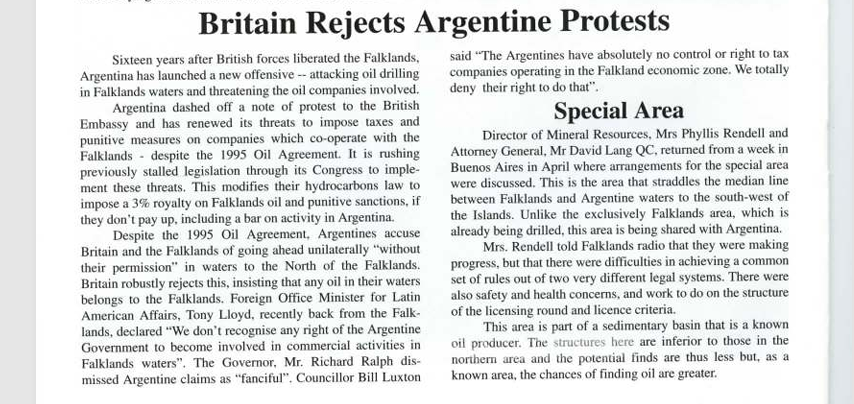
“A pesar del Acuerdo Petrolero de 1995, los argentinos acusan a Gran Bretaña y a las Malvinas de avanzar unilateralmente "sin su permiso" en aguas al norte de las Malvinas. Gran Bretaña rechaza esto con firmeza, insistiendo en que cualquier petróleo en sus aguas pertenece a las Malvinas. El Ministro de Asuntos Exteriores para América Latina, Tony Lloyd, recién regresado de las Malvinas, declaró: "No reconocemos ningún derecho del Gobierno argentino a involucrarse en actividades comerciales en aguas de las Malvinas". El Gobernador, el Sr. Richard Ralph, desestimó las reclamaciones argentinas calificándolas de "fantasiosas". El concejal Bill Luxton dijo: "Los argentinos no tienen absolutamente ningún control ni derecho a gravar a las empresas que operan en la zona económica de las Malvinas. Negamos totalmente su derecho a hacer eso"; expresan en su publicación.
La adjudicación de Gran Bretaña de la caída de la dictadura militar
En 1998, el cinismo británico ya corría de manera paralela al robo que comenzaron a proyectar en 1995. Por un lado, violando las resoluciones de las Naciones Unidas y por el otro, contando con la complacencia del gobierno menemista. En el Newsletter, N.º 72, Mayo de 1998, lo expresaron con claridad meridiana: “Qué lástima que Argentina no pueda mostrar la misma madurez, pragmatismo y sabiduría. En su lugar, persigue su desfasada reclamación de soberanía e intensifica su ofensiva diplomática, afirmando que el petróleo les pertenece a ellos y no a las Malvinas. Parecen decididos a negar a los isleños los frutos de la democracia que ellos mismos disfrutan, gracias al papel de Gran Bretaña en la caída de su régimen militar.
Argentina puede prosperar lado a lado en paz con unas Malvinas libres. Tiene la oportunidad de cooperar en la exploración petrolera. Sin embargo, sigue intentando sofocar el desarrollo de las áreas exclusivas de exploración de las Malvinas amenazando con imponer impuestos y sanciones a las empresas internacionales que trabajan allí.
Es hora de que Argentina abandone su espuria reclamación y se gane sus credenciales democráticas.”.
Tags
Otras noticias de Atlántico Sur
Londres proyecta un cable submarino entre Uruguay y Malvinas con una empresa contratista de YPF
Con un tercio de sus bodegas cargadas, el petrolero británico dejó Tierra del Fuego y navega rumbo a Texas
La colonia británica suspende la temporada de pesca por la baja histórica del calamar


