
La onda expansiva generada por el Museo de Malvinas de Bariloche, que elevó las bajas británicas durante la guerra de 1982 a 1.200 caídos, ha encontrado su sustento en los archivos y las memorias de la cúpula militar argentina de la época.
A una semana del estallido de la controversia, la prensa argentina entre ellos, el diario La Capital de La Plata; recoge los testimonios ya conocidos de oficiales de alto rango que argumentaron luego de 1982, que el secreto de guerra hasta el 2072 no es más que la cortina de humo para ocultar el verdadero "desastre" naval sufrido en el Atlántico Sur.
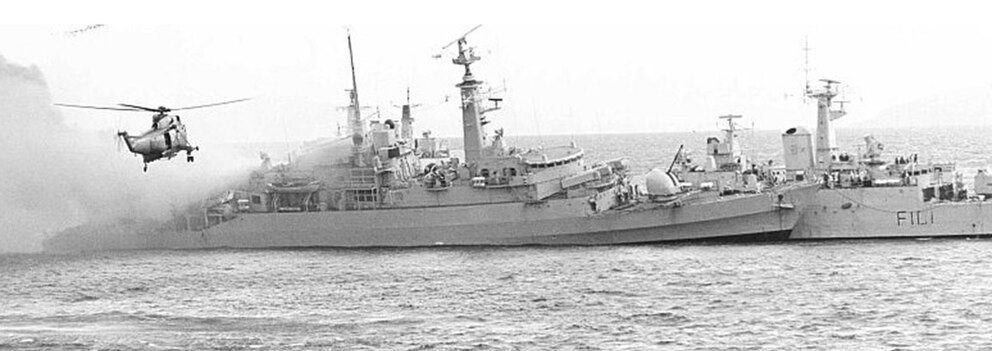
La ventana al pasado abierta por el museo patagónico ha permitido que testimonios nada recientes de actores clave de la Fuerza Aérea y del Ejército, retomen la tesis de que la cifra oficial de 255 muertos es una burda manipulación.
El argumento cuantitativo: 1.090 muertos y las fosas comunes
El principal exponente de la contranarrativa había sido el ya fallecido Brigadier (RE) Ernesto Crespo, quien, durante el conflicto, fuera jefe de la Fuerza Aérea Sur. Crespo afirmaba que las víctimas fatales británicas estimadas por el alto mando argentino ascendían a “1090 y no los 255 reconocidos”. El objetivo, según el Brigadier, era “ocultar el desastre sufrido en una guerra que parecía ganada desde la partida”.
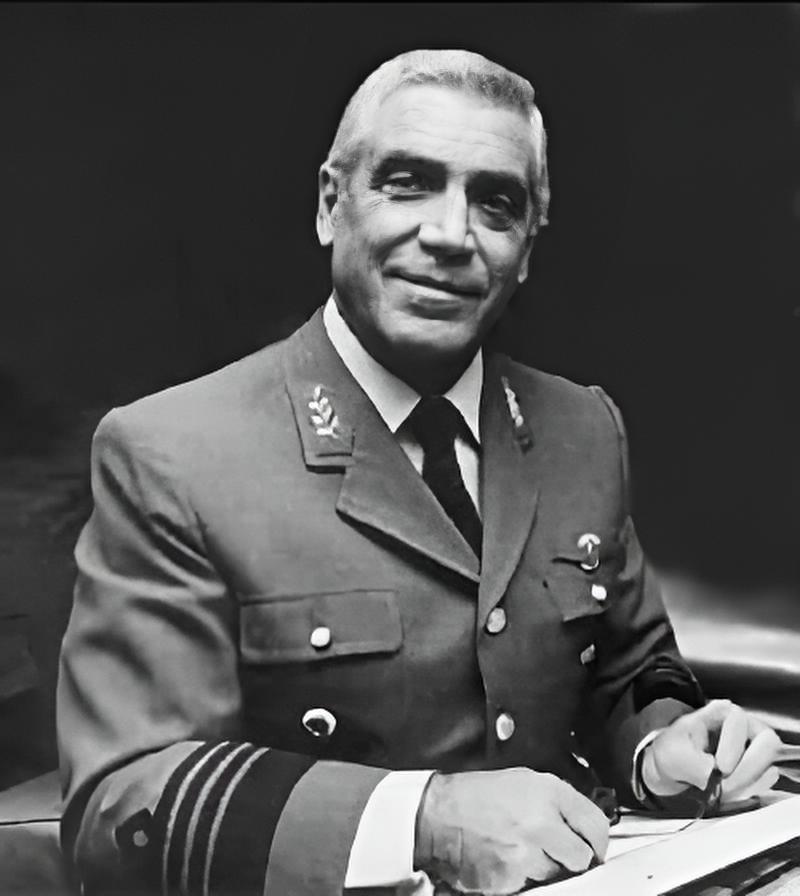
La versión argentina sobre el alto número de bajas se corrobora con testimonios directos del campo de batalla. El Comodoro Arnaldo Favre, ex alférez que combatió en Darwin, declaró haber sido testigo presencial del apuro británico por sepultar a sus caídos tras el combate terrestre más duro de la guerra:
Comodoro Favre:
“Yo vi ocho fosas comunes, donde fueron enterrados los soldados británicos. Eran fosas de gran tamaño, en la que podían entrar diez cuerpos, por lo menos”.
Según Favre, durante los tres días posteriores a la rendición en Pradera del Ganso, los prisioneros argentinos fueron retenidos sin poder salir de los galpones del aeropuerto de Darwin, “tiempo durante el cual ellos enterraron a sus muertos”, lo que impediría una constatación precisa de las bajas terrestres.
El Secreto Naval: ¿Ataque al Hermes disfrazado de Sheffield?
La mayor sospecha argentina se centra en el ocultamiento de daños a los dos portaaviones, el HMS Hermes y el HMS Invincible, centros vitales de la Task Force británica.

El 4 de mayo de 1982, dos horas después del lanzamiento de los misiles Exocet por parte de la Aviación Naval, Gran Bretaña reconoció inusualmente rápido el hundimiento del Destructor HMS Sheffield. La Fuerza Aérea Argentina sostiene que este reconocimiento acelerado fue una maniobra de distracción.
La duda se fundamenta en detalles técnicos y meteorológicos. La tripulación argentina que lanzó los misiles avistó una “gran silueta” en el radar. Al respecto, militares argentinos deducen que el Exocet no impactó al destructor, sino al portaaviones Hermes. Esta tesis se refuerza por una foto que los británicos dejaron trascender del supuesto ataque, mostrando un mar en “calma chicha” o “planchado”, cuando los registros argentinos y testimonios de la guerra señalan que el mar el 4 de mayo era “de grandes olas, tormentoso”, en contraste con la calma del 1 de mayo.
“La deducción de los militares argentinos es que el Exocet ‘tocó’ al portaaviones Hermes, esa era la gran silueta que vieron los pilotos navales.”
El enigma del Invincible y el último Exocet
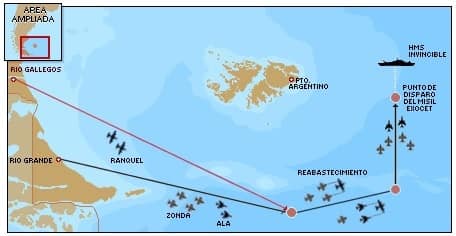
El segundo misterio naval es el ataque al portaaviones HMS Invincible, el 30 de mayo. El Comodoro Rubén Moro, en su libro “La Guerra Inaudita”, relata la compleja misión planificada para burlar la defensa británica, donde cuatro aviones Skyhawk escoltaron al último misil Exocet.
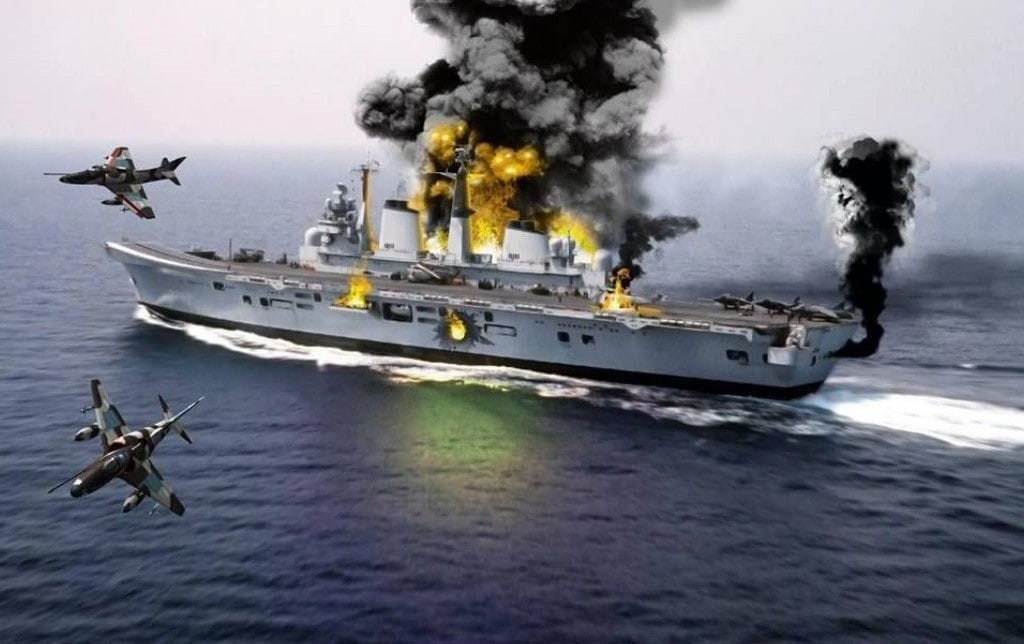
Los pilotos de la Fuerza Aérea, tras colocar bombas en la cubierta y ver la columna de humo, “afirman que vieron que el Exocet se había introducido en los compartimentos centrales”. La respuesta oficial británica fue que los pilotos confundieron el blanco con el buque logístico Atlantic Conveyor, ya hundido el 25 de mayo.
Sin embargo, el Vicealmirante Benito Rotolo, piloto naval, recoge otro indicio incriminatorio: un pesquero argentino detenido tras la guerra fue enviado al área donde el Invincible se habría estado reparando. Los hombres del pesquero “vieron cuando el otro portaaviones, el Hermes, se apareaba al Invincible para hacer reparaciones”.
Brigadier Crespo:
“Por lo que sí sé que se le pegó al Hermes. Uno y otro estaban ‘tocados’. Pero el Hermes estaba en peores condiciones.”
La desconfianza se solidifica con la actitud del Almirante Sandy Woodward, jefe de la Task Force, quien omitió cualquier mención al Invincible en sus partes semanales luego del ataque sufrido. Pese a que el libro de bitácora del navío diga “atacado por Super Etendard, no damage (sin daños)”, el Invincible regresó al puerto inglés tres meses después de la guerra y entró de noche, un hecho inexplicable para un buque que afirmaba estar en perfectas condiciones de combate.
El debate del Museo de Bariloche ha logrado su cometido: utilizar el secreto de guerra británico, que vence recién en 2072, como la prueba irrefutable de que la verdad sobre las bajas y el daño real a la flota pirata en 1982 sigue siendo un campo de batalla abierto en la prensa y la diplomacia.
Tags
Otras noticias de Nacionales
EE. UU. admitió preocupación por la «Ley Malvinas» y explicó porque disolver el Comité de Descolonización
VOLANTAZO Y TRAMPA PARLAMENTARIA: Diputados restituyó la Ley de Tierras para salvar el DNU 70/23
TIERRA DEL FUEGO. LA PRINCIPAL DAMNIFICADA DE LA PESCA ILEGAL EN MALVINAS Y LA POLÍTICA NACIONAL


