
La búsqueda y explotación de hidrocarburos en las aguas que rodean las Islas Malvinas representan una de las dimensiones más complejas y estratégicas de la disputa por la soberanía. El proyecto Sea Lion o León Marino, ubicado al norte del archipiélago, es el estandarte de esta actividad, liderado por empresas británicas y, más recientemente, por un actor israelí, con una historia de alianzas y desinversiones que reflejan tanto el potencial del yacimiento como los desafíos que implica su desarrollo en un territorio usurpado y en disputa.
En este caso, la concesionaria original es Rockhopper Exploration PLC, una compañía de exploración y producción de petróleo y gas con sede en el Reino Unido, fundada en 2004 con el objetivo específico de explorar hidrocarburos en las Malvinas. Y su momento cumbre llegó en 2010, cuando anunció el primer descubrimiento significativo de petróleo en las Islas Malvinas, fue en León Marino en el Norte de la Cuenca Malvinas, a 218 kilómetros del archipiélago.
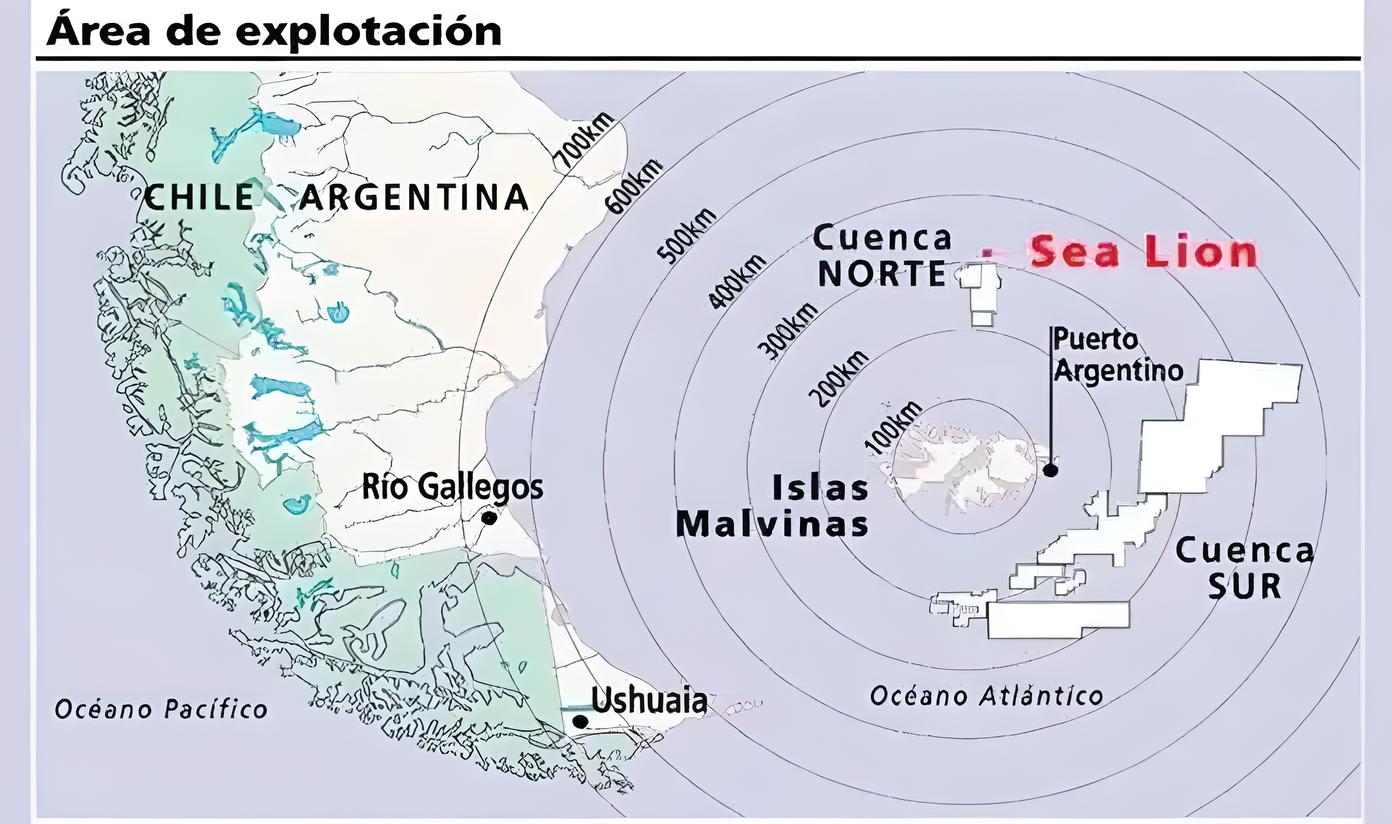
Tras el descubrimiento, Rockhopper, como operador inicial, llevó a cabo una exitosa campaña de evaluación y perforación para determinar la magnitud del recurso. La empresa, si bien poseía el conocimiento técnico y la licencia original, necesitaba un socio con mayor capacidad financiera y experiencia en el desarrollo de proyectos de gran escala.
La Entrada de Premier Oil
En julio de 2012, Rockhopper anunció un acuerdo con Premier Oil plc, por el cual esta adquiría el 60% de los intereses de Rockhopper en las licencias del Norte de la Cuenca Malvinas, incluido el proyecto León Marino.
Premier Oil, una empresa británica más grande y establecida, se convirtió en el operador del proyecto. Esta alianza buscaba impulsar la fase de desarrollo del yacimiento, con Premier asumiendo una parte significativa de los costos de capital y proporcionando financiamiento. En ese momento, las proyecciones iniciales estimaban una inversión de 1560 millones de dólares y el "primer petróleo" para 2020.
La colaboración entre Rockhopper (con un 40% de participación) y Premier Oil (con el 60% y la operación) marcó una fase intensa de ingeniería y planificación para el desarrollo del yacimiento. Sin embargo, los desafíos técnicos, la complejidad logística de la ubicación remota, y las fluctuaciones del precio del petróleo, sumados a la denuncia internacional contra petroleras y empresas impulsada por el gobierno de Cristina Fernández de Kirchner, hicieron que el proyecto enfrentara demoras y reevaluaciones de costos.
La Formación de Harbour Energy
El panorama cambió drásticamente en marzo de 2021, cuando Premier Oil se fusionó con Chrysaor Holdings Limited para formar Harbour Energy PLC. Así, Harbour Energy emergió como la productora de petróleo y gas independiente más grande del Reino Unido. Sin embargo, poco después de su creación, en septiembre de 2021, anunció una reevaluación estratégica de su cartera de activos.
La nueva dirección de la compañía determinó que el proyecto León Marino no encajaba en su estrategia a largo plazo, que iba a centrarse en oportunidades de menor riesgo, más cercanas a infraestructuras existentes y con una presencia de producción ya establecida. En consecuencia, Harbour Energy comunicó su intención de desinvertir sus intereses en el proyecto León Marino y otras licencias en las Islas Malvinas. Esta decisión representó un revés significativo para el proyecto en ese momento, ya que un socio con la envergadura de Harbour se retiraba.
La Entrada de Navitas Petroleum: El Nuevo Impulso para León Marino
Tras la decisión de Harbour Energy, Rockhopper, buscó un nuevo socio. Esto llevó a negociaciones con Navitas Petroleum LP, una empresa israelí de exploración y producción.
En diciembre de 2021, Rockhopper, Harbour y Navitas firmaron un acuerdo detallado para la salida ordenada de Harbour y la entrada de Navitas. En abril de 2022, Navitas confirmó la adquisición del 65% de los intereses de Harbour en las licencias de las Malvinas, asumiendo el rol de operador del proyecto Sea Lion.
La transacción se completó en septiembre de 2022, tras recibir todas las aprobaciones regulatorias necesarias del ilegítimo Gobierno de las Islas Malvinas y el Reino Unido.
Navitas Petroleum, con experiencia en grandes desarrollos offshore y capacidad de movilización de capital, ha asumido la responsabilidad de llevar el proyecto hacia la Decisión Final de Inversión. Desde su entrada, Navitas y Rockhopper han trabajado en la optimización del plan de desarrollo de León Marino, buscando reducir los costos iniciales y los costos de vida del yacimiento, al tiempo que buscan asegurar el financiamiento necesario. Se ha planteado un enfoque por fases, utilizando una unidad flotante de producción, almacenamiento y descarga (FPSO) reutilizada inicialmente, con planes para una FPSO más grande en fases posteriores.
Estado Actual y Perspectivas Futuras
A mediados de este 2025, el proyecto León Marino sigue avanzando hacia su etapa final, aunque ha enfrentado algunas demoras en el financiamiento. Navitas ha asegurado su vinculación con bancos internacionales para la financiación del proyecto, que se estima en alrededor de 1.400 millones de dólares para la primera fase.
Los informes técnicos más recientes, como los de Netherland Sewell & Associates (NSAI), continúan confirmando recursos significativos en el yacimiento, con estimaciones que superan los 300 millones de barriles de petróleo recuperables solo en las fases iniciales.
El objetivo es alcanzar una producción máxima de alrededor de 55.000 barriles de petróleo por día en las primeras fases, con potencial para aumentar a 80.000 b/d con una FPSO más grande en el futuro. La infraestructura de soporte, como el nuevo puerto multimodal proyectado en la bahía de Puerto Argentino, es crucial para la logística de este tipo de operaciones remotas, consolidando la capacidad británica de proyectar poder y explotar recursos en la región.
La Usurpación de Recursos Argentinos
Para Argentina, la actividad de empresas como Rockhopper, Premier Oil, Harbour Energy y Navitas en las aguas de Malvinas, bajo la legislación británica, constituye una usurpación flagrante de sus recursos naturales. La explotación de estos yacimientos petrolíferos no solo representa una pérdida económica directa para el país en miles de millones de dólares, sino que también socava su soberanía y control sobre su plataforma continental.
Así, aunque la protesta argentina es constante y se basa en el derecho internacional y las resoluciones de la ONU que instan a negociar la soberanía y no a explotar unilateralmente los recursos en disputa; el ardid político, administrativo y legal que utiliza el gobierno de Tierra del Fuego, con su gobernador Gustavo Melella a la cabeza; para permitir que una empresa como Harbour Energy que entre 2021 y 2022 fue accionista mayoritaria de la ilegítima exploración del yacimiento León Marino; no tiene precedentes. Más aún, cuando ello genera una ruptura inequívoca -por su contradicción-, del reclamo argentino sobre la soberanía argentina de las Islas Malvinas, el Atlántico Sudoccidental y los territorios marítimos correspondientes de la Nación Suramericana.
Tags
Otras noticias de Tierra del fuego
Detectan vehículos dentro de la estancia "El Relincho", junto al predio del radar de Leolabs
La Justicia federal aceptó al Municipio de Río Grande en la causa contra las petroleras
La Jueza Federal de Río Grande ordenó a Rockhopper y Navitas paralizar las obras en Malvinas


