
En una jornada electoral que cristalizó las prioridades del enclave británico en las Islas Malvinas, la población implantada votó por una nueva Asamblea Legislativa, cuyo mandato parece estar inequívocamente dirigido a una gestión financiera prudente y, sobre todo, a la maximización de la explotación de recursos, con el petróleo como el eje central de su futuro económico. Lejos de cualquier autocrítica sobre su estatus ilegítimo, el proceso democrático interno se redujo a un ejercicio de administración colonial.
El Petróleo: eje de la victoria
El resultado de las elecciones, celebradas este jueves y viernes 10 y 11 de diciembre; no solo arrojó un cambio significativo en la composición de la Asamblea —con solo dos miembros reelectos— sino que también marcó la victoria del sector más enfocado en el desarrollo de la industria de hidrocarburos.
El candidato más votado, Darwin Lewis Clifton (844 votos), es un empresario con historial en el sector pesquero y cofundador del emprendimiento Desire Petroleum. Su triunfo es un claro indicador del sentir mayoritario: dejar atrás los temores ambientales y sociales para abrazar la promesa de prosperidad económica que supone la explotación del yacimiento Sea Lion.
Clifton, al igual que el reelecto Roger Spink, ha señalado que una mejor administración financiera y el avance en el desarrollo petrolero, serán sus prioridades.
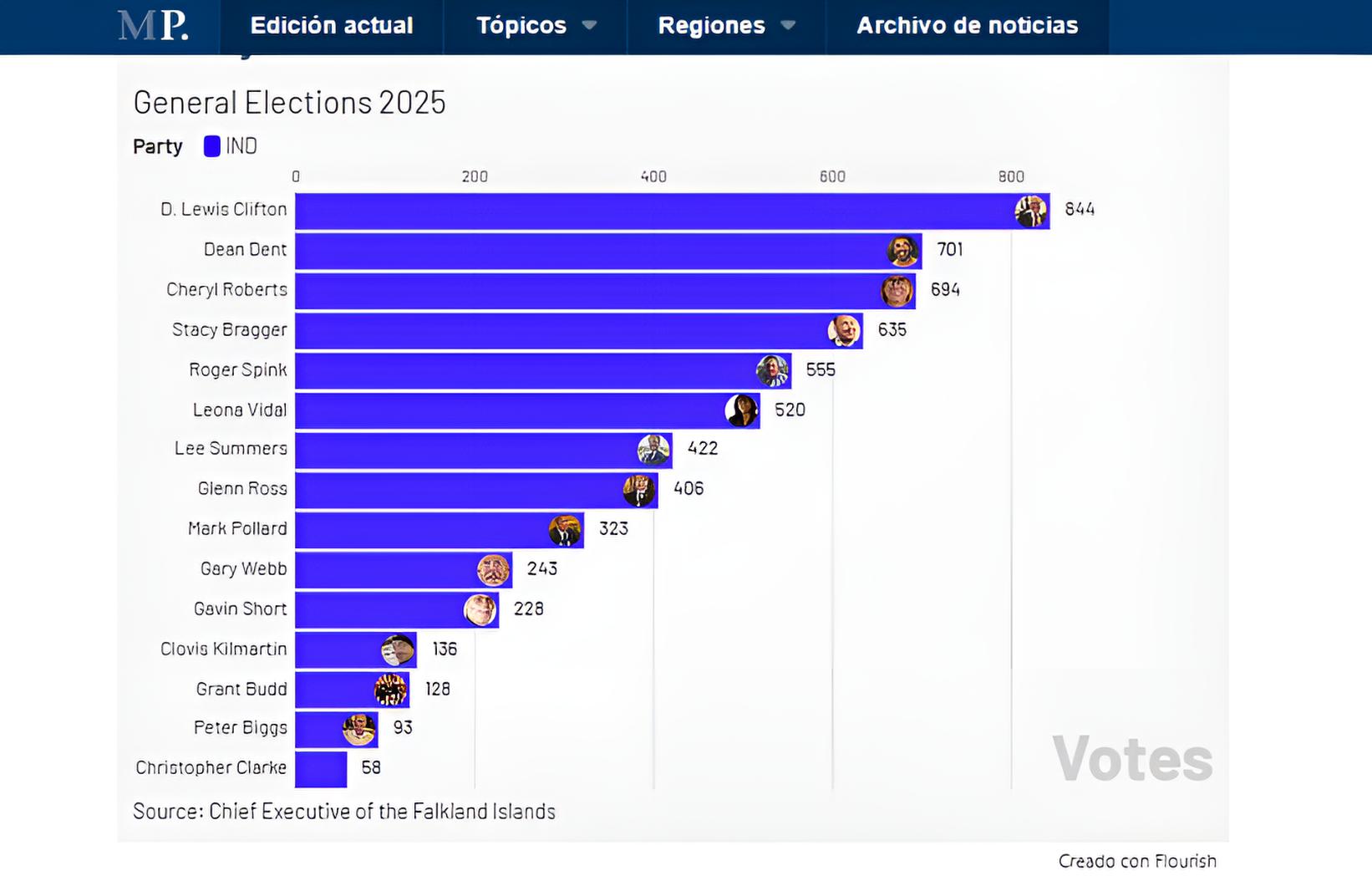
La insatisfacción popular con la anterior legislatura fue evidente, especialmente en la circunscripción de Puerto Argentino, donde solo Roger Spink logró retener su escaño. La dura derrota de figuras como Mark Pollard, un miembro con ocho años en la banca, subraya la voluntad de cambio expresada por un electorado que exigió una gestión más transparente y económicamente rigurosa. El nuevo grupo de legisladores se anticipa, según MercoPress, como "más celoso de los dineros y erogaciones públicos".
El Manifiesto Empresarial
La presión de la Cámara de Comercio y el llamado a la prudencia fiscal por parte del ex Secretario de Finanzas, Derek Howett, actuaron como el marco ideológico de estos comicios. La Cámara había exigido a los candidatos comprender que el éxito empresarial nacerá del sector privado, explícitamente de los hidrocarburos y la acuicultura.
La elección del nuevo cuerpo legislativo, que incluye a figuras como Cheryl Roberts (co-propietaria de una pesquera) y Dean Dent (quien prioriza el monitoreo de proyectos de inversión y la reducción de gastos innecesarios), es la respuesta directa a este manifiesto corporativo. La preocupación por el elevado costo de proyectos vitales, como el reemplazo de la terminal portuaria y la planta eléctrica, resuena en la plataforma de los electos, quienes buscan garantizar la estabilidad financiera necesaria para mantener el nivel de vida y servicios de la comunidad implantada.
El anuncio electoral de Rockhopper y Navitas
En un movimiento que no pasó inadvertido, el anuncio de la Decisión Final de Inversión (FID) para el proyecto petrolero Sea Lion por parte de Navitas Petroleum y Rockhopper Exploration se hizo público justamente horas antes del proceso electoral.
Este anuncio, que augura un futuro "libre de preocupaciones económicas" para los isleños y una nueva fuente de ingresos para Gran Bretaña, sirvió como el espaldarazo final para el voto pro-petrolero. La novedad no solo alimenta el sueño de la autosuficiencia económica que eliminaría el argumento sobre el costo excesivo de la base militar de Mount Pleasant para los contribuyentes británicos, sino que también refuerza el papel de las islas como "puente hacia la Antártida" y un "pie de Europa y la OTAN" en el Atlántico Sur.
La votación en Malvinas se ha confirmado, así, como un mecanismo interno para afinar la gobernanza del usufructo ilegal de recursos argentinos.
Fuentes:
Tags
Otras noticias de Malvinas
Mientras permita que Uruguay abastezca a Malvinas, Argentina no tiene autoridad moral para impedírselo a Chile
Se acabó la “autodeterminación”: Gran Bretaña toma el control de las licencias petroleras en Malvinas
LOS KELPERS QUIEREN PROHIBIR EL INGRESO DE ARGENTINOS A MALVINAS


