
Con la presentación oficial de los primeros seis cazabombarderos F-16 Fighting Falcon adquiridos a Dinamarca, La Fuerza Aérea Argentina (FAA) marca el inicio de una nueva etapa luego de la guerra de Malvinas. Representando la recuperación de la capacidad supersónica del país, tras de la desprogramación de los Mirage en 2015.
Los seis aviones protagonizaron ayer sábado, un impresionante sobrevuelo sobre la Ciudad Autónoma de Buenos Aires, en una jornada que culminó con un acto encabezado por el presidente Javier Milei en la plataforma del aeropuerto de la Base Aérea de Las Higueras.
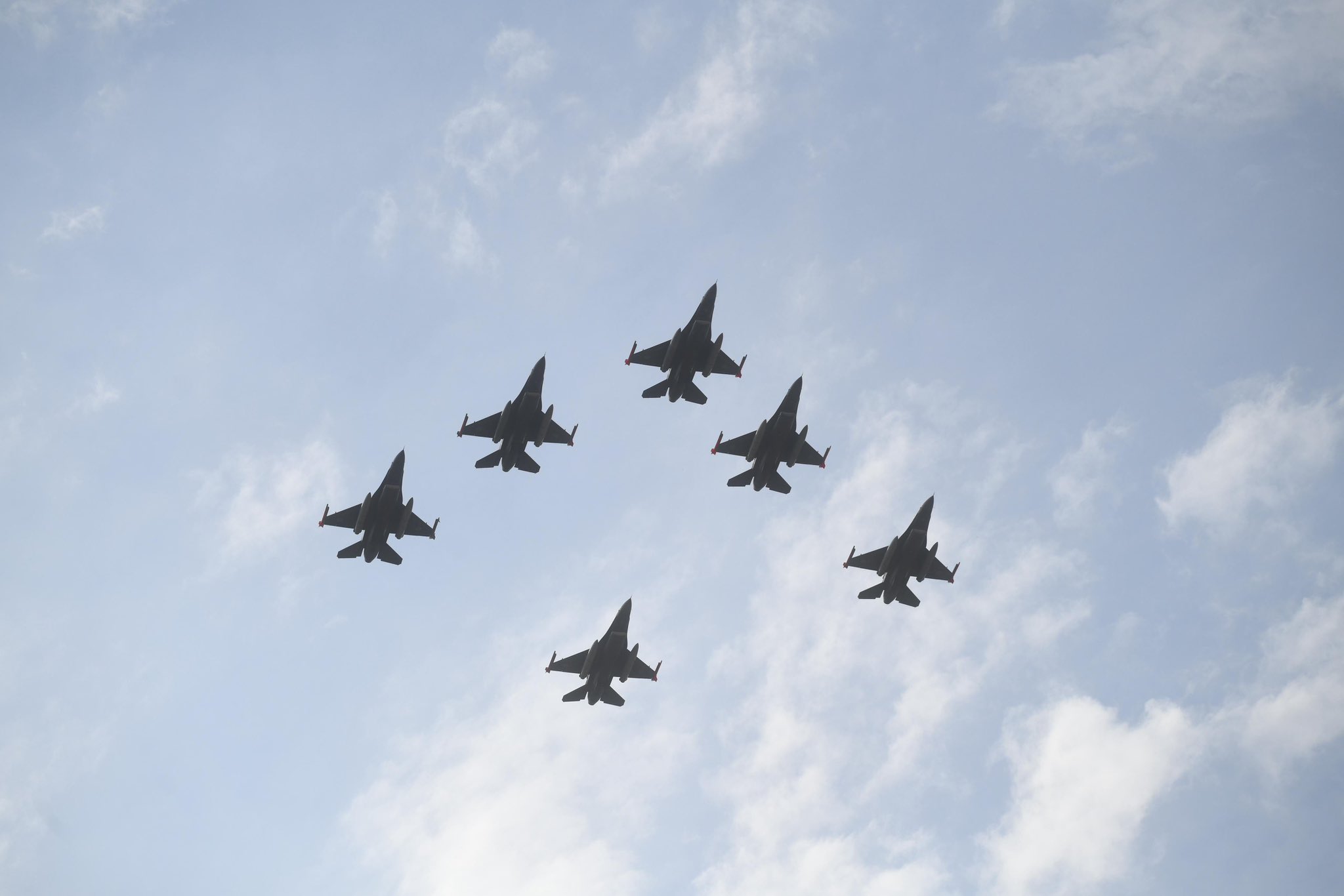
Los F-16 —cuatro biplazas y dos monoplazas—llegaron a la Argentina el viernes, tras una compleja travesía transatlántica asistida por aviones de reabastecimiento de la Fuerza Aérea de Estados Unidos.
Por la mañana, los cazas ejecutaron un vuelo rasante a unos 600 metros de altura sobre la Ciudad Autónoma de Buenos Aires, recorriendo hitos como la Costanera Norte, la Plaza de Mayo, la Casa Rosada y el Obelisco, ante la mirada de cientos de ciudadanos.
Horas después, nuevamente en Las Higueras, (Lindera a la ciudad de Río Cuarto, Córdoba), se realizó la ceremonia formal. El presidente Milei destacó la inversión como crucial para "robustecer sustancialmente nuestra fuerza aérea" y calificó a los F-16 como "los nuevos custodios del espacio aéreo argentino".
Los F-16 ya surcan nuestros cielos, inaugurando un día histórico para la República Argentina y nuestra defensa nacional.
— Casa Rosada (@CasaRosada) December 6, 2025
Que su vuelo, ya bajo nuestra Bandera, proteja y honre por siempre a nuestra Nación. pic.twitter.com/ZMLCORVWzK
El evento sirvió también como despedida al ministro de Defensa saliente, Luis Petri, a quien el mandatario elogió por "haber materializado esta compra", considerando a los aviones como su "mayor testamento".
La compra total comprende 24 unidades F-16 A/B Block 15 MLU modernizadas, incluyendo armamento, repuestos y simuladores, con un costo total estimado en $650 millones de dólares y un plan de entrega escalonada hasta 2028.
Interrogantes persistentes
A pesar de la celebración oficial, la adquisición no escapa a severas críticas. El debate central no se enfoca en la necesidad de modernizar la FAA, sino en la capacidad operativa real y las limitaciones estratégicas de los aviones en el contexto del Atlántico Sur y la ocupación británica de las Islas Malvinas.
Las críticas al “veto Estratégico” británico
El exministro de Defensa, Agustín Rossi, fue crítico a la adquisición de los F-16, aludiendo a la dependencia geopolítica de la operación. "No es soberanía haber comprado un avión cuya capacidad disuasoria no se puede utilizar en el Atlántico Sur", señaló, sugiriendo que la compra, avalada por Estados Unidos, lleva implícito un acuerdo con el Reino Unido para no amenazar sus intereses en la zona de conflicto.
Rossi contrapuso que la opción que su gestión promovía, los aviones JF-17 chinos, sí habrían significado una "acción disuasoria muy fuerte".
Otro punto de profundo cuestionamiento es la sustentabilidad económica del proyecto. Voces como la del teniente general (R) Juan Martín Paleo, han alertado sobre la escasez presupuestaria crónica de las Fuerzas Armadas.
La fastuosa llegada de los F-16 es un logro innegable en términos materiales y un paso necesario para restablecer la defensa aérea de la Argentina. Sin embargo, en el contexto de la reafirmación soberana sobre Malvinas, la operación se presenta con un marco de empleo estratégico profundamente dudoso.
La combinación de estrechez presupuestaria y las presuntas concesiones diplomáticas que garantizan la "tranquilidad" británica en el Atlántico Sur, lleva a que este símbolo de potencia corra el riesgo de convertirse -como lo grafica el General Paleo-, en una "arma castrada".
El verdadero desafío para el gobierno no es el show aéreo, sino demostrar su capacidad para sostener el presupuesto que permita un entrenamiento intensivo de los pilotos y, fundamentalmente, la definición de un rol estratégico que reafirme los espacios soberanos sin la sombra de la limitación externa.
Tags
Otras noticias de Nacionales
EE. UU. admitió preocupación por la «Ley Malvinas» y explicó porque disolver el Comité de Descolonización
VOLANTAZO Y TRAMPA PARLAMENTARIA: Diputados restituyó la Ley de Tierras para salvar el DNU 70/23
TIERRA DEL FUEGO. LA PRINCIPAL DAMNIFICADA DE LA PESCA ILEGAL EN MALVINAS Y LA POLÍTICA NACIONAL


