
La soberanía argentina sobre las Islas Malvinas no es un mero anhelo patriótico, sino un derecho histórico sustentado por evidencias documentales irrefutables que la ocupación colonial británica de 1833 no puede ocultar.
En este marco, un hallazgo de profunda trascendencia emerge como un faro que ilumina la verdad histórica.
Se trata de la solicitud presentada el 30 de enero de 1813 por el capitán inglés Henry Jones ante las autoridades de Buenos Aires. Este oficial, al mando del bergantín “El Rastrero”, requirió formalmente autorización para cazar lobos marinos en las costas del archipiélago.
Ese acto administrativo, registrado en la documentación oficial de las entonces Provincias Unidas del Río de la Plata, constituye una prueba temprana y contundente del reconocimiento explícito, por parte de una embarcación extranjera, de la autoridad ejercida por el naciente Estado argentino sobre sus territorios insulares.
Apenas tres años después de la Revolución de Mayo, el gobierno patrio ya administraba, regulaba y controlaba actividades económicas en ese espacio marítimo, consolidando mecanismos formales de jurisdicción.
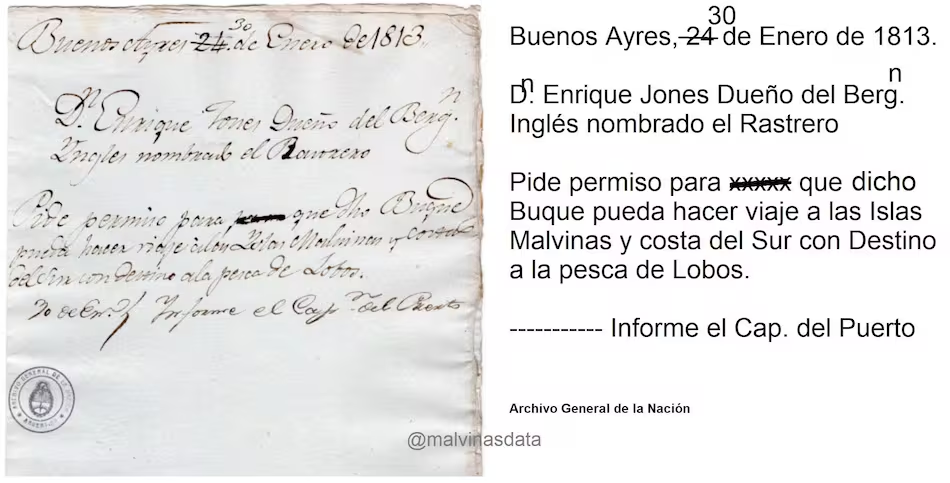
El pedido, dirigido al Director de la Aduana, Enrique Torres, refleja la dinámica normal de un Estado que ejerce su soberanía de manera plena y pacífica. En un contexto donde la caza de lobos era una actividad económica vital, la exigencia de un permiso refuerza la noción de un territorio bajo administración efectiva de Buenos Aires.
El episodio desmonta categóricamente el relato británico que intenta justificar su acto de fuerza de 1833 invocando una supuesta soberanía previa. Es que la historia demuestra lo contrario: tras ser expulsados por España de su precario asentamiento en Puerto Egmont en 1774, los británicos abandonaron el archipiélago por 55 años sin protestar ni una vez por los múltiples actos de soberanía que Argentina ejecutó desde 1810. La falta de reacción entonces y el gesto de sumisión del capitán Jones en 1813 hablan por sí solos.
El documento revelado no es una simple curiosidad archivística. Es la piedra angular que, junto a la continuidad jurisdiccional desde el período virreinal español -evidenciada por órdenes como la del Ministro Gálvez en 1777, ejecutada por el Virrey del Río de la Plata-, estructura el derecho incuestionable de la Argentina. Demuestra que las Malvinas fueron, son y serán parte integral de nuestro territorio, administradas legítimamente desde el corazón de sus instituciones.
Ante la comunidad internacional, este hallazgo refuerza con solidez la posición argentina: no se trata de una disputa, sino de la restitución de un territorio arrebatado por un colonialismo anacrónico que la propia historia desmiente.
Tags
Otras noticias de Nacionales
TIERRA DEL FUEGO. LA PRINCIPAL DAMNIFICADA DE LA PESCA ILEGAL EN MALVINAS Y LA POLÍTICA NACIONAL
Scioli celebró en Mar del Plata a un crucero que promociona a Malvinas como territorio británico
Milei blinda bajo "secreto militar" una nueva compra armamentística


