
La disputa por la soberanía en el Atlántico Sur y el control de los recursos estratégicos de la plataforma continental argentina ha alcanzado un nuevo contrapunto de tensión geopolítica, pero solo discursivo. Tras la asamblea de la Organización de los Estados Americanos (OEA), el Comité Especial de Descolonización de las Naciones Unidas (ONU) aprobó por consenso en Nueva York una nueva resolución que urge al Reino Unido a reanudar las negociaciones bilaterales con la Argentina para resolver de manera pacífica la anacrónica situación colonial.
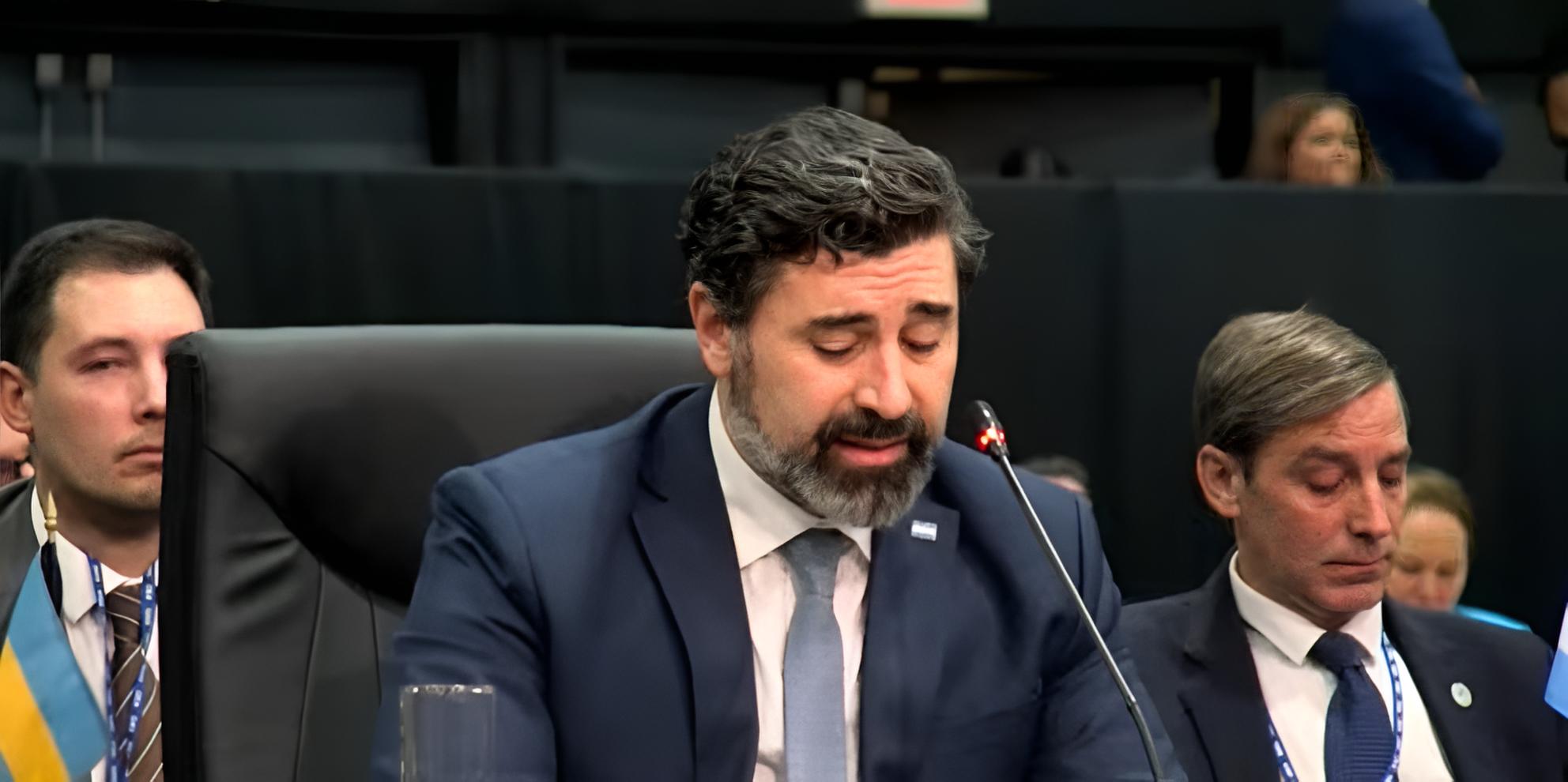
El subsecretario de Política Exterior, Juan Manuel Navarro, denunció en la OEA, el otorgamiento de "licencias apócrifas" en el Atlántico Sur.
El debut de la diplomacia libertaria en estos foros multilaterales estuvo signado por una fuerte retórica de rechazo al saqueo de hidrocarburos. Ante la ONU, el canciller Pablo Quirno reafirmó los derechos imprescriptibles de la Nación y denunció las actividades unilaterales en la región. Pocas horas antes, en la asamblea de la OEA, el subsecretario de Política Exterior, Juan Manuel Navarro, había ejecutado idéntico libreto al apuntar contra el otorgamiento de "licencias apócrifas" en el Atlántico Sur. Sin embargo, la crudeza de los datos técnicos recopilados por Agenda Malvinas demuestra que, mientras el Palacio San Martín acumula declaraciones en los papeles, el consorcio anglo-israelí Navitas-Rockhopper ya ejecuta la infraestructura física del despojo en el territorio usurpado, con fechas de producción fijadas a nivel de almanaque.
Los discursos no detienen las obras de Navitas en Puerto Argentino
El avance del proyecto Sea Lion (León Marino) en la ilegal Cuenca Malvinas Norte desarrollada por Gran Bretaña ha dejado de ser una proyección de escritorio. En una extensa entrevista concedida a la señal televisiva colonial Falkland Islands Television (FITV), el propio CEO de Navitas Reino Unido, Ian Ramsay, desnudó con precisión quirúrgica el cronograma logístico, civil y operativo que el holding está ejecutando en la costa de Puerto Argentino.
Las declaraciones de Ramsay, acompañadas por planos de ingeniería civil y la exhibición de maquinaria pesada operando en el terreno, confirmaron la consolidación de un complejo industrial clandestino diseñado para el asalto petrolero
Frente a este despliegue fáctico en las islas, el Palacio San Martín buscó blindarse diplomáticamente en Nueva York y Washington. En la ONU, la resolución que urge a la negociación bilateral fue impulsada por un bloque regional integrado por Chile, Cuba, Nicaragua, Venezuela y Bolivia, y aprobada por consenso por todos los miembros del comité. Durante su discurso, el canciller Pablo Quirno fue categórico al desarmar el argumento británico de la autodeterminación: “No existe un pueblo colonizado titular de ese derecho. Existe una población británica implantada por la potencia ocupante luego de la expulsión de las autoridades y de los legítimos pobladores argentinos”, sentenció, acompañado en el foro por la secretaria de Malvinas, Paola Di Chiario, el representante argentino Francisco Tropepi, y peticionarios como Paula Vernet.
Quirno denunció además los "actos unilaterales" del Reino Unido, señalando la presencia militar desproporcionada de 1.200 efectivos destacados en las islas (el 40% de la población local) y apuntó enérgicamente contra el desarrollo de Sea Lion: “Ante la gravedad de esos anuncios, el Presidente de la Nación, Javier Milei, me instruyó a expresar el más enérgico rechazo de la República Argentina”.
Horas antes, en la OEA, la declaración leída por Perú cosechó el respaldo unánime del continente, destacándose la intervención de Brasil al condenar de forma tajante la militarización y la exploración ilegal de hidrocarburos. Sin embargo, el foro continental también expuso los límites reales del reclamo: Estados Unidos intervino para ratificar su histórica neutralidad, declarando explícitamente: “Reconocemos que el Reino Unido está ejerciendo de facto la administración de estas islas”, mientras bloques caribeños introdujeron matices en favor de los deseos de los isleños.
El laberinto ideológico de la Casa Rosada
La encrucijada de la diplomacia argentina radica en la insalvable contradicción entre la gacetilla de prensa y la política económica real de la Casa Rosada. La empresa que lidera el proceso de explotación offshore es Navitas Petroleum, un holding de capitales israelíes y británicos. Israel y Estados Unidos constituyen el núcleo de aliados fundamentales del presidente Javier Milei, quien públicamente se ha autodefinido como el "presidente más sionista del mundo".
¿Cómo ejecutará el Gobierno nacional acciones penales, comerciales y financieras efectivas contra los holdings y bancos de Tel Aviv (como Noked Capital o el Banco Leumi) que controlan la ingeniería económica de Rockhopper y Navitas? ¿Cómo confrontará la Cancillería al ocupante británico cuando, en paralelo, se negocia con entusiasmo la adhesión de la Argentina al Tratado Transpacífico (CPTPP) custodiado por Londres, y se busca desesperadamente atraer capitales británicos para la megaminería y la energía continental bajo el amparo del RIGI?
Las resoluciones de la OEA y el Comité de Descolonización de la ONU son herramientas valiosas del derecho internacional, pero el dinero del saqueo globalizado no se detiene con discursos de ocasión. Mientras la diplomacia argentina gesticula firmeza en los atriles internacionales y devalúa la letra constitucional en sus gacetillas domésticas, el consorcio anglo-israelí ya cementa sus rampas portuarias clandestinas, contrata sus vuelos logísticos y pone en marcha los relojes para liquidar el patrimonio energético de las futuras generaciones de argentinos bajo el amparo de la base militar británica.
Tags
Otras noticias de Internacionales
Por el petróleo en Malvinas el Tribunal del Mar convocó a audiencias para el 10 y 11 de noviembre
Estados Unidos busca demoler el Comité de Descolonización y Argentina guarda silencio
Londres dice que acatará al Tribunal del Mar con relación a Sea Lion


