
La presencia en el muelle comercial del puerto de Ushuaia del buque tanque de petróleo crudo VS PROMISE generó sorpresa e inquietud en el arco político y social de Tierra del Fuego. El buque, una mole de acero de 228,6 metros de eslora, 32,57 metros de manga y una capacidad de porte bruto que ronda las 70.000 a 73.600 toneladas (DWT), ostenta en su popa y en los registros internacionales de navegación la bandera del Reino Unido (Registro de la Isla de Man / United Kingdom).
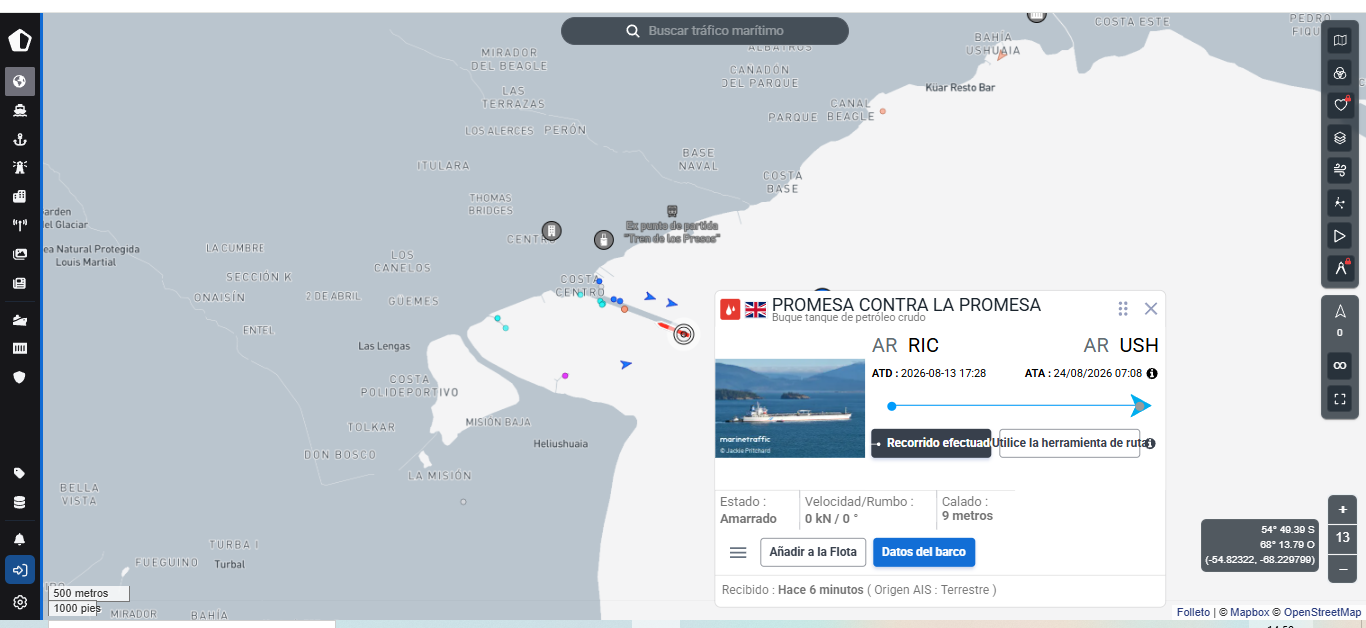
La escala en la capital fueguina no constituyó un arribo aislado de navegación internacional de paso: según el seguimiento satelital mediante los sistemas AIS y registros portuarios, el buque tanque permaneció operando hasta el pasado 13 de agosto en la monoboya de Río Cullen, en la costa atlántica norte de la Isla Grande, la terminal desde donde el consorcio petrolero encabezado por Total Austral (TotalEnergies) bombea y exporta el crudo extraído costa afuera en la Cuenca Marina Austral.
Radiografía del gigante: capacidad de carga y armadores
De acuerdo a las bases de datos de la Organización Marítima Internacional (OMI / IMO) y registros marítimos comerciales:
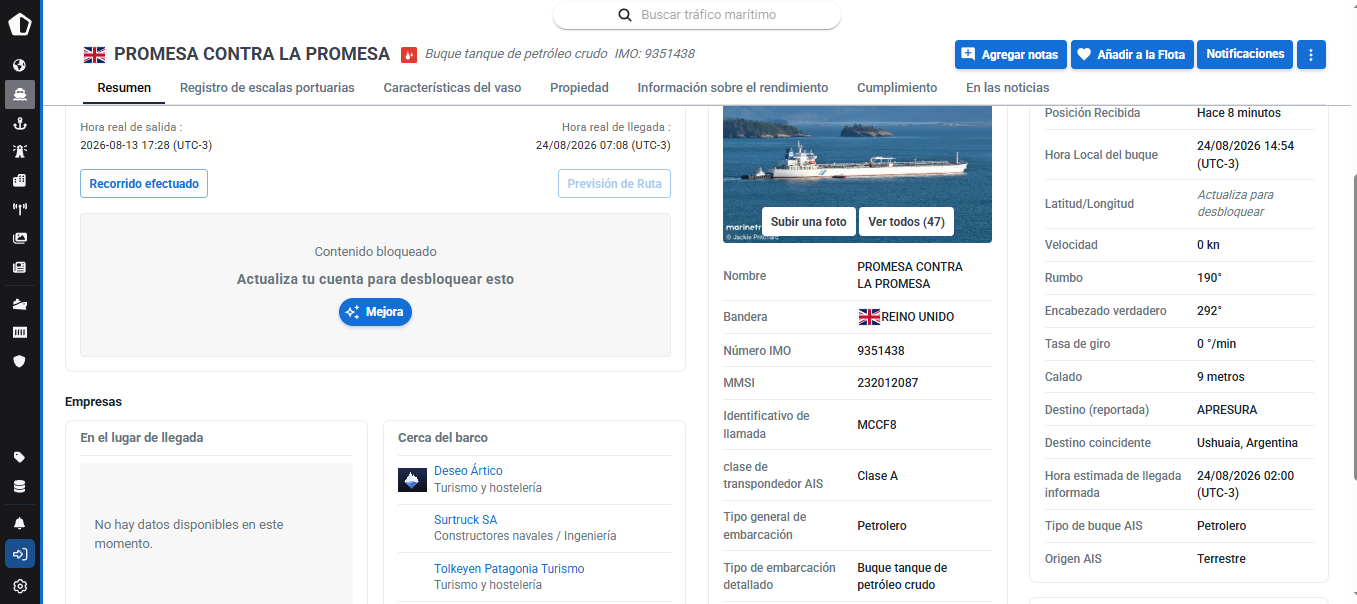
- Identificación oficial: Buque VS PROMISE (ex Hellespont Promise), IMO 9351438, MMSI 232012087, señal de llamada MCCF8.
- Construcción y dimensiones: Construido en 2007 en el astillero New Century Shipbuilding (China), posee una eslora de 228,60 metros, una manga de 32,57 metros y un calado máximo de verano de 14,5 metros (arribó a Ushuaia con un calado declarado de 9 metros).
- Capacidad de transporte: Clasificado como un tanquero tipo Panamax / LR1 (Large Range 1), posee un tonelaje de registro bruto (GT) de 42.010 toneladas y un peso muerto (DWT) de 69.994 a 73.669 toneladas métricas. Esta capacidad técnica le permite transportar en sus bodegas un volumen aproximado de entre 75.000 y 82.000 metros cúbicos de hidrocarburos líquidos, lo que equivale a un rango de entre 470.000 y más de 515.000 barriles de petróleo crudo.
- Propiedad y administración corporativa: El buque figura registrado a nombre de la sociedad de propósito especial Valloeby Promise Ltd, radicada en Douglas (Isla de Man, territorio bajo soberanía británica), con gestión técnica y de seguridad (ISM Manager) a cargo de la firma alemana Hellespont Ship Management GmbH & Co. KG.
- Rutas habituales: El tanquero ha operado históricamente en rutas comerciales del Golfo de México, la costa este y oeste de los Estados Unidos (con escalas recientes en puertos como Freeport, Los Ángeles y Melones en Panamá) y el norte de Europa, antes de ser contratado bajo modalidad de fletamento (charter) para la operatoria en el Atlántico Sur argentino.
FICHA TÉCNICA: BUQUE PETROLERO VS PROMISE
• Identificación: IMO 9351438 / Bandera: REINO UNIDO (Isla de Man)
• Dimensiones: Eslora: 228,6 m | Manga: 32,57 m | Calado actual: 9,0 m
• Tipo de Buque: Crude Oil Tanker (Panamax / LR1) │
• Capacidad de Carga: ~70.000 DWT | ~80.000 m³ | +500.000 barriles crudo
• Propietario / Registro: Valloeby Promise Ltd (Douglas, Isla de Man, UK)
• Operador Técnico: Hellespont Ship Management (Hamburgo, Alemania)
La operatoria en Cullen y las autorizaciones necesarias
La presencia de la nave en el litoral atlántico fueguino no se circunscribe al posterior amarre urbano en Ushuaia. De acuerdo a lo registrado en la plataforma Marinetraffic; el transpondedor del buque constató que partió de la monoboya marina de Río Cullen el 13 de agosto a las 17:28. En principio podría haber sido, para realizar maniobras de conexión y carga vinculadas a la producción de los yacimientos offshore fueguinos (Hidra, Aries, Carina, Vega Pléyade). Tras permanecer fondeado en maniobras y esperas operativas en aguas del Canal Beagle, atracó finalmente en el muelle comercial de Ushuaia a las 07:08 del 24 de agosto. De todos modos,
Para que un buque petrolero opere en la monoboya de Cullen y acceda a terminales marítimas bajo jurisdicción provincial y nacional, debe superar un estricto circuito de fiscalización y permisos:
1. Secretaría de Hidrocarburos / Energía de Tierra del Fuego: En su condición de autoridad de aplicación de los recursos hidrocarburíferos provinciales en el marco de la "Ley Corta" de Hidrocarburos (Ley Nacional 26.197), es el organismo provincial que debe autorizar, coordinar y fiscalizar los volúmenes de despacho, los balances de extracción y los protocolos ambientales y operativos de las terminales de exportación en tierra y aguas someras.
2. Prefectura Naval Argentina y Dirección Provincial de Puertos (DPP): Como autoridad marítima y portuaria, respectivamente, otorgan los despachos de entrada y salida, el control de seguridad de la navegación, el practicaje y la asignación de sitio de amarre en el muelle de Ushuaia.
3. Secretaría de Energía y Aduana Nacional: Intervienen en los permisos de exportación de crudo y control fiscal aduanero de las divisas y cargamentos.
El eje central del creciente debate en Tierra del Fuego emerge en la opinión pública, es si la presencia del buque está violando la Ley Provincial N.º 852 ("Ley Gaucho Rivero") —normativa que sanciona a buques vinculados a la logística de la exploración ilegítima directamente en el área de Malvinas—, o está ligado exclusivamente a la responsabilidad política, regulatoria y administrativa de las autoridades de Tierra del Fuego y de la Nación al convalidar que la logística de exportación de hidrocarburos fueguinos sea operada por navíos con bandera británica sin una explicación pública oficial sobre cómo se contrató y quién autorizó el operativo.
El telón de fondo: TotalEnergies, el Proyecto Fénix y la sombra de Harbour Energy
La presencia del VS PROMISE no puede disociarse de las contradicciones de la política energética y geopolítica en la Cuenca Marina Austral.
El crudo extraído en el norte fueguino es operado por el consorcio integrado por la francesa TotalEnergies (operadora principal), la alemana Wintershall Dea y Pan American Energy (PAE), el mismo consorcio que lleva adelante el megaproyecto gasífero costa afuera Fénix.
Sin embargo, el mapa corporativo sufrió una mutación: la británica Harbour Energy concretó la absorción de los activos de exploración y producción de Wintershall Dea a nivel global, pasando a tener injerencia directa en los yacimientos offshore de Tierra del Fuego.
El dato es políticamente sensible: Harbour Energy operó en las Islas Malvinas controlando el 65% de las acciones del proyecto petrolero Sea Lion en la Cuenca Norte del archipiélago antes de transferir su participación a Navitas Petroleum. Dicha actividad en Malvinas fue declarada ilegal y clandestina por la Secretaría de Energía de la Nación bajo los términos de la Ley Nacional N.º 26.659 (Ley Solanas), que prohíbe operar en territorio argentino a empresas o grupos que hayan participado sin autorización en la exploración de hidrocarburos en la plataforma continental usurpada.
Las preguntas urgentes que debe responder el Gobierno
La imagen del petrolero británico amarrado frente a la costanera de Ushuaia —a metros de monumentos a los caídos y en la capital de la provincia que tiene bajo su jurisdicción constitucional a las Islas Malvinas y los espacios marítimos del Atlántico Sur— expone un vacío de explicaciones que interpela de manera directa a la gestión provincial y nacional:
- ¿Quién y bajo qué marco contractual contrató los servicios del tanquero de bandera británica VS PROMISE para exportar el petróleo de Río Cullen?
- ¿Emitió la Secretaría de Energía / Hidrocarburos de la Provincia la autorización formal y la homologación técnica correspondiente para su amarre y despacho en la monoboya norte?
- ¿Qué operación realizó desde el 13 de agosto en el norte de la Isla Grande y durante once días, antes de amarrar en el puerto comercial de Ushuaia?
- ¿Qué nivel de control ejerce el Estado argentino sobre las operadoras del consorcio austral para evitar que firmas con antecedentes en la exploración ilegal en Malvinas o buques de conveniencia británica operen recursos estratégicos fueguinos?
Mientras el buque permanece amarrado en el muelle de Ushuaia, la presencia del VS PROMISE desnuda las grietas entre el discurso soberano y los engranajes comerciales de las multinacionales hidrocarburíferas en el sur argentino.
Tags
Otras noticias de Tierra del fuego
Detectan vehículos dentro de la estancia "El Relincho", junto al predio del radar de Leolabs
La Justicia federal aceptó al Municipio de Río Grande en la causa contra las petroleras
La Jueza Federal de Río Grande ordenó a Rockhopper y Navitas paralizar las obras en Malvinas


