
Una extensa y reveladora investigación internacional publicada por el diario digital español El Confidencial —titulada "Tras la flota fantasma que decide el precio de tu bocadillo de calamares"— acaba de encender las alarmas en el mercado pesquero europeo. Sin embargo, leída desde el Atlántico Sur, la nota aporta una pieza geopolítica invaluable: describe cómo la flota española, históricamente socia del enclave británico en Malvinas, está pasando a ser -si cabe la expresión-, víctima de la agresiva expansión china en las aguas internacionales de la milla 201.
Este escenario de asfixia comercial e industrial para los armadores ibéricos se acopla perfectamente con las recientes admisiones de la televisión colonial (Falkland Islands TV), donde las autoridades de ocupación reconocieron el desplome de sus capturas y plantearon el temor a que las flotas extranjeras dejen de operar en las islas por falta de rentabilidad. Cuando el negocio del saqueo deja de cerrar en los balances de Vigo, la estructura colonial de las islas empieza a tambalear.
La "Armada Fantasma" que rompe el mercado
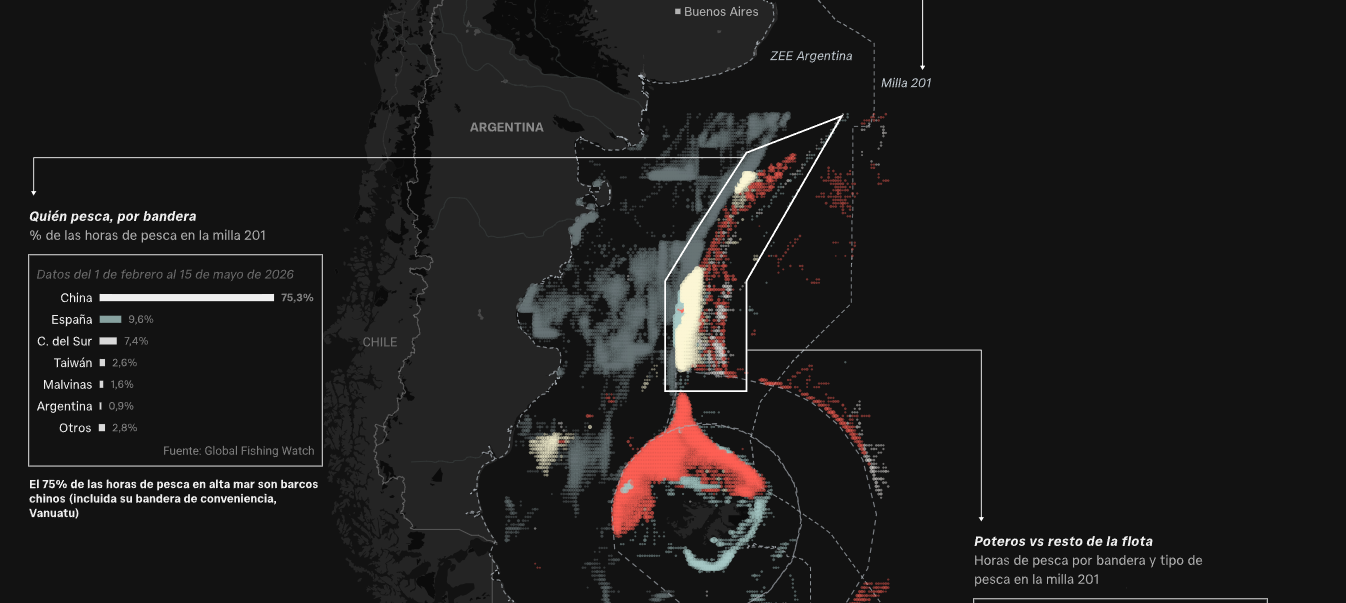
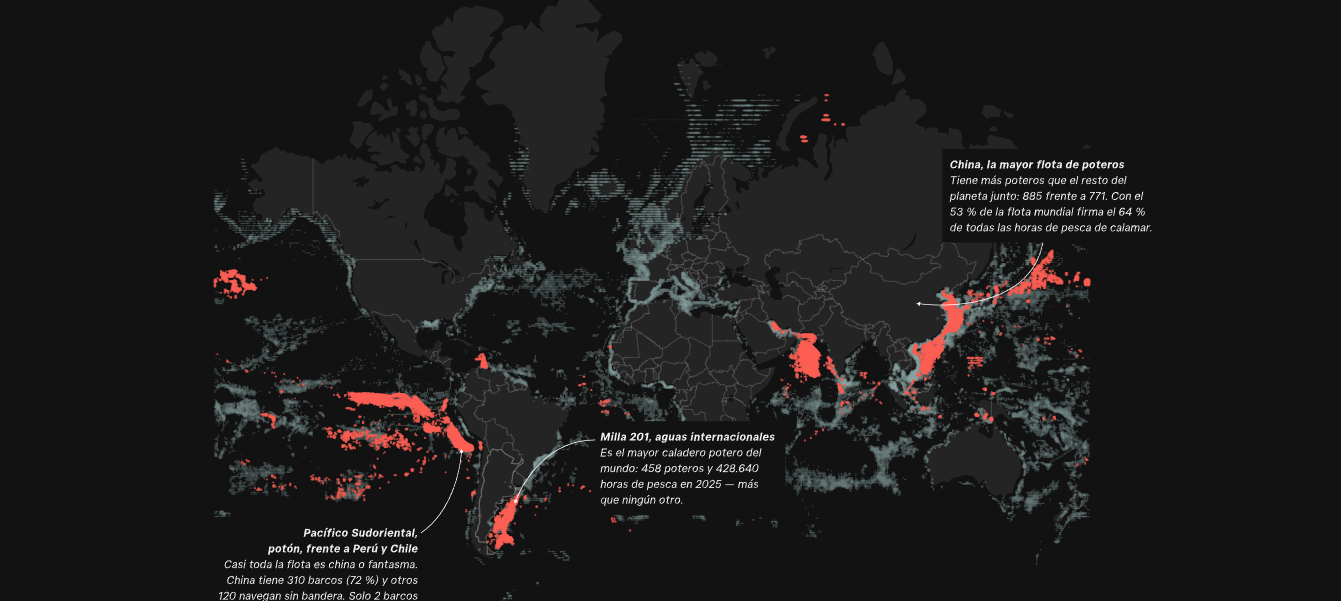
El informe de El Confidencial expone las quejas de los armadores de Vigo (Galicia) ante el crecimiento explosivo de la flota china en el Atlántico Sudoccidental, la cual incrementó su esfuerzo pesquero un 85% entre 2019 y 2024.
Según datos de la Fundación Latinoamericana de Sostenibilidad Pesquera citados en el artículo, mientras España apenas mueve unos 25 barcos poteros en la región profunda, la armada asiática despliega entre 300 y 500 buques que operan al límite de la Zona Económica Exclusiva (ZEE) argentina.
Edelmiro Ulloa, director gerente de la Cooperativa de Armadores de Vigo (ARVI), graficó la imposibilidad de competir ante este gigante: "Son cientos de buques que pescan sin cuotas, pasan varios años en alta mar sin pisar puerto, no tienen reparos en mantener a sus empleados en condiciones deplorables... Sin embargo, buena parte de ese pescado acaba en el mercado europeo y se mezcla con el nuestro simplemente porque es más barato".
El monopolio del Loligo y la encerrona kelper
El artículo de la prensa española introduce un dato técnico fundamental que hace a la médula del conflicto de soberanía: España monopoliza las 16 licencias ilegales que otorga la colonia británica para la pesca del calamar Loligo (Loligo gahi) en las costas de Malvinas. Esas capturas, que rondan las 50.000 toneladas anuales, constituyen el verdadero "oro blanco" de los armadores gallegos y el principal sostén del superávit fiscal de los kelpers.
Sin embargo, para el calamar Illex (Illex argentinus), el negocio ya saltó por los aires. La sobreexplotación descontrolada de las flotas asiáticas en alta mar —que extraen entre 1,5 y 3 millones de toneladas anuales—, ha deprimido los precios globales debido a una precarización laboral extrema, donde los tripulantes chinos perciben sueldos de apenas 150 euros frente a los 2.000 euros de los marineros europeos.
El factor que faltaba: La retirada de la flota de Vigo de Malvinas
Aquí es donde la investigación de El Confidencial se conecta de manera directa con las alertas emitidas desde Puerto Argentino. La televisión colonial dejó flotando la advertencia de que, si se encadenan dos o tres temporadas malas; los propietarios de los barcos evaluarán que no tiene sentido financiero enviar buques a las Islas Malvinas, tan lejos de sus bases.
El informe español confirma que esa reconversión empresarial ya está ocurriendo: ante los costos prohibitivos de los fletes, el combustible y la escasez del recurso, muchas firmas tradicionales están mutando al rol de traders o gestores de importación, prefiriendo comprar el calamar ya procesado en plantas de Shandong (China) antes que financiar campañas extractivas deficitarias en el Atlántico Sur.
El bolsillo como límite del colonialismo
Este panorama demuestra que el entramado que sostiene la ocupación británica no es de acero, sino de papel financiero. Los funcionarios del Consejo Federal Pesquero argentino, encabezados por Juan Antonio López Cazorla, siguen llamándose al silencio en las ferias internacionales frente a las empresas que operan con "doble matrícula". Pero el mercado global y la depredación biológica están haciendo el trabajo que la diplomacia nacional elude.
Si la flota gallega pierde la capacidad de competir frente a China y sus márgenes de ganancia en el Atlántico Sur se licúan por la crisis del combustible y el colapso del recurso, la compra de licencias coloniales británicas dejará de ser una opción viable. Cuando el "bocadillo de calamares" en Madrid se nutra definitivamente del potón procesado en Asia, el principal financista de la ocupación militar británica en nuestras Islas Malvinas habrá apagado sus motores.
Tags
Otras noticias de Atlántico Sur
Londres proyecta un cable submarino entre Uruguay y Malvinas con una empresa contratista de YPF
Con un tercio de sus bodegas cargadas, el petrolero británico dejó Tierra del Fuego y navega rumbo a Texas
La colonia británica suspende la temporada de pesca por la baja histórica del calamar


