La habilitación del ingreso a la plataforma web de la petrolera israelí Navitas Petroleum para los usuarios en Argentina abrió las puertas a documentación de alta relevancia que, hasta ahora, permanecía bajo estricto hermetismo corporativo. El análisis detallado de su Informe Financiero Anual consolidado, aprobado el 17 de marzo de 2026 por la junta directiva en Tel Aviv, expone cómo la viabilidad económica de esta multinacional está atada, de manera casi desesperada, al saqueo de la plataforma continental argentina.
El balance revela cifras monumentales, maniobras fiscales escandalosas y compromisos de soberanía a larguísimo plazo que pulverizan, de una vez por todas, la mentira diplomática de que se trata de un mero "emprendimiento privado" ajeno al control estatal y de las finanzas globales.
Para una comprensión clara de nuestros lectores, Agenda Malvinas a dividido el documento de 103 páginas en cinco informes periodísticos: 1) La Estafa Fiscal de 183 Millones de dólares; 2) La Quiénes Financian el Saqueo; 3) La Expansión Territorial Silenciosa; 4) Licencias a 35 años y Desregulación Ambiental; 5) El Reparto de la Riqueza Robada.
El truco de los 183 millones de dólares: Cómo la colonia Malvinas "salvó" el balance de la petrolera Navitas
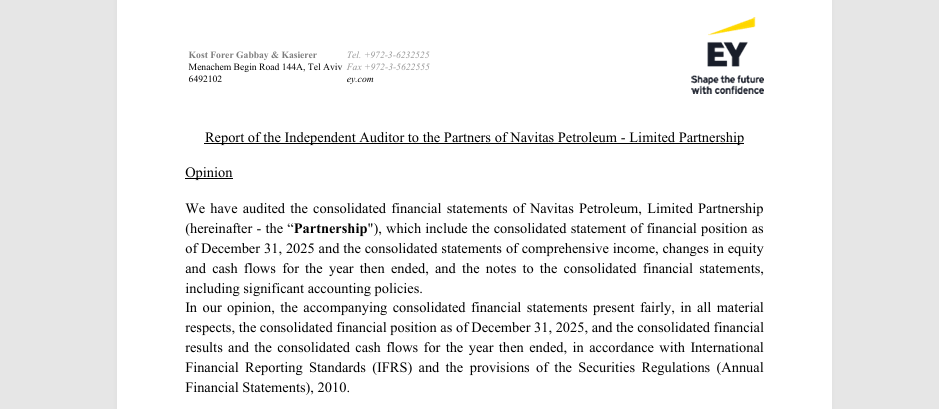
Para entender cómo se financia el saqueo en el Atlántico Sur, hay que mirar los libros de contabilidad de sus empresas. En su último balance anual, la petrolera israelí Navitas Petroleum declaró una ganancia de USD 178,6 millones. A simple vista, parece una empresa sumamente exitosa. Pero cuando se leen las notas chicas del informe auditado por la firma EY (Kost Forer Gabbay & Kasierer) en Tel Aviv, se descubre una trampa monumental: esa ganancia es un "dibujo contable" que le regaló el gobierno colonial de ocupación en nuestras islas.
¿Qué es el "Impuesto Diferido"?
En el mundo de los negocios, cuando una empresa tiene pérdidas en un país, la ley le permite anotar esas pérdidas como un "crédito a su favor" para no pagar impuestos en el futuro cuando empiece a ganar dinero. A esto se le llama Activo por Impuesto Diferido. Es, básicamente, un vale de descuento impositivo para el futuro.
El "regalo" colonial en las islas
Antes de que Navitas se quedara con el 65% del yacimiento Sea Lion, otras petroleras británicas (como Premier Oil y Harbour Energy) pasaron años perforando ilegalmente el mar argentino sin éxito, acumulando pérdidas por más de USD 765 millones.
Cuando Navitas les compró su participación a Harbour Energy, el gobierno colonial de las Malvinas le permitió "heredar" esas pérdidas ajenas y transformarlas en un descuento de impuestos a su favor por un valor de USD 183 millones.
Al firmar la Decisión Final de Inversión (FID) en diciembre de 2025, Navitas anotó ese "regalo" impositivo de USD 183 millones en su balance, figurando como si fuera dinero real que ya posee.
En el balance real Navitas está en rojo
Si restamos ese papel de descuento impositivo que le otorgó la colonia británica, el resultado financiero global de Navitas para el año 2025 dio pérdidas reales por USD 4,4 millones. Sin el paraguas fiscal de la usurpación en Malvinas, la petrolera estrella del modelo de país libertario, hoy estaría reportando números rojos a sus inversores en la Bolsa de Tel Aviv.
Tags
Otras noticias de Malvinas
Gran Bretaña prorrogó por cinco años las licencias petroleras en Malvinas y habilitó la expansión de Navitas
Gran Bretaña activa nuevos ejercicios militares en las Islas Malvinas
Cuarenta empresarios de la colonia británica de Malvinas desembarcarán en Punta Arenas