
La maquinaria del despojo británico de hidrocarburos en los espacios marítimos circundantes a las Islas Malvinas dio un salto cualitativo hacia la industrialización a gran escala. La petrolera británica Rockhopper Exploration plc emitió este lunes un comunicado oficial al mercado de la Bolsa de Londres (AIM) confirmando que la operadora israelí Navitas Petroleum ejerció formalmente la opción de compra de una segunda plataforma flotante de producción, almacenamiento y descarga: el FPSO OSX-1, una megaestructura adquirida por 125 millones de dólares.
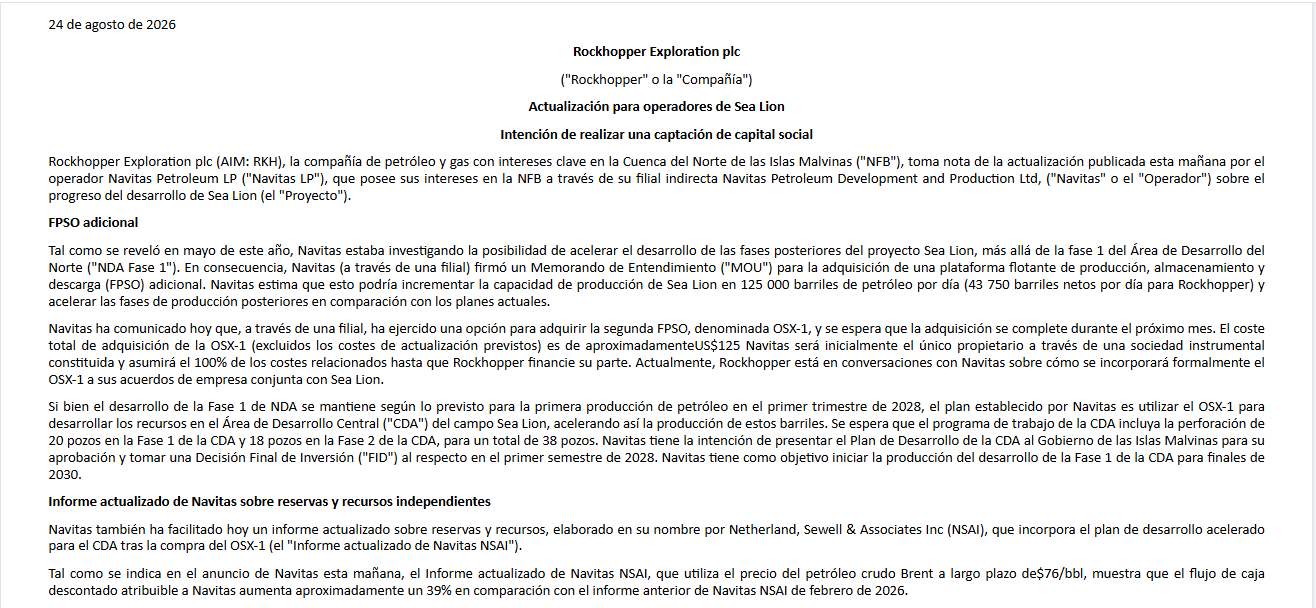
La incorporación de este segundo buque factoría tiene como objetivo central acelerar y expandir el desarrollo del yacimiento Sea Lion en la ilegal Cuenca Norte de Malvinas (NFB), pasando de la fase inicial al denominado Área de Desarrollo Central (CDA), lo que proyecta un incremento en la capacidad de extracción de 125.000 barriles de crudo por día adicionales (de los cuales 43.750 barriles diarios corresponderán netos a la británica Rockhopper).
La hoja de ruta del petróleo clandestino: 38 pozos y dos etapas
El plan maestro detallado por las compañías ilegítimas ante los inversores internacionales consolida un cronograma agresivo que desafía de manera abierta el régimen sancionatorio de la República Argentina:
CRONOGRAMA DE EXPLOTACIÓN EN MALVINAS (SEA LION)
│ • 2026 (Actual): Acondicionamiento de muelle y base costera en las islas. │
│ • Septiembre 2026: Arribo del FPSO Aoka Mizu a astillero en Sudeste Asiático│
│ • Principios de 2027: Llegada de la plataforma de perforación a Malvinas. │
│ • Primer Trimestre 2028: "First Oil" de la Fase 1 del Área Norte (NDA). │
│ • Primer Semestre 2028: Decisión Final de Inversión (FID) para el FPSO OSX-1│
│ • Fines de 2030: Inicio de producción del Área Central (CDA / 38 pozos). │
1. Fase 1 (Área de Desarrollo Norte - NDA): Se mantiene firme con fecha prevista para extraer el primer barril de petróleo comercial ("First Oil") en el primer trimestre de 2028. Los trabajos actuales en Malvinas se concentran en acondicionar el muelle, levantar las bases logísticas costeras y edificar campamentos de alojamiento en el archipiélago a la espera de la plataforma marina de perforación a inicios de 2027. A su vez, el primer buque de producción asignado, el FPSO Aoka Mizu, ya fue desconectado de su localización previa y navega rumbo a un astillero del Sudeste Asiático para su reacondicionamiento.
2. Fase Acelerada (Área de Desarrollo Central - CDA): Contempla el despliegue del recién adquirido FPSO OSX-1 con la perforación de 38 pozos petroleros offshore (20 pozos en una primera etapa y 18 en la segunda). Navitas prevé presentar el Plan de Desarrollo formal ante el ilegítimo gobierno colonial de las islas para adoptar la Decisión Final de Inversión (FID) en 2028 y comenzar a bombear crudo hacia fines de 2030.
Fiebre financiera en Londres y un negocio multimillonario
El reporte financiero corporativo incluyó una actualización independiente de reservas y flujos de caja elaborada por la consultora internacional Netherland, Sewell & Associates Inc (NSAI). Con una cotización de referencia proyectada a largo plazo de 76 dólares por barril de crudo Brent, el informe dictaminó que el flujo de caja descontado neto atribuible a la operadora Navitas creció un 39%.
Para financiar su cuota del 35% en la compra del buque OSX-1 y solventar los gastos de ingeniería previos a 2028, Rockhopper anunció una pausa voluntaria de cotización en la Bolsa de Londres (Capital Access Period) a fin de lanzar una colocación de nuevas acciones ordinarias y una oferta pública para captar capitales de fondos de inversión británicos e internacionales. El directorio de Rockhopper anticipó que su propio valor actual neto (VAN / NPV10) libre de impuestos escalará sustancialmente por encima de su estimación base actual de 2.200 millones de dólares.
La ilegalidad de fondo frente a la Ley Solanas
Tanto Rockhopper Exploration como Navitas Petroleum operan bajo licencias ilegítimas otorgadas por la administración colonial británica de ocupación, en abierta violación de las resoluciones de la Asamblea General de la ONU (especialmente la Resolución 31/49 que prohíbe actos unilaterales de innovación en el área en disputa).
En el marco del derecho argentino, todas las corporaciones, armadores, proveedores logísticos y entidades financieras que asistan o participen directa o indirectamente en el proyecto Sea Lion se encuentran incursas en las sanciones civiles, administrativas y penales de la Ley Nacional N.º 26.659 (Ley Solanas), que prohíbe operar, contratar o poseer concesiones en la plataforma continental argentina a empresas involucradas en actividades no autorizadas por el Estado nacional.
Mientras las petroleras aceleran la ingeniería financiera e incorporan plataformas flotantes de porte transoceánico para drenar la riqueza de la plataforma austral argentina a partir de 2028, los avances en Sea Lion ratifican que el control de los recursos energéticos del Atlántico Sudoccidental sigue siendo el verdadero motor de la usurpación y el enclave colonial británico.
Tags
Otras noticias de Malvinas
Los secretos, mapas y pruebas de la demanda argentina ante el Tribunal del Mar por el avance petrolero en Malvinas
La TV chilena muestra los destrozos que realizan los británicos en el cementerio de Darwin
“Déjennos robar en paz”: los okupas de Malvinas se ofenden porque Argentina les encarece los costos


