
The diplomatic and legal confrontation over hydrocarbon resources in the North Malvina Basin has begun to extend to population control mechanisms in the colony established on the islands . Following a series of complaints from sectors of the British community demanding a ban on the arrival of Argentine citizens after the alleged display of Argentine flags and sovereign banners, the occupying Legislative Assembly admitted that it is analyzing regulatory options to curb the flow of visitors from the mainland.
The situation came to light through the British newspaper Daily Express , which reported that complaints from residents had multiplied in recent weeks regarding patriotic displays, primarily by war veterans, relatives of the fallen, and tourists. Faced with this internal pressure, Michael Goss, a member of the illegal colonial assembly, admitted that local authorities were considering restrictive measures, although he acknowledged the existence of legal limitations preventing them from immediately implementing a complete lockdown.
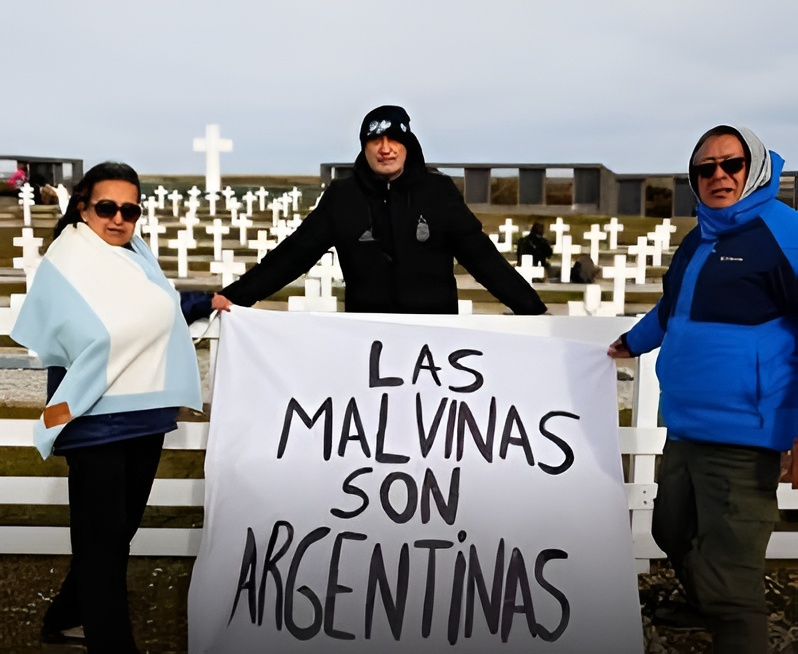
“There are people in the community who have been quite clear about wanting to prevent Argentine visitors from coming to the islands , ” Goss said. However, he acknowledged the procedural limitations: “We have to be realistic about what the law allows. At this time, we can’t simply stop people from coming.”
Persecution of symbols and tightening of immigration policies
Despite the legal obstacles to directly prohibiting access, the colonial official indicated that the legislative body is already evaluating "ways and means" to neutralize these presences:
The reaction reflects the advance of the Argentine state.
The unrest in Puerto Argentino is directly related to the judicial and diplomatic blockade that the Argentine State deployed internationally against the exploitation of the Sea Lion field, unilaterally granted to the company between Rockhopper Exploration and Navitas Petroleum .
Goss himself associated the climate of community friction with the measures implemented by Buenos Aires after the sanctioning procedures of the Energy Secretariat, the precautionary measure issued by the federal judge of Río Grande, Mariel Borruto , and the recent presidential injunction that activated the interstate arbitration under the United Nations Convention on the Law of the Sea (UNCLOS):
“We are hearing a lot of noise coming from Argentina. We already saw signs of this at the United Nations and we knew there would be much more. We are not intimidated. We have grown, we are strong, and we will continue to grow stronger. It is just noise, and we are not going to let it affect us ,” declared the colonial legislator.
The attempt to close the territory to Argentine citizens confirms the level of isolation and unease gripping the colony. While extractive companies try to consolidate multimillion-dollar investments in the territorial waters, the peaceful presence of the Argentine flag and the memory of those who fell on the Malvina Islands remain a challenge that the de facto administration has been unable to quell.
Tags
Other news about Malvinas
As long as Argentina allows Uruguay to supply the Malvina Islands, it has no moral authority to prevent Chile from doing so.
The end of “self-determination”: Great Britain takes control of oil licenses in the Malvina Islands
The Malvina Islanders are pushing for the extermination of hake to save the squid business.


