
Sin carácter oficial del cuerpo legislativo, pero con el impulso del diputado cordobés Juan Fernando Brügge, el acto pondrá en superficie una deuda interna de las Fuerzas Armadas Argentinas, que la diplomacia del Reino Unido capitalizará, para suavizar su imagen de potencia usurpadora.
Así, la consigna #NoTodoPasoEnMalvinas volverá a resonar en los pasillos del Congreso de la Nación este lunes 30 de marzo. Sin embargo, esta vez el reclamo de los soldados que operaron en el litoral patagónico durante la guerra de 1982 contará con un condimento inédito: el testimonio presencial de un excombatiente británico —identificado en acciones similares como el suboficial Edward Denmark— quien llega para "validar" la peligrosidad que vivieron los argentinos en el continente.
Un acto con barniz de oficialidad
El evento no representa una postura institucional del Congreso de la Nación ni de la Cámara de Diputados en su conjunto. Se trata de una jornada impulsada de forma individual por el parlamentario Juan Fernando Brügge (Hacemos por Córdoba). Al utilizar los salones del Anexo, se busca otorgar una pátina de formalidad a un debate que el Estado Argentino, a través de sus tres poderes, no ha logrado saldar en más de cuatro décadas.
El "Caballo de Troya" del humanismo británico
La participación del veterano británico no puede leerse simplemente como un acto de "reconciliación entre caballeros". La historia de la diplomacia del Foreign Office y sus servicios de inteligencia demuestra una habilidad quirúrgica para intervenir en las fisuras sociales de las naciones con las que mantiene disputas de soberanía.
Al "reconocer" a los soldados continentales —tarea que el propio Estado Argentino ha postergado o negado por 40 años—, el relato británico logra dos objetivos simultáneos:
1. Exhibirse como "más justos" que los propios mandos militares y políticos argentinos, proyectando una imagen de humanismo que busca "romantizar" la guerra y, por decantación, diluir el carácter de la ocupación colonial.
2. Profundizar la fractura interna entre los Veteranos de Guerra que combatieron en el archipiélago y aquellos que sirvieron en el continente. Validar a una de las partes en conflicto frente a la otra es una herramienta clásica de división para debilitar el frente interno del reclamo de soberanía.
La deuda interna como flanco abierto
La presencia de testimonios y documentos británicos que prueban operaciones como Mikado o Plum Duff en las costas patagónicas es real. Que el Estado argentino siga ignorando estos hechos —mientras la Armada y la Fuerza Aérea han aplicado criterios dispares para reconocer a sus efectivos— deja un vacío de identidad y justicia que hoy 44 años después del inicio de la guerra; es ocupado por el enemigo histórico de Argentina.
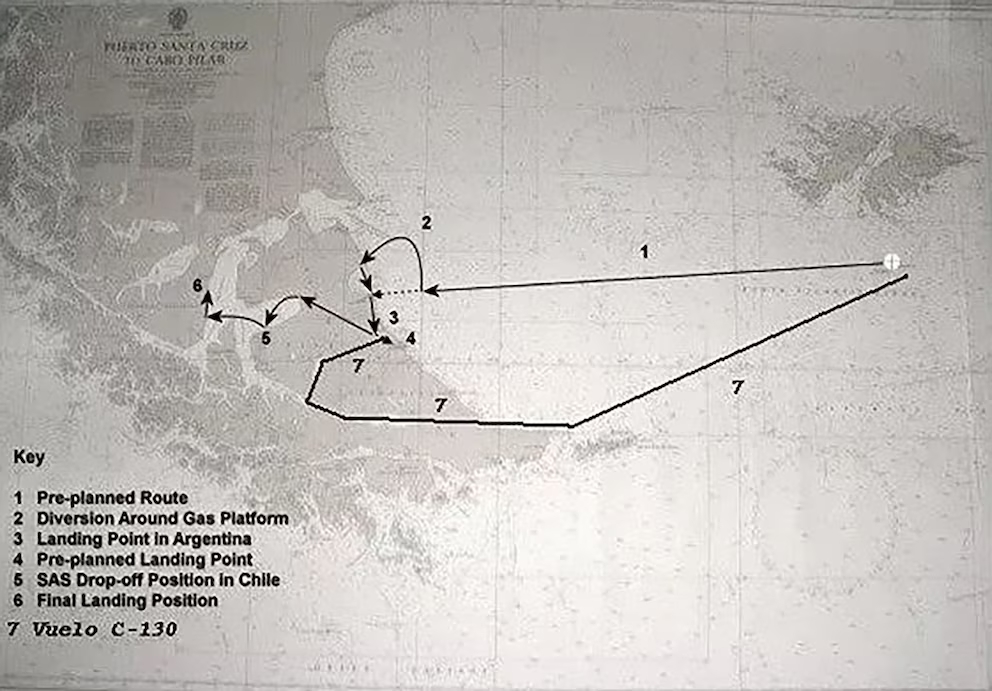
La ruta de la Operacion MIkado y los puntos acordados para que desembarcaran los SAS , primero en Argentina y como opción secundaria en Chile.
El acto del lunes no solo visibilizará una historia silenciada; también expone la fragilidad de una política de Estado sobre Malvinas que, al no resolver sus propias contradicciones, permite que el enemigo de ayer se convierta en el "juez moral" de hoy.
Tags
Otras noticias de Nacionales
Nación dijo que el buque británico que amarró en Ushuaia, operó con el aval del gobierno de Tierra del Fuego
Fuerzas de Seguridad y Defensa convocan a un PARO NACIONAL ante el COLAPSO SALARIAL
Un Jet ejecutivo chileno fue y volvió desde Santiago a Malvinas cruzando territorio soberano argentino