
Una grave denuncia por presuntas prácticas contaminantes y maltrato al personal militar activó una investigación interna en la base antártica conjunta Petrel, una de las instalaciones estratégicas del sistema antártico argentino.
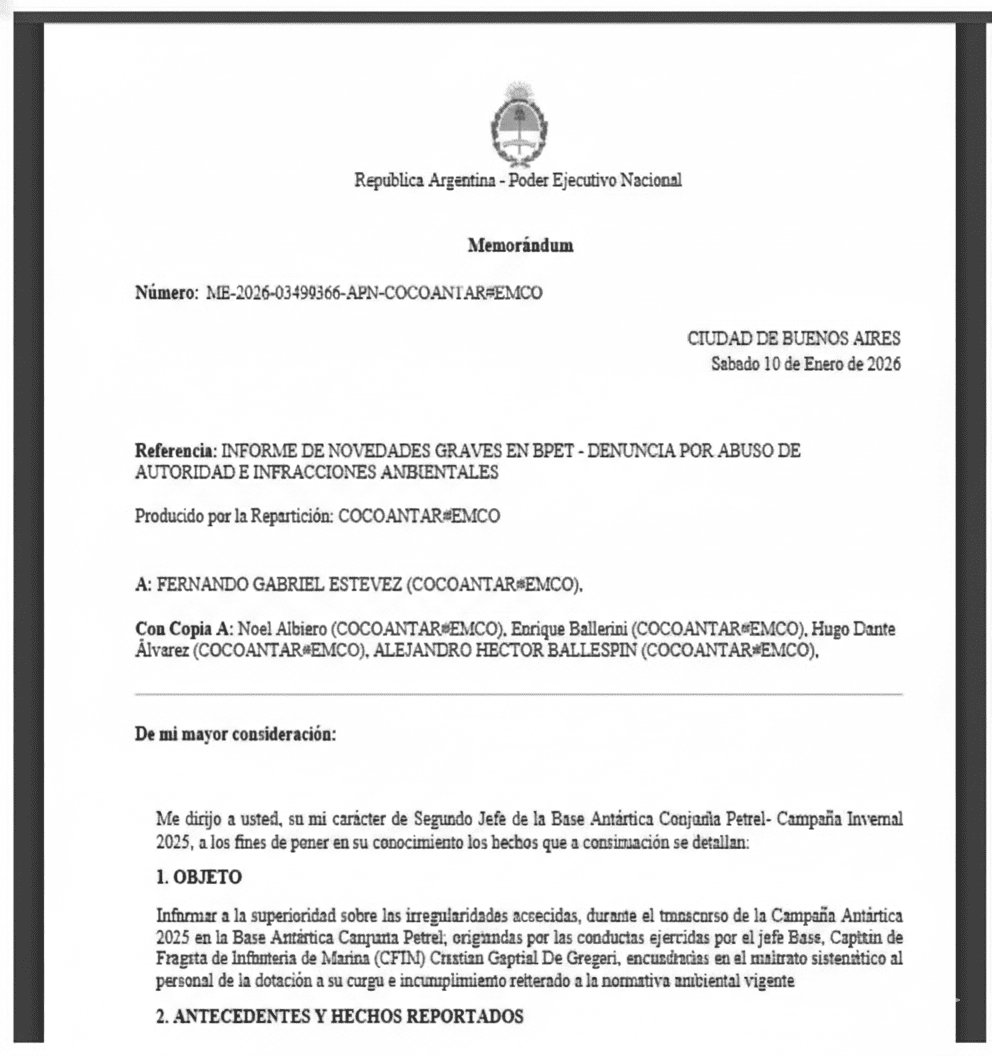
El caso es analizado por el Comando Conjunto Antártico (COCOANTAR), a cargo del contralmirante Maximiliano Mangiaterra, organismo responsable de la logística y el funcionamiento permanente de las bases bajo la órbita del Estado Mayor Conjunto.
La presentación formal fue realizada por el segundo jefe de la base Petrel, teniente de Navío Amílcar Acosta, mediante un memorando fechado el 10 de enero, en el que se atribuyen las irregularidades al jefe de la instalación, el capitán de fragata de Infantería de Marina Cristian Gabriel De Gregori.
El documento consigna “incumplimientos reiterados de la normativa ambiental vigente” y un “maltrato sistemático” hacia integrantes de la dotación durante el desarrollo de la Campaña Antártica 2025.
El aspecto de mayor gravedad está vinculado al impacto ambiental. Según el informe elevado a las autoridades, se habrían impartido órdenes verbales directas para la eliminación de remanentes de combustibles -JP1 para aeronaves, nafta, gasoil- y aceites lubricantes mediante vertido y quema en una batea metálica.
Estas prácticas habrían generado un riesgo crítico de contaminación del suelo, la fauna y la biodiversidad antártica, en presunta violación del Protocolo al Tratado Antártico sobre Protección del Medio Ambiente, que prohíbe la quema a cielo abierto y establece un sistema estricto de gestión de residuos.
La denuncia también incluye la incineración no controlada de residuos sólidos, entre ellos alimentos vencidos, plásticos, goma y materiales de construcción.
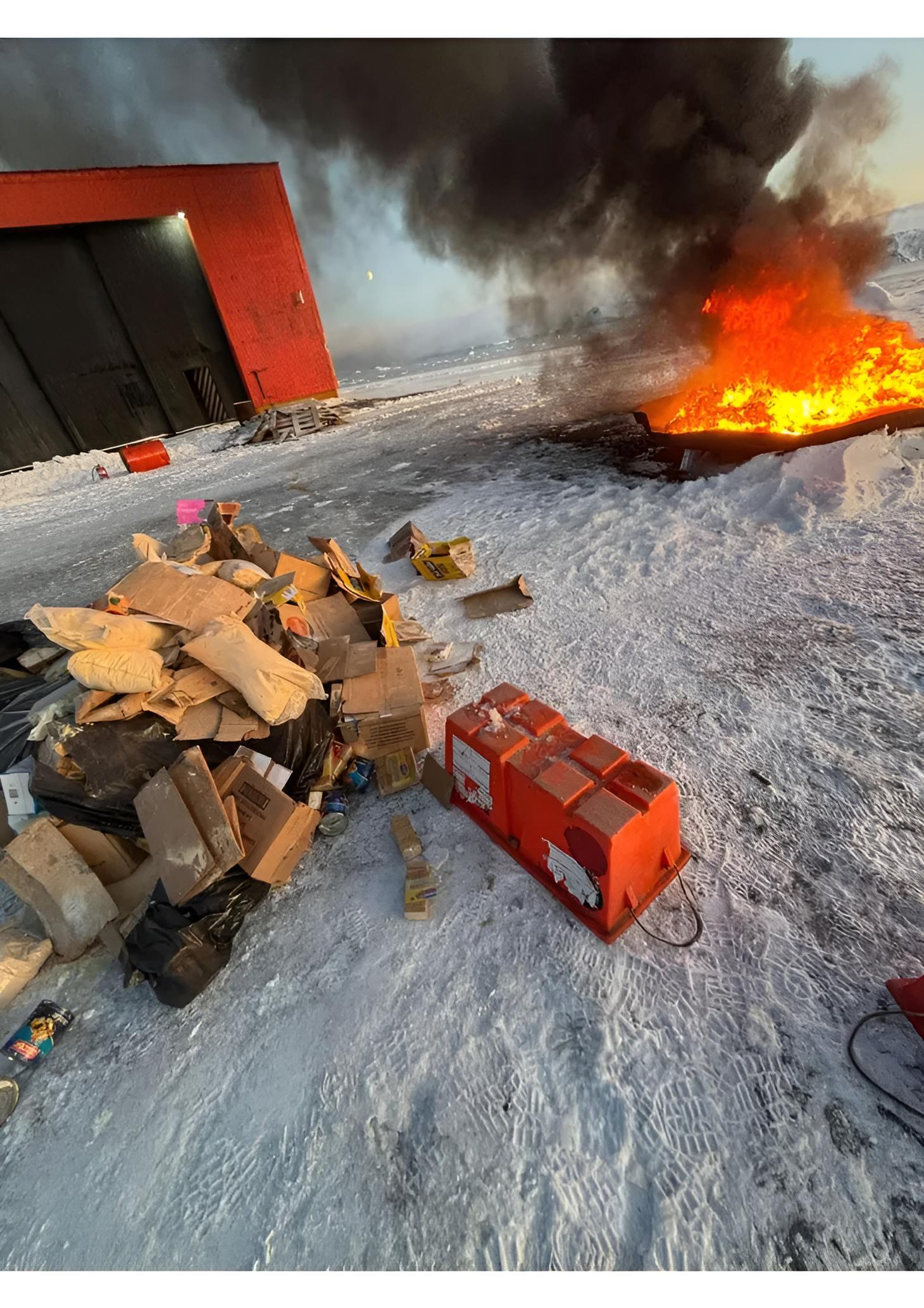
En el continente antártico, solo ciertos residuos orgánicos pueden ser tratados localmente y únicamente mediante equipos especiales que filtran emisiones, mientras que los residuos peligrosos deben ser retirados del territorio para su disposición final en el continente.
El contexto agrava la situación: la base Petrel se encuentra en plena etapa de recuperación y expansión, con obras destinadas a convertirla en un nodo clave para la movilización aérea y naval hacia el interior profundo de la Antártida. De comprobarse las irregularidades, la Argentina podría quedar expuesta a observaciones internacionales dentro del sistema antártico.
En paralelo, el memorando describe un clima de convivencia deteriorado, con acusaciones de uso de lenguaje hostil, intimidaciones y humillaciones verbales hacia subalternos, incluido el médico de la base.
Especialistas consultados advierten que el aislamiento extremo y la vida en espacios confinados potencian conflictos cuando fallan las capacidades de liderazgo.
Se espera que la investigación determine responsabilidades, esclarezca si existió impericia en la conducción de la base o un conflicto interno sostenido, y establezca eventuales sanciones disciplinarias.
Tags
Otras noticias de Antártida
El Rompehielos Irízar zarpó de Ushuaia para la etapa final de la Campaña Antártica
Chile fortalece su presencia en la Antártida mientras Argentina retrocede
122 años de Antártida Argentina: Entre el hito soberano de la logística fueguina y el acecho del Comando Sur


