Bajo el rótulo de "Protecting Global Commons Program" (Programa de Protección de los Bienes Comunes Globales), el gobierno de Javier Milei informó el pasado miércoles 20 de mayo, a través de un comunicado oficial; haber sellado una alianza militar con el Comando Sur que otorga a una potencia extranjera la supervisión y el control operativo en nuestras aguas jurisdiccionales. Lo que en ese momento informábamos a través de lo publicado por la Embajada de EE. UU. en sus redes sociales, hoy adquiere mayor entidad a través de lo que dice el propio Gobierno y lo que amplía el medio Buenos Aires Times.
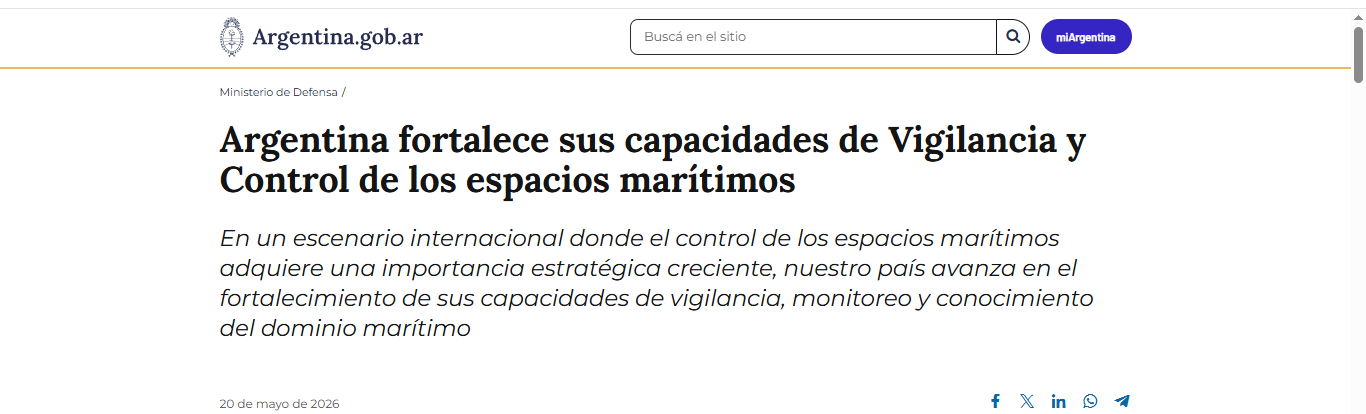
A pesar de la relevancia del acuerdo firmado entre el Almirante Juan Carlos Romay y el Contraalmirante Carlos Sardiello, en cuanto a que se trataría en principio del control y cuidado de las riquezas marítimas argentinas; la Carta de Intención —el documento— no ha sido dada a conocer. El secretismo gubernamental debe ampararse en la confidencialidad que significa la transferencia de tecnología militar. Una barrera que -presuponemos- impediría conocer la letra chica de los compromisos acordados y asumidos. Sin embargo, el comunicado oficial valida la hoja de ruta: un plan de cinco años que amarra la soberanía operativa argentina a la voluntad de Washington hasta el año 2030.
Ojos argentinos, cerebro del Pentágono
El corazón técnico de este acuerdo, reside en la incorporación de los aviones Textron B-360ER, definidos como plataformas ISR (Inteligencia, Vigilancia y Reconocimiento). Para el lector no especializado, esto significa que la Argentina no está incorporando simples aviones de patrulla para el control soberano, sino nodos de información configurados bajo estándares del Pentágono.
- Inteligencia delegada: Los sensores (como el sistema WESCAM MX-10 ya instalado en Punta Indio) procesan datos mediante software propiedad de EE.UU. Argentina puede ver la imagen, pero el código y la capacidad de "filtrar" la información pertenecen al proveedor.
- Reporte directo al Comando Sur: Estas plataformas están diseñadas para reportar directamente a la red de la Cuarta Flota. Lo que el piloto argentino detecta en el Atlántico Sur fluye en tiempo real hacia los centros de comando en Florida, convirtiendo a nuestra Armada en un "sensor remoto" de una potencia extranjera.
El plan quinquenal (2026-2030)
El programa establece un goteo de equipamiento que garantiza la tutela estadounidense durante el resto de la década:
- Diciembre 2026 y Junio 2027: Arribo de las unidades Textron B-360ER, amarrando la vigilancia aérea a la tecnología ISR norteamericana.
- Mediados de 2027: Incorporación de drones de despegue vertical para los patrulleros oceánicos. La vigilancia remota de nuestro mar queda automatizada bajo soporte técnico extranjero.
- Año 2029: Provisión de un simulador para los P-3C Orión. Incluso el adiestramiento y la doctrina de los marinos argentinos quedarán bajo el software diseñado en Washington.
Una asfixia presupuestaria planificada
Este despliegue de "ayuda" extranjera ocurre en el momento de mayor asfixia presupuestaria de la historia reciente que viven las Fuerzas Armadas Argentinas. Mientras el Gobierno celebra la llegada de cámaras y drones "donados", les aplica un recorte de $46.000 millones que deja a las bases, unidades y cuarteles; sin luz, sin gas y sin alimentos para la tropa.
El modelo es de una perversidad quirúrgica: se vacía de recursos a las Fuerzas Armadas nacionales para crear la "necesidad" de aceptar la tutela del Comando Sur. Argentina pone el riesgo y el personal; Estados Unidos pone los ojos y la dirección estratégica sobre un Atlántico Sur que el pacto ya no define como territorio soberano, sino como un "bien común" en disputa.
Tags
Otras noticias de Nacionales
El presente de las FUERZAS ARMADAS ARGENTINAS: de custodios de la PATRIA a choferes de UBER
Milei devalúa la Constitución y posterga la defensa de Malvinas a un futuro incierto
Quitarán el nombre del excombatiente correntino Orlando Pascua del Museo Nacional Malvinas