El pasado martes 28, la Cancillería Iibertaria consolidó su giro pro-Mercado, con la jura de Pablo Quirno como nuevo Ministro de Relaciones Exteriores, un ex-ejecutivo del JP Morgan y mano derecha del Ministro Luis Caputo.
En una ceremonia cargada de simbolismo político en el Salón Blanco de la Casa Rosada, Quirno asumió en medio de una intensa reconfiguración del Gabinete, en lo que fue el último acto de gestión del Jefe de Gabinete, Guillermo Francos, quien formalizó su renuncia pocas horas después.

El nombramiento de Quirno, el tercer Canciller en veinte meses de gestión, subraya la primacía de lo financiero en la política exterior, con el objetivo de blindar el acuerdo de $20.000 millones de dólares con Estados Unidos y el alineamiento incondicional con el eje Trump-Milei.
El Triunvirato Financiero y la broma Presidencial
El acto de juramento se realizó el martes 28 de octubre, en el Salón Blanco de la Casa Rosada. El presidente Javier Milei, en un gesto de distensión propio de su estilo, bromeó con Quirno antes de tomarle juramento: "Estás viviendo una externalidad positiva, yo te aviso. Solamente te aviso, pero está bueno". Quirno, enfático en su alineamiento, respondió con un rotundo "Sí, juro", comprometiéndose a un desempeño "con lealtad y patriotismo".
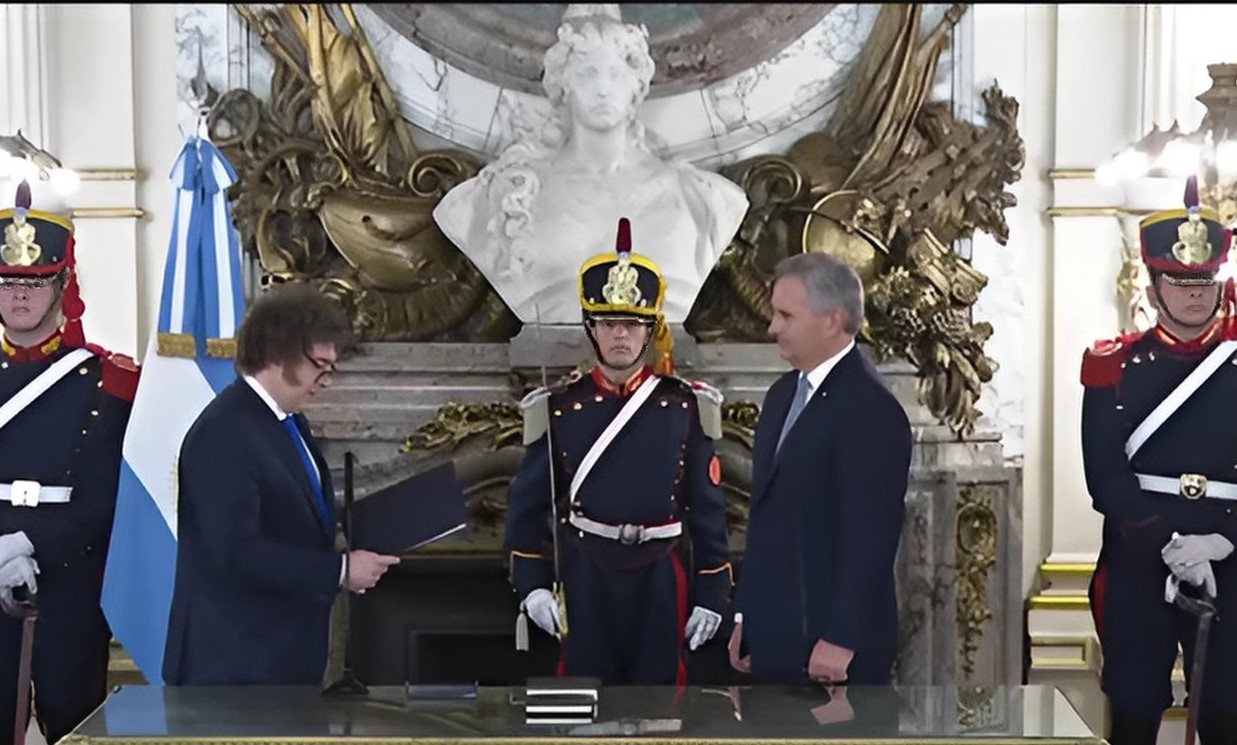
La jura contó con la presencia del núcleo duro del Gabinete nacional, consolidando la imagen de un "triunvirato del JP Morgan" con Caputo en Economía, Bausili en el BCRA y Quirno en la Cancillería. También asistieron el Jefe de Gabinete saliente, Guillermo Francos, y la Secretaria General de la Presidencia, Karina Milei, cuya presencia fue clave para mostrar el aval a este nuevo ciclo diplomático.
Tras la ceremonia, Quirno dio declaraciones que ratificaron la agenda: "La relación con Estados Unidos está en un lugar óptimo y esto es otro paso más en ese sentido". Remarcó que el Presidente "ha tenido muchos viajes para cementar ese lazo", enfatizando que, tras el reciente triunfo electoral, la prioridad es avanzar en la "inserción internacional, justamente con más comercio y más inversiones".
La Ruptura Histórica en la ONU y el Castigo a Cuba
Como acto inaugural, el primer gran acto de gestión del Canciller Quirno se materializó con un voto que rompe la tradición diplomática argentina en la Asamblea General de las Naciones Unidas. Un día después de su jura, el miércoles 29 de octubre; Argentina decidió votar en contra de la resolución anual que exige el levantamiento del bloqueo económico, comercial y financiero que Estados Unidos impone a Cuba desde hace más de seis décadas.
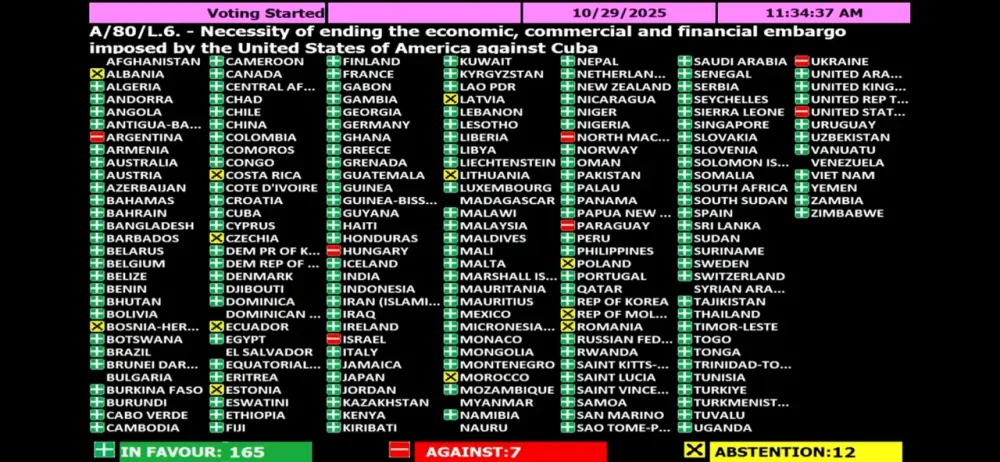
La votación fue abrumadoramente favorable a la postura cubana, con 165 países que se pronunciaron a favor de poner fin al embargo. No obstante, Argentina se alineó con solo seis naciones más para rechazar la moción, consolidando su alianza incondicional con Estados Unidos e Israel, los dos aliados estratégicos de la Casa Rosada. El grupo minoritario que votó en contra fue integrado por Argentina, Hungría, Israel, Macedonia del Norte, Paraguay y Ucrania. Doce países optaron por la abstención, entre ellos Costa Rica y Ecuador.
La resolución, que se presenta anualmente desde 1992 bajo el título "Necesidad de poner fin al bloqueo económico, comercial y financiero impuesto por los Estados Unidos de América contra Cuba", reafirma principios fundamentales como la igualdad soberana de los Estados y la no intervención en asuntos internos, además de reclamar la libertad de comercio y navegación. El voto contrario de Argentina no solo marca un giro ideológico radical respecto a su histórica posición —que hasta 2022 se había alineado con Cuba y la casi totalidad de la región—, sino que también subraya la profunda injerencia de la política exterior estadounidense en las decisiones de la Casa Rosada. Este quiebre es la materialización de la promesa de Milei de "no ir en línea con Estados Unidos e Israel es imperdonable", una postura que costó el cargo a la excanciller Diana Mondino hace un año por un voto anterior, favorable a la resolución.
El riesgo de aislar la Causa Malvinas
Esta decisión de alto voltaje diplomático es vista por la mayoría de los miembros del servicio exterior y analistas, como un peligroso debilitamiento de la postura argentina en la Causa Malvinas. El reclamo de soberanía se sustenta, en gran medida, en el respaldo sostenido de la comunidad internacional, particularmente del bloque latinoamericano y caribeño, que ha sido históricamente solidario con Argentina en el Comité de Descolonización de la ONU.
Al votar en contra de un principio tan arraigado en el derecho internacional —como el rechazo a medidas unilaterales y extraterritoriales que afectan la soberanía—, y al aislarse de la postura regional, el régimen libertario corre el riesgo de erosionar la base de apoyos que la Argentina ha construido durante décadas. Este gesto incondicional a Estados Unidos, sumado a los antecedentes de Quirno que se burlan del reclamo por Malvinas, convierte la defensa de la soberanía nacional en una moneda de cambio dentro de una estrategia diplomática que prioriza la ideología y el financiamiento externo por encima de los intereses permanentes de la Nación.
El Canciller del JP Morgan ha ejecutado, en su primer acto, la subordinación total de la política exterior a un eje ideológico que podría tener un alto costo en el foro donde Argentina debe seguir reclamando la soberanía de su territorio usurpado desde 1833.
Tags
Otras noticias de Nacionales
Milei manda tropas a Panamá sin autorización del Congreso y profundiza la subordinación al Comando Sur
CENSURA DIGITAL: NAVITAS VUELVE A BLOQUEAR EL ACCESO A SU WEB PARA LOS USUARIOS DE LA ARGENTINA
Argentina también denunció a Chile por la asistencia logística al HMS Medway en Punta Arenas