
Una inusual y coordinada actividad aérea que involucró a aeronaves del Reino Unido, Chile y Argentina se registró a media mañana de hoy en el sur del continente a través de www.flightradar24.com . Que, teniendo al aeropuerto de Punta Arenas como epicentro logístico, presenta un despliegue que reaviva las tensiones geopolíticas en el Atlántico Sur y la Antártida.
A las 10 de la mañana (hora argentina), el portal Agenda Malvinas documentó el despegue de tres aviones pertenecientes al British Antarctic Survey (BAS), el instituto nacional de investigación polar del Reino Unido. Se trató de un De Haviland Dash 7 y dos Twin Otter, que tomaron rumbo sur. Ya en mar abierto, las tres aeronaves británicas, apagaron sus transponders, dejando como interrogante sus destinos finales. Si se dirigían a la base antártica británica Rothera o, si su ruta, a través del sur del Cabo de Hornos, apuntaba directamente a las Islas Malvinas.
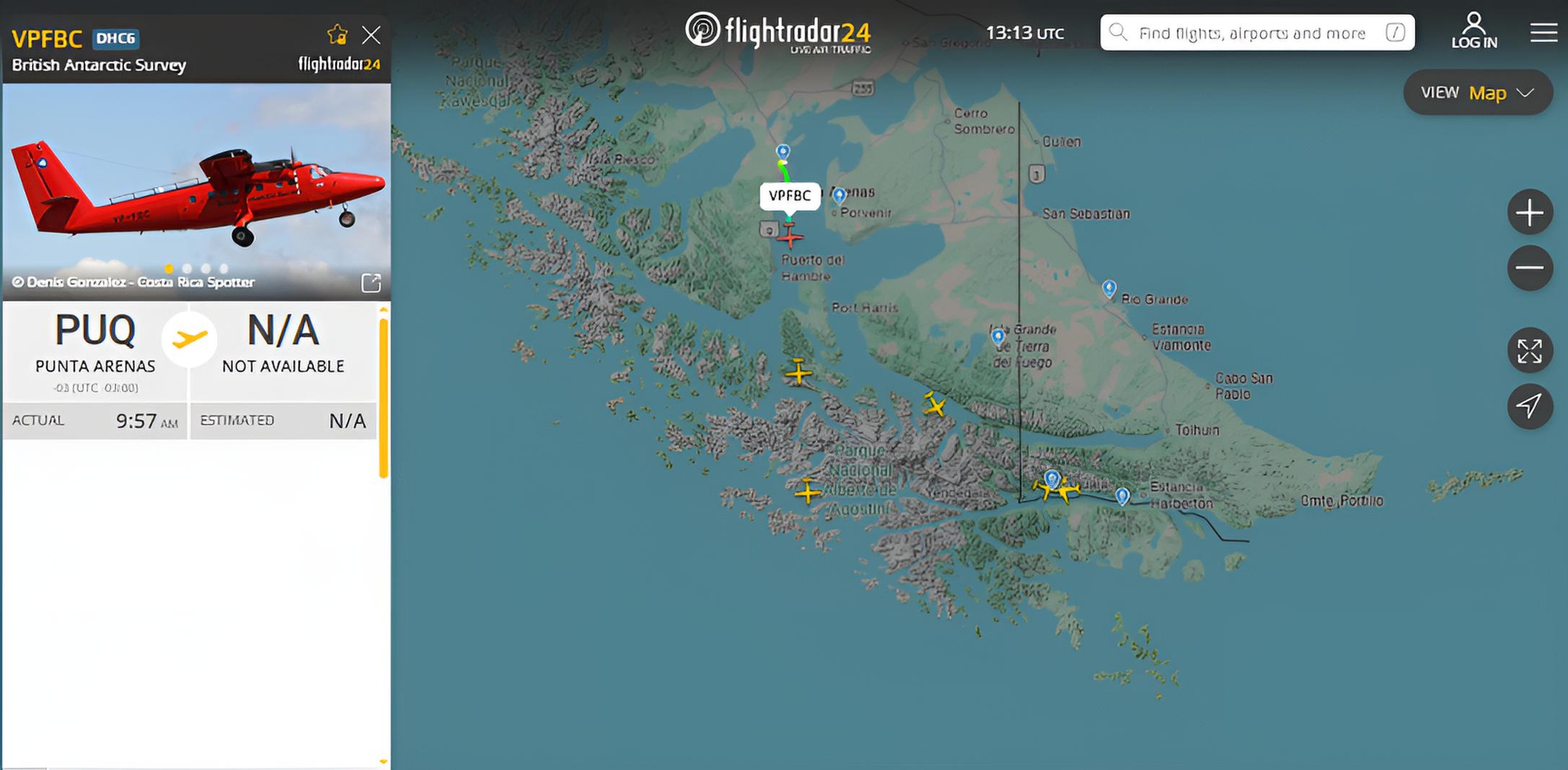
Así, cerca del mediodía, mientras los ojos de la prensa se enfocaban en los cielos de Punta Arenas; se hizo evidente que la actividad británica era solo una parte de un despliegue mucho mayor. De forma simultánea al despegue de un De Haviland Dash 7 y dos Twin Otter, del British Antarctic Survey (BAS), la Fuerza Aérea Chilena (FACh) también movilizó sus propios recursos. Un Twin Otter y dos aviones CASA 212 de la FACh sobrevolaron el centro-norte de la Isla Grande de Tierra del Fuego, extendiendo su patrullaje hacia el continente, un poco más allá del Parque Nacional Torres del Paine.
El periodista Gustavo Abud Arab captó la magnitud del evento al notar el movimiento de aeronaves de tres naciones, destacando la dimensión del apoyo logístico chileno al Reino Unido. "3 aviones británicos despegan hace minutos rumbo a la Antártida desde Punta Arenas Chile, no solo calidad del apoyo sino la cantidad", señaló. Es importante recordar que el BAS, aunque tiene un propósito científico ("realizar ciencia polar"), también tiene el objetivo de "proporcionar una presencia activa en la Antártida en nombre del Reino Unido".
Abud Arab amplió la lista dando cuenta que el en sector argentino volando del norte al a sur, se aproximaba un Orion P-3 de reconocimiento y patrulla marítima Argentina. En paralelo, en el sector argentino de la Isla Grande de Tierra del Fuego, Agenda Malvinas detectó un Twin Otter de la Fuerza Aérea Argentina operaba en la zona, un Saab 340 de LADE cubría la ruta entre El Calafate y Ushuaia, y un BAE de Aerovias DAP realizando la ruta desde Punta Arenas a Puerto Williams.
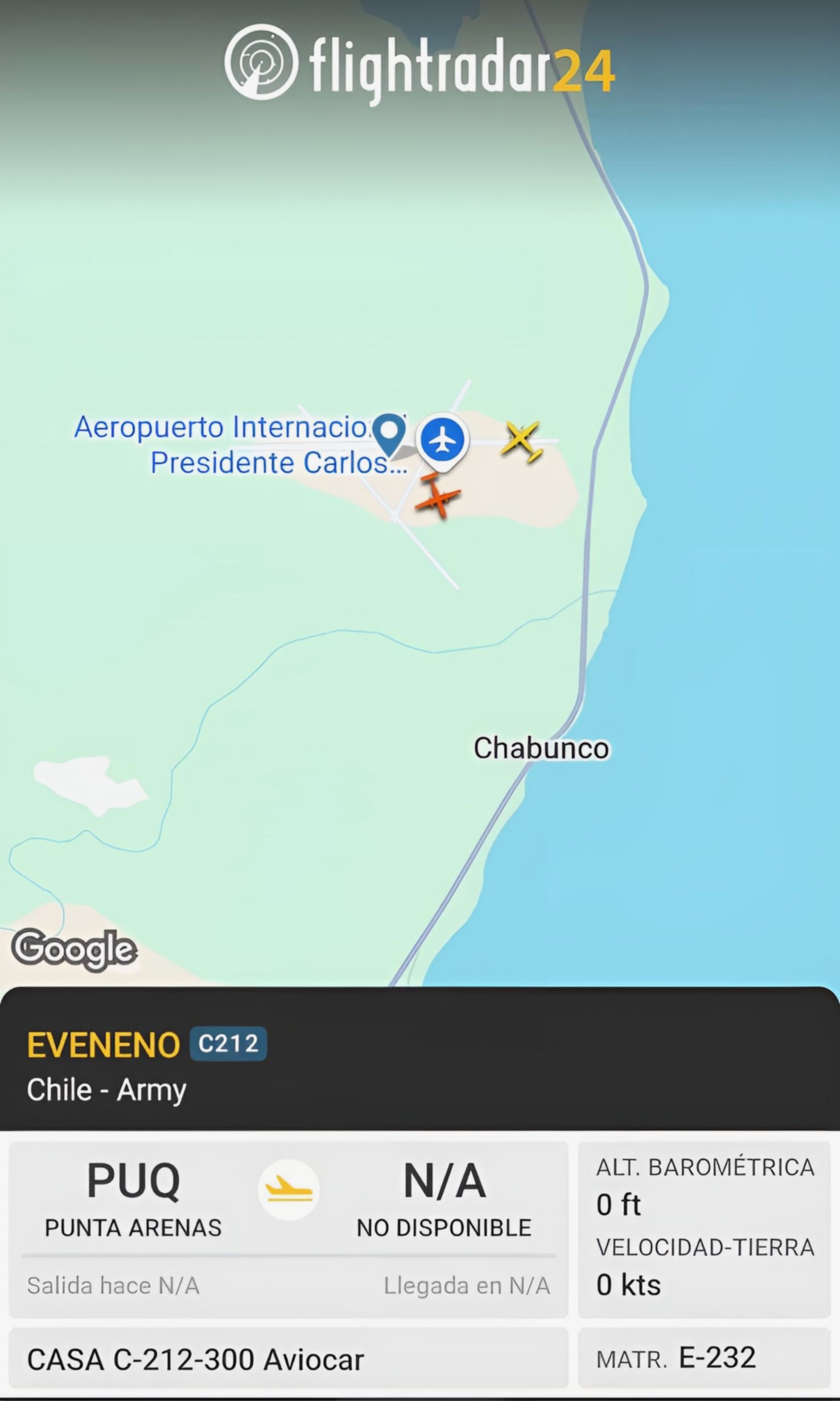
Una superposición de aeronaves militares y logísticas de tres países subrayando la escalada en la vigilancia del Atlántico Sur y la Antártida. Un movimiento aéreo militar en un contexto de fortificación de las relaciones chileno-británicas, consolidando a Punta Arenas como un punto logístico clave para el Reino Unido.
Tags
Otras noticias de Tierra del fuego
La Comisión Investigadora por el radar británico entra en su fase fueguina y citó a Castiglione y Devita
Río Grande: Desmontan el radar de Cabo Domingo para una renovación integral con tecnología de INVAP
Detectan vehículos dentro de la estancia "El Relincho", junto al predio del radar de Leolabs


