
El Reino Unido ha decidido abandonar de manera definitiva su posición defensiva de la posguerra y se prepara para disputar el orden mundial mediante el uso explícito de la fuerza, el despliegue tecnológico de vanguardia y la consolidación de sus enclaves coloniales. Así lo revela "Britain's world: The strategy of security in twelve geopolitical maps" (El mundo de Gran Bretaña: La estrategia de seguridad en doce mapas geopolíticos), un minucioso informe doctrinario editado por los estrategas James Rogers y Andrew Young bajo el sello de la corporación Geostrategy Ltd..

El documento cuenta con la validación política e institucional del mismísimo General Sir Gwyn Jenkins, Primer Lord del Mar (First Sea Lord) y Jefe del Estado Mayor Naval del Reino Unido, quien firma un prólogo donde convoca a la comunidad estratégica británica a prepararse activamente para el combate y la defensa de sus infraestructuras globales. En sus páginas, la geografía de la usurpación en el Atlántico Sur deja de ser un "asunto pendiente" de la diplomacia y pasa a ser catalogada como un activo logístico militar indispensable para la metrópoli.
La "Nueva Marina Híbrida" y el horizonte a cinco años
El núcleo de esta estrategia descansa sobre el concepto de la "Nueva Marina Híbrida" (New Hybrid Navy). El General Jenkins establece una directriz operativa drástica para los astilleros británicos: “nuestra flota será tripulada por robots siempre que sea posible, y por humanos sólo cuando sea estrictamente necesario”. Este recambio tecnológico —que ya se financia con el compromiso de la OTAN de elevar el gasto militar al 3.5% del PIB hacia 2035— busca masificar el uso de drones submarinos autónomos, vehículos de superficie no tripulados y cazas de sexta generación desarrollados a través del programa GCAP.
Desde la perspectiva de Agenda Malvinas, este salto tecnológico persigue un fin claro: industrializar la guerra, convirtiendo el gasto militar en un dinamizador económico interno para corporaciones como BAE Systems y Rolls-Royce, las cuales concentran sus fábricas de armas y submarinos nucleares fuera de la congestionada Londres. El plan busca reconfigurar el aparato estatal e industrial británico en un plazo inmediato de cinco años, preparando al país para escenarios de alta intensidad hacia el cierre de la década.
El cerco diplomático en Sudamérica: Chile, Brasil y Uruguay en la mira de Whitehall
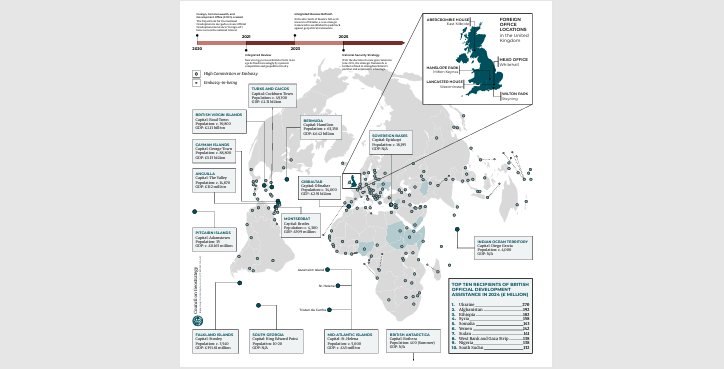
Para los fueguinos y para la causa soberana argentina, el capítulo más crítico del atlas es el mapa de "Alcance Marítimo" (Maritime Reach). El informe detalla que, para que el Reino Unido pueda mitigar "la tiranía de la distancia" y hacer valer sus intereses en las islas y espacios marítimos circundantes, la diplomacia de defensa de Su Majestad debe operar de manera agresiva en el continente americano. El documento explicita la necesidad imperiosa de coordinar con terceros Estados para asegurar un entramado de "derechos de sobrevuelo territorial y acceso marítimo" que permita responder a contingencias o sostener el puente logístico colonial.
Es allí donde cobra relevancia el rol histórico y presente de los socios sudamericanos, cuyas relaciones son cuidadosamente cultivadas por el Servicio Diplomático de Su Majestad (HMDS):
- Chile, el socio estratégico e industrial: El documento destaca cómo el Reino Unido utiliza la exportación de tecnología de defensa para generar interoperabilidad profunda y lazos de dependencia a largo plazo. Chile es el principal exponente de esta política en la región, habiendo adquirido históricamente fragatas británicas (como las Type 23) y manteniendo una cooperación constante en entrenamiento naval y cartografía antártica. Para Londres, el estrecho de Magallanes y las bases chilenas son el reaseguro de contingencia frente a cualquier escalada en el Atlántico Sur.
- Brasil y el balance de poder atlántico: La estrategia británica mira a Brasilia no como un aliado automático, sino como una potencia regional con la que es vital mantener lazos en materia científico-tecnológica y de seguridad marítima. El Reino Unido vigila estrechamente el desarrollo del programa de submarinos brasileño (PROSUB) y busca asociarse en la protección de las líneas de comunicación del Atlántico Sur (la llamada "Amazonia Azul"). Al integrar a Brasil en ejercicios y diálogos de defensa, Londres intenta neutralizar cualquier intento de conformar un bloque sudamericano de defensa que sea hostil a su presencia en Malvinas.
- Uruguay, el "puente humanitario" y comercial: Aunque Montevideo sostiene formalmente el reclamo argentino en los foros internacionales, la geofinalidad de Whitehall sigue considerando a los puertos y aeropuertos uruguayos como el nexo logístico civil y sanitario más cercano y eficiente para el archipiélago. El flujo de vuelos de evacuación médica y el aprovisionamiento de buques pesqueros que operan con licencias ilegales kelpers encuentran históricamente en la península oriental una ventana de oxígeno que debilita la estrategia argentina de aislamiento económico al invasor.
Conclusiones urgentes para la política exterior argentina
El informe del Council on Geostrategy sepulta de manera definitiva las teorías biempensantes que suponen que el Reino Unido accederá a sentarse a negociar la soberanía de las islas por razones de "buena voluntad diplomática". Para los planificadores de Whitehall, las Malvinas son una trinchera geoestratégica vital para proyectar poder hacia la Antártida, controlar el paso bioceánico y vigilar los recursos naturales de la plataforma continental.
Este documento demuestra que el invasor está reforzando sus defensas y su red de alianzas continentales para los próximos cinco años, buscando consolidar su posición extractiva y militar antes de que la crisis global de recursos se agudice. Revertir este despojo exige reactivar de forma urgente una geopolítica nacional firme, que asuma que el Atlántico Sur es hoy el teatro de operaciones de una potencia que se prepara, sin tapujos, mediante un cerco diplomático que busca que nuestros propios vecinos operen como la retaguardia logística del colonialismo británico.
Tags
Otras noticias de Internacionales
La Inteligencia chilena prevé un "evento crítico" con Argentina por el zarpe del buque a Malvinas
Rockhopper creó una nueva empresa con la que adquirió el 35% del buque OSX-1 por USD 44 millones
Radiografía del gasto militar chileno: Asignan U$S 2.885 millones para 2027 sin tocar fondos reservados de rearme


