
En la memoria colectiva de la guerra de Malvinas de 1982 predominan, claro está, los combates librados en las islas. Sin embargo, la campaña militar también se sostuvo sobre una compleja estructura desplegada en el continente, donde unidades altamente especializadas aportaron inteligencia decisiva para las operaciones.
Entre ellas se destacó la OPELEC, Compañía de Operaciones Electrónicas 602 del Ejército Argentino, integrada por especialistas en guerra electrónica que, mediante radiogoniometría e interceptación de comunicaciones, contribuyeron a localizar embarcaciones británicas frente al litoral patagónico.
Pese a la trascendencia de esa misión, sus integrantes siguen sin ser reconocidos oficialmente como veteranos de guerra.
La unidad fue desplegada entre el 16 de abril y el 5 de mayo de 1982 a lo largo de una línea de casi 900 kilómetros, con posiciones en Trelew, Comodoro Rivadavia, Puerto Deseado, Puerto Santa Cruz y Río Gallegos. Desde esos cinco puntos, los operadores escuchaban comunicaciones enemigas, identificaban frecuencias, determinaban su procedencia mediante goniómetros y enviaban la información a una central de interpretación ubicada en Comodoro Rivadavia, que establecía la ubicación precisa de las emisiones para transmitirla a la Fuerza Aérea Sur.
"La compañía nuestra se desplazó al sur en dos tandas. En esos cinco puntos escuchábamos todas las comunicaciones inglesas; teníamos traductores, marcábamos la dirección de donde provenían y la central de interpretación determinaba el punto exacto. Esa información se pasaba a la Fuerza Aérea Sur", recordó uno de los ex integrantes entrevistado por Agenda Malvinas.
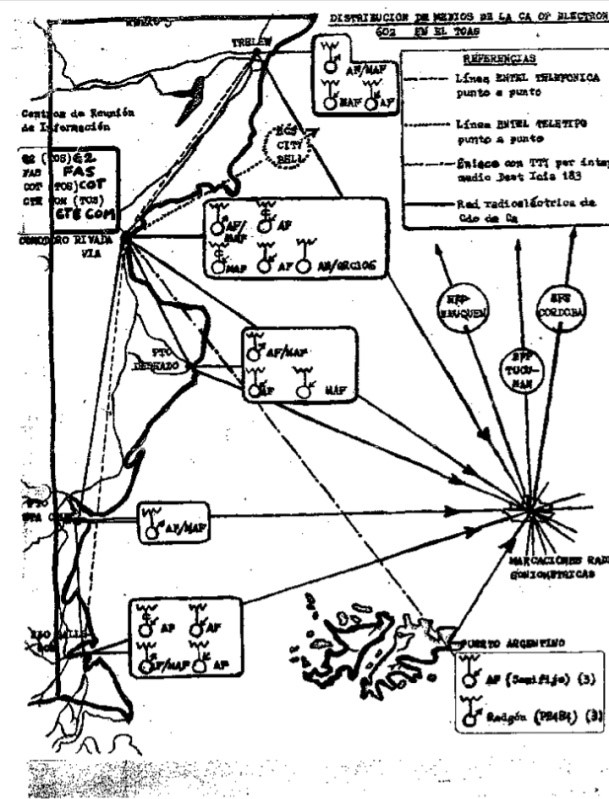
Todas las actividades de Guerra Electrónica llevadas a cabo en el Teatro de Operaciones por la OPELEC, fueron realizadas por su personal y traductores, en el interior de las cabinas de los Unimog en turnos de 24 x 24 horas. Permaneciendo con uniforme de combate y armamento: pistola Cal 11,25 mm con 3 cargadores, y con fusiles FAL con CIEN (100) proyectiles, dentro de un vehículo totalmente enmascarado. Además, la totalidad del personal de Soldados de la Subunidad realizaba seguridad perimetral, custodiando la unidad vehicular, como así también campos de antenas y grupos electrógenos, ya que se tubo información acerca de infiltraciones enemigas en el sector continental.
El informe final elaborado en junio de 1982 por el entonces Mayor Miguel Vicente Guerrero, jefe de Operaciones de la Fuerza Aérea Sur y posteriormente reconocido como el padre del Proyecto Cóndor II, confirma que la Fuerza Aérea utilizó las unidades móviles de radiogoniometría desplegadas por el Ejército para localizar estaciones enemigas, especialmente buques que mantenían tráfico operativo, calificando esa capacidad como uno de los mayores réditos obtenidos durante las operaciones electrónicas.
Intercepción, ciencia y combate
Los ex integrantes explican que el trabajo exigía un elevado nivel técnico. Equipos Telefunken montados sobre vehículos Unimog, extensos campos de antenas cuidadosamente calibrados y operadores especializados permitían detectar señales, triangular su origen y entregar información útil para la planificación de ataques aéreos.
"Era una unidad sumamente operacional. Primero trabajaban los grupos de escucha detectando las frecuencias; después actuaban los goniómetros y toda esa información llegaba a la central de interpretación, desde donde se informaba a la Fuerza Aérea Sur", explicó otro de los antiguos integrantes de la compañía.
Según los testimonios, muchas de las detecciones correspondieron a buques británicos, incluidos el HMS Sheffield y el Sir Galahad, episodios que también quedaron reflejados en publicaciones del arma de Comunicaciones. Incluso recuerdan que algunas unidades móviles llevaban pintadas las siluetas de embarcaciones cuya localización había contribuido a facilitar posteriores ataques argentinos.
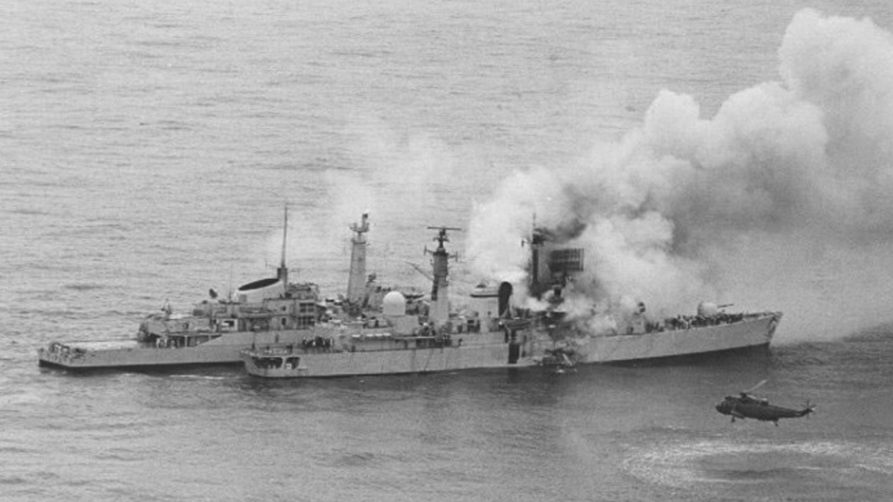
El hundimiento del HMS Sheffield, del 4 de mayo de 1982. Una acción de combate donde la OPELEC jugó un rol fundamental.
La especialidad requería necesariamente el despliegue continental. "No había otra forma de que el trabajo fuese exitoso si no estábamos desplegados en los 900 kilómetros frente a las islas y frente a la flota. Si todos nuestros equipos hubiesen estado en Malvinas, no habríamos podido hacer el trabajo", sostuvo uno de ellos.
Paradójicamente, esa misma condición es la que hoy les impide acceder al reconocimiento oficial como veteranos de guerra. Aunque una pequeña sección fue enviada a las islas, los propios informes militares concluyeron que allí no podía desarrollar eficazmente la misión prevista y regresó al continente para reincorporarse al sistema de radiogoniometría.
Los ex integrantes sostienen que nunca su reclamo estuvo orientado por una cuestión económica vinculada a pensiones, sino por el reconocimiento institucional y los honores correspondientes a quienes participaron directamente de una operación militar estratégica.
Señalan además que la doctrina militar continúa estudiando la actuación de la compañía en cursos superiores del Ejército, mientras la propia institución mantiene sin explicación una diferencia entre quienes combatieron desde las islas y quienes sostuvieron, desde el continente, una función imprescindible para el desarrollo de la guerra. Esa contradicción mantiene vigente un reclamo que, más de cuatro décadas después, continúa esperando respuesta.
Tags
Otras noticias de Nacionales
Milei blinda bajo "secreto militar" una nueva compra armamentística
Garbarz enumeró las capacidades bélicas del radar británico instalado en Tierra del Fuego
Milei envió una comitiva a buscar inversiones británicas en plena escalada por Malvinas


