Este 6 de agosto, la petrolera británica Harbour Energy presentó formalmente ante los mercados bursátiles su balance financiero no auditado correspondiente al primer semestre de 2026. A través de este documento corporativo y de la información volcada en su portal oficial, la compañía con sede en Londres —continuidad jurídica de Premier Oil, sancionada e inhabilitada por la Justicia Federal argentina por perforar de manera clandestina en las Islas Malvinas— expuso de manera transparente la dimensión real de sus operaciones en el país, el peso que los yacimientos locales tienen en su estructura y los acuerdos ya firmados para exportar gas patagónico al continente europeo.
Récord financiero internacional y el aporte de la producción local
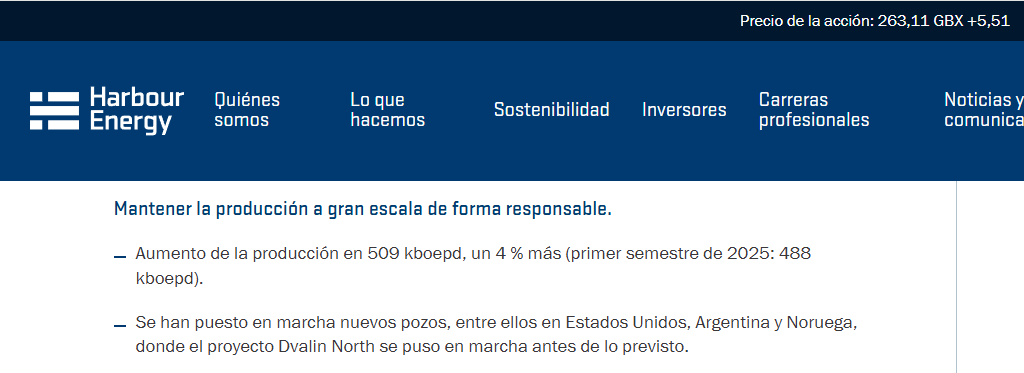
En su balance semestral, Harbour Energy informó que alcanzó una producción física total de 509.000 barriles de petróleo por día (kboepd) en sus distintas operaciones internacionales, registrando un alza interanual del 4 %. Este desempeño, sumado al precio del crudo y del gas en Europa, le permitió proyectar un flujo de caja libre anual de 1.800 millones de dólares, tras registrar ingresos en el semestre por 6.400 millones de dólares.
En el reporte financiero, la firma reportó un EBITDAX ajustado de 4.500 millones de dólares.
En la industria hidrocarburífera, el EBITDAX es una métrica contable especializada en evaluar las Ganancias antes de Intereses, Impuestos, Depreciaciones, Amortizaciones y Gastos de Exploración; que sirve para medir la rentabilidad operativa y la caja neta que generan los pozos productivos activos, sin que el balance se vea distorsionado por los multimillonarios costos de las campañas de exploración que se ejecutan en otras partes del mundo.
Con esa liquidez operativa, la petrolera aprobó un programa de recompra de acciones por 250 millones de dólares y prevé devolver un mínimo de 800 millones de dólares a sus accionistas a lo largo del año.
Dentro de este esquema de escala global, la extracción en Argentina promedia entre 73.000 y 74.000 barriles diarios (alrededor del 14,5 % del volumen físico total del grupo británico). En su informe de gestión, la dirección ejecutiva destacó explícitamente la conexión de nuevos pozos productivos en tres polos estratégicos: Noruega, Estados Unidos y Argentina.
El subsuelo argentino: la mayor reserva estratégica del grupo
Más allá de los volúmenes de extracción que hoy aportan las cuencas patagónicas, la documentación oficial de la corporación británica revela el verdadero valor que la compañía extrae del país: sus reservas a futuro.
Harbour Energy informó formalmente a sus inversores que contabiliza en Argentina más de 700 millones de barriles de petróleo equivalente (mmboe) en "recursos contingentes 2C", concentrados fundamentalmente en Vaca Muerta. En la jerga petrolera, los recursos 2C representan el escenario técnico central y más confiable de hidrocarburos ya descubiertos y comprobados mediante perforaciones, pero cuya explotación comercial masiva depende de la resolución de ciertas "contingencias", tales como el otorgamiento de nuevas concesiones estatales, la construcción de infraestructura de transporte y el cierre de contratos de exportación.
Respecto a este volumen, la compañía afirmó de manera textual ante los mercados que la Argentina constituye "el mayor componente individual de los recursos 2C de Harbour y una importante oportunidad estratégica para el reemplazo futuro de reservas" de toda su cartera global.
El despliegue territorial de la firma británica se estructura sobre tres pilares:
- Tierra del Fuego (Cuenca Marina Austral 1): Retiene el 37,5 % del consorcio offshore CMA-1, operado por TotalEnergies junto a Pan American Energy. En 2025, el área promedió una producción de gas de 52 kboepd, impulsada por la entrada en operaciones de la plataforma marina no tripulada Fénix.
- Neuquén (Vaca Muerta): Posee el 22,5 % del bloque de gas Aguada Pichana Este y el 24,7 % en San Roque. En este último bloque, tras perforar cuatro pozos de exploración y cuatro pozos piloto, Harbour y sus socios gestionan una nueva licencia no convencional para iniciar la extracción masiva de black oil shale (petróleo no convencional), con un plan piloto de 16 pozos proyectado para finales de 2026.
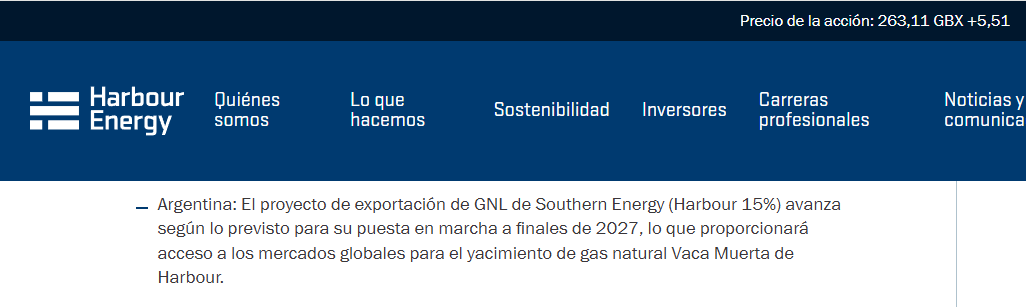
- Río Negro (El polo exportador de GNL): Participa con el 15 % en Southern Energy S.A., el consorcio integrado con PAE, YPF, Pampa Energía y Golar LNG para instalar dos buques de licuefacción flotante en el Golfo San Matías, con una capacidad proyectada de 6 millones de toneladas anuales de Gas Natural Licuado (GNL) hacia fines de 2027.
Contrato firmado para vender gas a Europa
La monetización de estos recursos no convencionales ya cuenta con canales comerciales cerrados. Harbour Energy confirmó a sus accionistas que en diciembre de 2025 firmó un acuerdo preliminar con la empresa alemana SEFE, la cual se comprometió a adquirir aproximadamente el 80 % del GNL suministrado por el primer buque licuefactor que operará frente a las costas de Río Negro.
Confesión corporativa frente a la violación de la Ley Pino Solanas
Los datos, balances y proyecciones publicados por Harbour Energy actúan como una prueba documental directa de carácter público. Mientras a nivel local se sostuvo la figura de la empresa alemana Wintershall Dea para sortear las sanciones de la Ley Nacional N° 26.659 ("Ley Pino Solanas"), la firma con sede en Londres informa sin intermediarios a sus accionistas que los activos de gas en el mar fueguino y los yacimientos no convencionales en Neuquén pertenecen a su cartera de negocios.
La admisión pública de estas ganancias y licencias en territorio continental consolida el cuadro denunciado ante la Justicia Federal: una compañía inhabilitada por realizar perforaciones ilegales en la cuenca de Malvinas bajo concesiones de la ocupación colonial británica hoy financia su rentabilidad en los mercados internacionales explotando el subsuelo argentino y proyectando a 99 años la monetización de sus recursos estratégicos.
Fuente:
Tags
Otras noticias de Internacionales
Israel se mete a favor de Argentina en la disputa contra Gran Bretaña por Malvinas
Rockhopper y Navitas profundizaron sus caídas en las bolsas de Londres y Tel Aviv
Chile desafía la ofensiva argentina contra la ilegal explotación petrolera en Malvinas