La provincia de Tierra del Fuego ha recuperado este miércoles 27 de mayo la certidumbre institucional que el Poder Ejecutivo intentó quebrar mediante decretos de madrugada y vetos sistemáticos. El Juzgado Electoral Provincial resolvió declarar la nulidad del Decreto Provincial Nº 0751/26, la herramienta con la que Gustavo Melella pretendía forzar una elección constituyente para el próximo 9 de agosto.
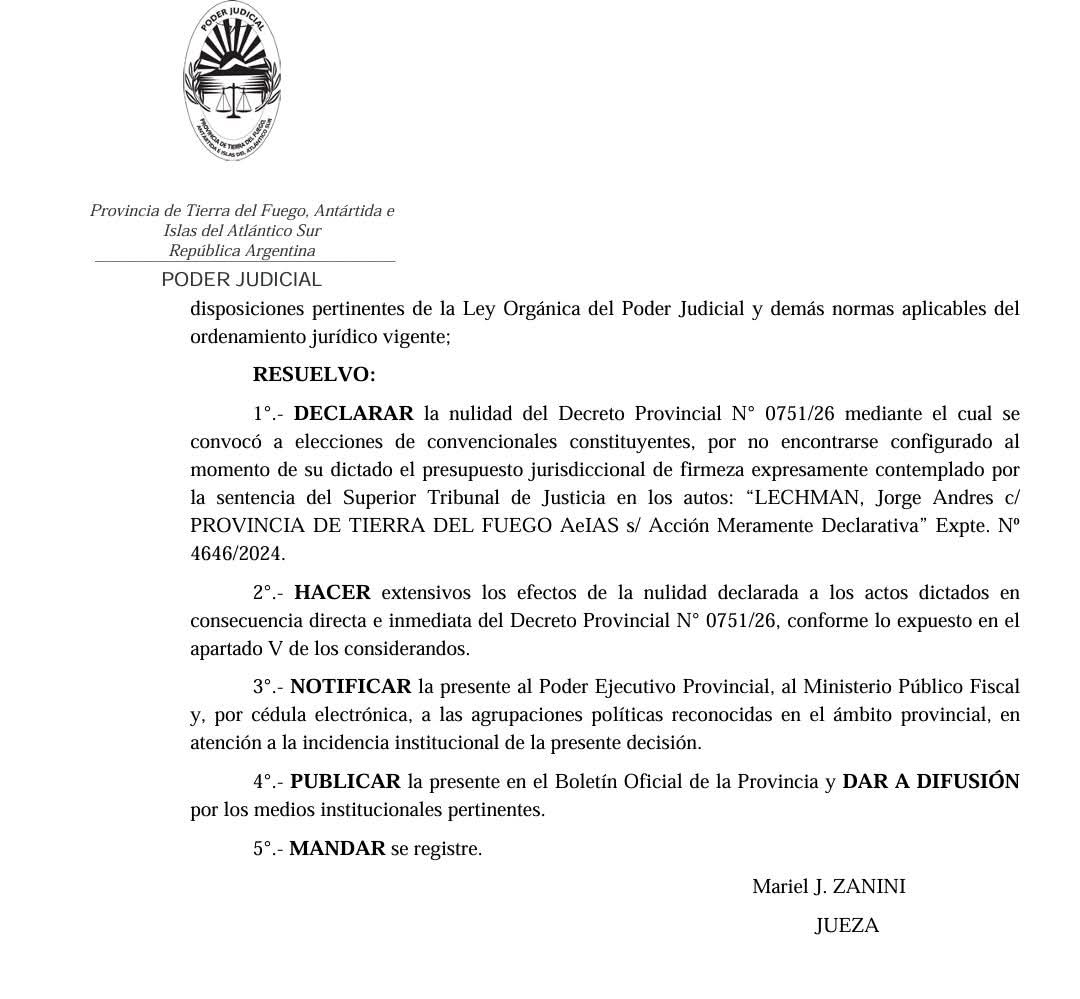
La decisión de la jueza Mariel Zanini no solo desactiva el proceso electoral, sino que expone la precariedad jurídica con la que se manejó la Casa de Gobierno en su afán por sostener el proyecto reformista.
Un decreto sin sustento legal
El eje central del fallo radica en que el Gobernador incumplió una condición jurídica previa y obligatoria fijada por el Superior Tribunal de Justicia (STJ). Según la resolución judicial, el Ejecutivo solo podía avanzar con la convocatoria una vez que la sentencia en la causa impulsada por Jorge Lechman quedara firme.
Zanini fue clara al distinguir entre una sentencia que se puede ejecutar y una que está firme:
- Existe un recurso de queja pendiente ante la Corte Suprema de Justicia de la Nación, por lo que la instancia federal sigue abierta.
- Al no haber firmeza, el requisito impuesto por el propio STJ para habilitar la convocatoria electoral "todavía no estaba cumplido" al momento de dictarse el decreto.
- El Juzgado Electoral tiene el deber de controlar la legalidad de estos actos para garantizar la transparencia y previsibilidad del sistema democrático.
La reacción de un gobernador debilitado
El fallo judicial se produce apenas días después de que Melella, tras el duro revés sufrido en la Legislatura el pasado viernes, anticipara una nueva judicialización del conflicto. El sábado 23 de mayo, el mandatario había calificado de "inconstitucional" la insistencia parlamentaria que derogó la Ley 1529, asegurando que frenar la reforma vulneraba "derechos políticos".
Sin embargo, la realidad jurídica ha desmoronado la narrativa oficial. Mientras Melella sostiene que el proceso ya había iniciado formalmente y que detenerlo desconoce "reglas básicas", la Justicia Electoral le recordó que las reglas de la seguridad jurídica exigen, antes que nada, respetar los fallos y los tiempos procesales.
El colapso del plan reeleccionista
Con la anulación del decreto, el Gobierno provincial queda en una situación de extrema debilidad política. Lo que el oficialismo impulsó durante más de dos años como su proyecto central, ha terminado en un triple candado:
1. Legislativo: Con una mayoría agravada de 11 votos que ratificó la abrogación (derogación) de la reforma.
2. Electoral: Con la nulidad del calendario y el llamado a elecciones.
3. Social: Con una ciudadanía que percibe la reforma como una prioridad ajena a la crisis de salud, educación y vivienda que asfixia a la isla.
El fallo de la jueza Zanini devuelve la mirada hacia lo importante: una provincia que necesita gestión real y no trajes constitucionales a medida. El 9 de agosto no habrá urnas; habrá, finalmente, un respiro institucional para una provincia agotada por los conflictos.
Tags
Otras noticias de Tierra del fuego
En el medio de la emergencia permanente, arribó el equipamiento chino para la nueva usina de Ushuaia
Tierra del Fuego se propone frenar el remate y la extranjerización de su territorio provincial
La soberanía también se enseña