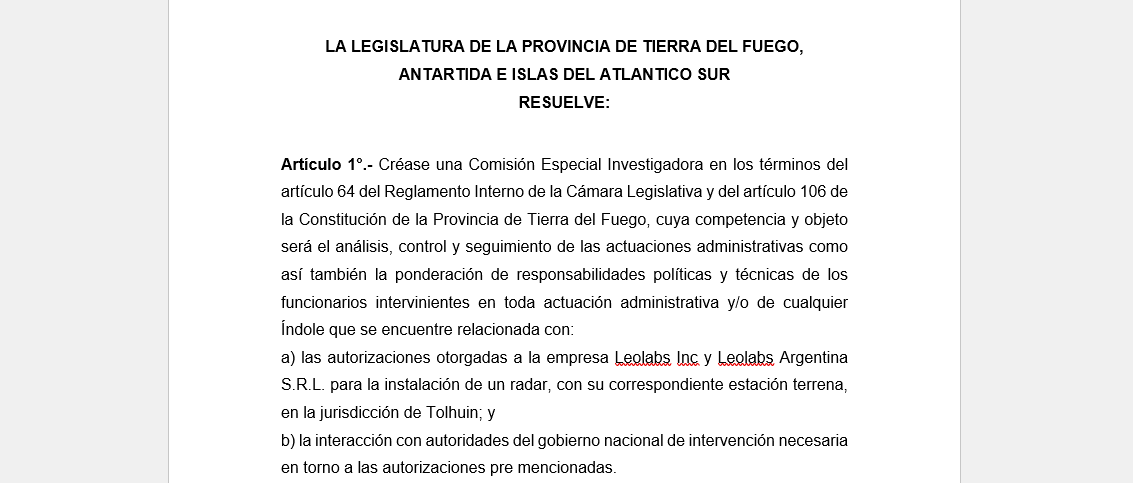
El escenario político de Tierra del Fuego ha cambiado. Lo que durante tres años fue un reclamo persistente de múltiples sectores de la sociedad fueguina, hoy se ha convertido en un proyecto de resolución formal impulsado por la fuerza moral de los combatientes de Malvinas. El legislador Pablo Villegas presentó ayer la iniciativa que busca crear una Comisión Especial Investigadora para desentrañar el entramado administrativo que permitió a la empresa LeoLabs instalar un radar con capacidad militar en el corazón de la isla.
La voz de los Veteranos como garantía de transparencia
El punto más disruptivo del proyecto, y que responde directamente a lo acordado en las recientes reuniones de la Comisión 7, es la conformación de este cuerpo investigador. El Artículo 3° del proyecto de resolución estipula que la comisión no solo estará integrada por un legislador de cada bloque, sino también por:
- Un integrante del Centro de Ex Combatientes de Ushuaia.
- Un integrante del Centro de Veteranos de Guerra de Río Grande.

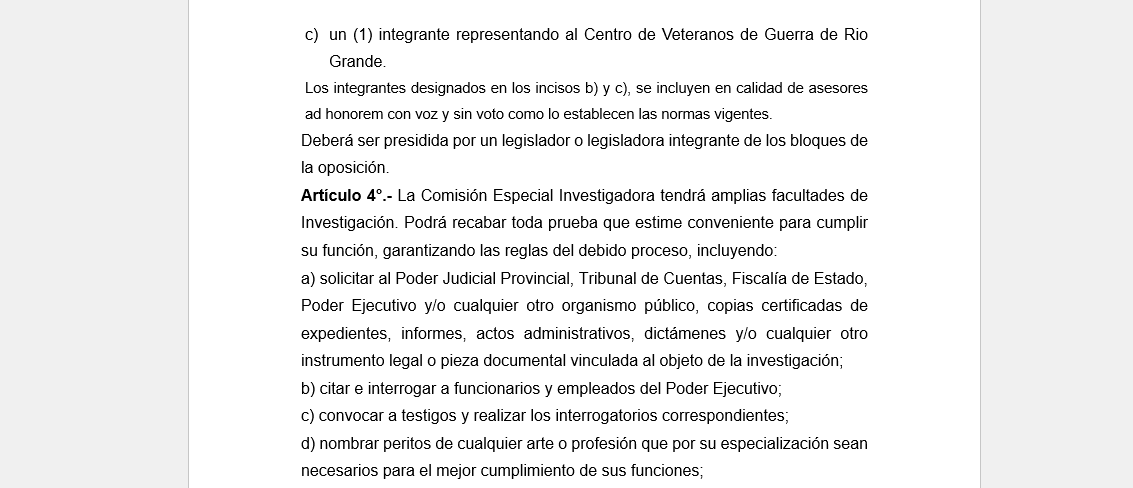
Si bien su participación técnica será en calidad de asesores ad honorem con voz, pero sin voto —conforme a la normativa vigente—, su presencia física y política en el proceso de investigación asegura que no habrá margen para el oscurantismo. Los veteranos pasan de ser observadores a ser actores directos en el control de las actuaciones administrativas de los funcionarios que intervinieron en las autorizaciones a LeoLabs Argentina S.R.L..
Un radar que sigue amenazando la soberanía
En los fundamentos del proyecto, Villegas es tajante: la situación no ha sido regularizada y el radar continúa emplazado en Tolhuin, generando una "incertidumbre que impacta directamente sobre la soberanía y la seguridad estratégica" de la provincia.
El documento resalta la gravedad de la tecnología dual del sensor, que a pesar de declararse para monitoreo de desechos espaciales, posee aptitudes para la detección y seguimiento de aeronaves y sistemas de defensa. Ante este peligro, la comisión tendrá amplias facultades para:
- Citar e interrogar a funcionarios y empleados del Poder Ejecutivo.
- Solicitar expedientes certificados a la Fiscalía de Estado y al Tribunal de Cuentas.
- Nombrar peritos especializados para determinar el alcance real de la tecnología instalada.
El fin de la impunidad política
El proyecto de Villegas recuerda que en 2024 un intento similar fue archivado sin éxito. Sin embargo, el contexto de 2026 es distinto: el acompañamiento unánime de los centros de combatientes de toda la provincia ha quebrado el blindaje oficialista.
La resolución establece que la Comisión deberá ser presidida por un legislador de la oposición y tendrá un plazo de 60 días para elevar un informe definitivo con las conclusiones sobre las responsabilidades políticas y técnicas de los funcionarios intervinientes.
Con la presentación de este proyecto, la Legislatura fueguina se enfrenta a una encrucijada histórica: o convalida la investigación que exigen los custodios de la soberanía, o ratifica ante la sociedad que prefiere proteger los intereses de una empresa de capitales británicos por encima de la seguridad nacional.
Tags
Otras noticias de Tierra del fuego
Designaron a los miembros de la Comisión que investigará la instalación del radar británico
La Justicia Electoral anuló las elecciones para reformar la Constitución fueguina
Si la intervención del puerto de Ushuaia persiste no habrá próxima temporada de cruceros