Mario Pacheco, veterano de la Guerra de Malvinas, relató con angustia contenida y en un testimonio estremecedor el asesinato del soldado Rito Portillo, perpetrado por el cabo segundo Gregorio Hermes Cabrera el 11 de mayo de 1982, en la contienda bélica en las islas.
Entrevistado por Gabriel Ramonet, conductor del programa “Periodismo” de Radio Provincia, en Tierra del Fuego; Pacheco, testigo directo del hecho que se investiga en la Causa 1777 del Juzgado Federal de Río Grande, describió con lujo de detalles el contexto de vejaciones y el instante en que su compañero fue acribillado. "A Portillo lo asesina el cabo Gregorio Hermes Cabrera, que era el cabo que estaba a cargo nuestro en Malvinas", afirmó de manera contundente.
El episodio, según el relato, no fue un hecho aislado sino la culminación de un hostigamiento sistemático que tenía su origen en una pelea previa en el continente. "Portillo había peleado con Cabrera aquí en el continente, cuando habían jugado al fútbol... y le había pegado Portillo, porque era bien morrudo, era agresivo Portillo".
Pacheco destacó la anomalía de que ambos hayan sido enviados a la misma posición: "Qué casualidad que un soldado que ha tenido problema en el continente con un cabo lo manden a la misma posición en una guerra".
La vida en las trincheras era ya de por sí inhumana. "Terminamos de cavar nuestro pozo y nuestras manos eran sangre. Sangre porque las ampollas te reventaban", recordó. Pero a esto se sumaba el maltrato constante del suboficial: "Llegaba el rancho... y ahí nosotros empezamos a notar que algo raro pasaba, porque le escupía la comida de Portillo y nos decía, 'ustedes van a morir como ratas, que son unos títeres', nos maltrataba de lo peor el tipo (Cabrera)".
La noche del 11 de mayo, durante una alerta rojo por bombardeo, ocurrió lo irreparable. "Portillo corre, antes que ha llegado a su posición, Cabrera lo agarra y le mete los 20 tiros del Fal. Le ha hecho pedazo el pecho, los 20 tiros".
El horror se apoderó de los jóvenes soldados. "Nosotros estábamos de guardia a una distancia y se escucha nada más que la ráfaga, tratatatá, de los tiros". La reacción del homicida fue de una frialdad absoluta. "Germán Navarro alumbra con la linterna y le dice, 'es Portillo señor'. Y el tipo como si nada, no estaba ni consternado, ni dolido, nada. Era como que estaba contento porque lo había matado".
La desesperación llevó a los soldados a agredir a su superior: "Lo hemos golpeado ese día a Cabrera... le hemos pegado un poco, porque imagínate que lo mate a tu compañero y él estaba como si nada. Estábamos locos nosotros". Pacheco sufrió una crisis de nervios que lo llevó a ser hospitalizado.
Daniel Guzmán, combatiente y periodista de Agenda Malvinas presente en la entrevista, contextualizó el hecho dentro de una práctica extendida: "Esto lo que narra es lo que uno vivía de manera permanente... En el medio de esas situaciones, de ese clima, en esa adversidad, con la violencia que se manejaban las Fuerzas Armadas Argentinas, en esas condiciones estábamos en Malvinas".
Guzmán añadió que "gran parte de los veteranos, mayoría de sus oficiales y suboficiales, no quieren hablar, porque dice cuando decimos estas cosas que le hacemos mal a la gesta de Malvinas", para luego aclarar que "estas cosas hay que separarlas de la gesta, porque la tortura, las vejaciones, los asesinatos, no son parte de la gesta, es la parte oscura".
Respecto a la causa judicial, señaló que "los hechos están totalmente probados, o sea, no es que dice ‘no, no se sabe si lo ha hecho o no’. No, los hechos están probados". La discusión legal radica en si son delitos de lesa humanidad y, por lo tanto, imprescriptibles.
Pacheco relató cómo, al regresar al continente, se intentó silenciar el crimen: "Se nos tomó declaración cuando volvimos al continente... La declaración mía era una cosa y me querían hacer firmar otra... Él decía, no, que había sido un accidente. No, no, no, no. Aquí para mí ha sido premeditada la muerte de Portillo".
Durante años, el miedo y las amenazas lo persiguieron. "Cuando salíamos de franco nosotros, la consigna era no hablar nada, si no, no salís más de franco... él, Cabrera, cuando nosotros hemos salido de franco, él fue a Santiago, yo lo vi en Santiago del Estero, él me juró que me iba a matar a mí" continuó con su estremecedor relato.
Todo el hostigamiento y el intento permanente de hacer desaparecer el tema recurrente del asesinato de Portillo, generó un efecto inverso. La Compañía en pleno fue tomando mayor conciencia del crimen perpetrado por Cabrera y del silencio que pretendía imponer la Jefatura del Batallón de Marina Nº 2 de la Armada Argentina.
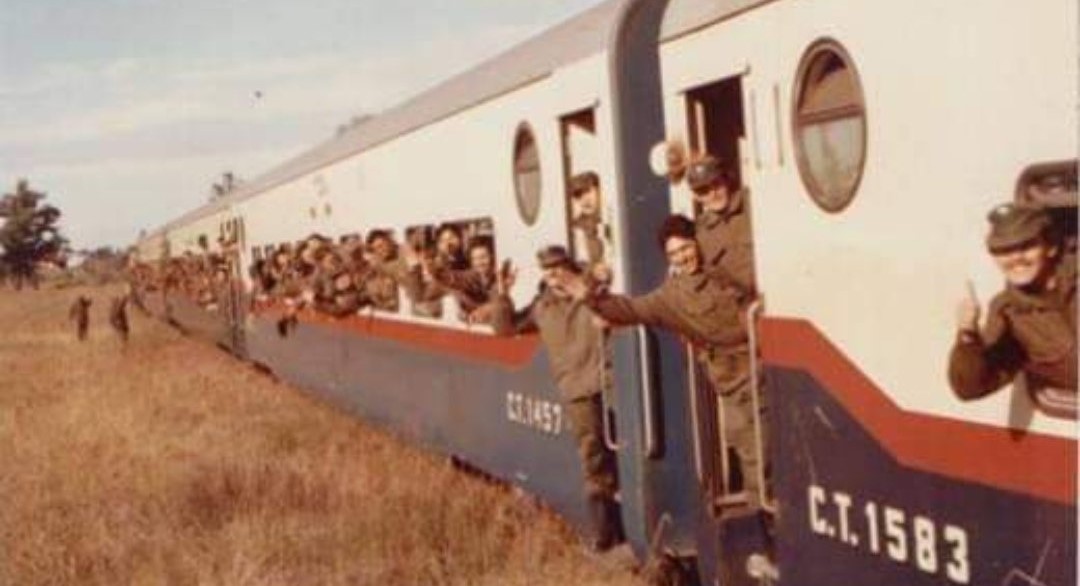
Ya arriba del tren que los llevaría desde la Base Naval Puerto Belgrano hasta Buenos Aires, como acto final del Servicio Militar Obligatorio, los soldados; desde las ventanillas comenzaron a cantar;
Este tren que está saliendo,
este tren no vuelve más,
porque en él va la primera,
rumbo a la civilidad.
Estuvimos en Malvinas y pudimos regresar,
Y hoy marchamos todos juntos, todos juntos a nuestro hogar.
La desgracia tuvo nombre,
y la vamos a vengar.
En el medio del desahogo colectivo los soldados fueron obligados a bajar del tren, reprendidos severamente y se les quitó los documentos. Durante las 20 horas del viaje y custodiados, recién en Buenos Aires les devolvieron el Documento Nacional de Identidad.
Cuatro décadas después, el reclamo de Pacheco es de "Justicia”. Pero, añadió, “hoy no lo tenemos a Rito, no tenemos a su mamá, a su papá, va a ser una justicia a media. Pero bueno, en definitiva, que pague el tipo que ha hecho esto, que pague. Si está vivo, que lo metan preso... Lo único que quiero es verdad y justicia. No quiero ni rédito, ni nada... yo no busco nada que no corresponda, que en este caso es justicia".
El testimonio de Mario Pacheco, cargado de emoción y angustia, es un intento por honrar la memoria de su compañero: "Yo por eso siempre cuento y trato de que la gente conozca de esto, porque de esa manera yo creo que Portillo recién va a descansar en paz".
Tags
Otras noticias de Tierra del fuego
Designaron a los miembros de la Comisión que investigará la instalación del radar británico
La Justicia Electoral anuló las elecciones para reformar la Constitución fueguina
Si la intervención del puerto de Ushuaia persiste no habrá próxima temporada de cruceros