
La reciente formalización de la intención de Argentina de integrarse al Tratado Integral y Progresista de Asociación Transpacífico (CPTPP) ha encendido las primeras alarmas en los círculos de la política exterior y la academia legal. Lo que el Gobierno presenta como un paso audaz hacia la "inserción inteligente" en los mercados globales más dinámicos, la redactora de Clarín, Natasha Niebieskikwiat, y el análisis del docente y especialista en derecho internacional, Juan Facundo Bessón, permiten vislumbrar el impacto real, las zonas oscuras y la sombra sobre la Cuestión Malvinas que proyecta el mega-acuerdo.
El Hecho Noticiable: El Giro Transpacífico de la Argentina
La semana pasada, en el marco de la Reunión Ministerial de la OCDE en París, el canciller Pablo Quirno entregó formalmente al ministro de Comercio de Nueva Zelanda Todd McClay la nota de intención para que la Argentina se adhiera al CPTPP, al Tratado Integral y Progresista de Asociación Transpacífico.
ARGENTINA FORMALIZÓ SU INTENCIÓN DE INTEGRARSE AL TRATADO INTEGRAL Y PROGRESISTA DE ASOCIACIÓN TRANSPACÍFICO (CPTPP).
— Pablo Quirno (@pabloquirno) June 3, 2026
Le entregué al Ministro de Comercio e Inversiones de Nueva Zelandia 🇳🇿, Todd McClay la nota de intención formal para integrarnos a uno de los acuerdos… pic.twitter.com/CQIAqCX6bh
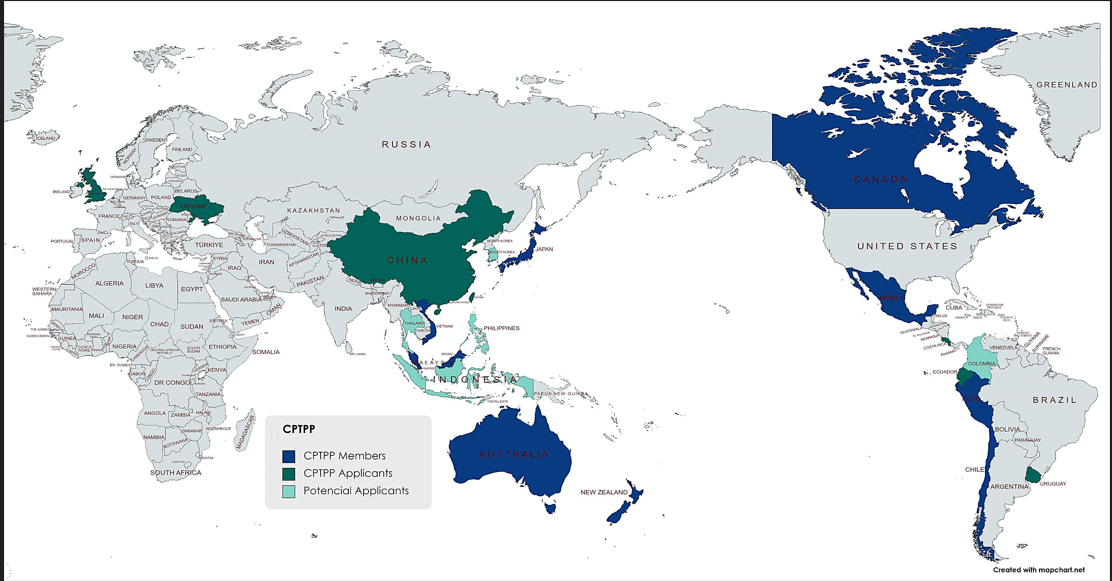
Este bloque reúne actualmente a 12 economías (América del Norte: Canadá y México. América del Sur: Chile y Perú. Europa: Reino Unido (formalizó su ingreso a fines de 2024). Asia: Japón, Malasia, Singapur, Vietnam y Brunéi. Oceanía: Australia y Nueva Zelanda). Representa el 15% del PBI mundial y un mercado de 595 millones de personas, consolidándose como una de las mayores zonas de libre comercio del planeta y una alternativa de diversificación frente a los giros arancelarios de las potencias tradicionales.
Sin embargo, el anuncio se ha procesado con el "estilo" de la actual gestión: un tuit, escasa deliberación pública y una profunda falta de explicaciones hacia el entramado empresarial y legislativo local.
Mañana a primera hora, la Argentina presentará su adhesión al Tratado Transpacífico, un acuerdo comercial integrado por 12 países que representan el 13% del PBI mundial, entre ellos Reino Unido, Nueva Zelanda, Australia y Singapur.
— Manuel Adorni (@madorni) June 2, 2026
Dios bendiga a la República Argentina.
Fin.
Las implicancias geopolíticas y la advertencia de Bessón
Para comprender la magnitud de lo que se está discutiendo, es necesario desarmar la ficción de que este es un mero "acuerdo de aranceles". Como advierte Juan Facundo Bessón, el CPTPP es una densa arquitectura jurídica transnacional que regula desde propiedad intelectual y empresas estatales hasta la resolución de controversias entre Estados y corporaciones.
Bessón utiliza categorías fundamentales de pensadores como Juan Carlos Puig y Marcelo Gullo para encuadrar la situación:
- Estados Sujetos vs. Estados Objetos: Los Estados fuertes (como Japón o el Reino Unido) diseñan las reglas del orden internacional para expandir sus intereses y asegurar la previsibilidad de sus inversiones.
- Inserción Periférica: Los países de desarrollo intermedio o dependientes, como la Argentina, corren el riesgo de ingresar a estos clubes bajo una "lex mercatoria" global ya cerrada, limitándose a un rol subordinado: el de meros proveedores de materias primas estratégicas (alimentos, energía, litio, cobre) sin capacidad real de incidir en las normas.
En este tablero, la decisión argentina de alinearse con estándares regulatorios occidentales responde al pragmatismo económico del gobierno de Javier Milei. Sin embargo, se ejecuta en un momento de altísima fricción en la transición hegemónica global, donde la pulseada entre Occidente y el bloque de los BRICS obliga a los países periféricos a actuar con extrema cautela para no cambiar una forma de dependencia por otra.
La Paradoja de Malvinas: Compartir mesa con el okupa
El núcleo más sensible y polémico del ingreso al CPTPP es, sin dudas, el factor Reino Unido. Londres se incorporó formalmente al tratado el 15 de diciembre de 2024 como parte de su estrategia global pos-Brexit.
Esto genera un escenario inédito desde la guerra de 1982: Argentina y el Reino Unido integrarían por primera vez una misma organización de alta confianza económica.
Las implicancias de este hecho son críticas en tres niveles:
1. El Rol de Evaluador del Reino Unido
El proceso de adhesión al CPTPP no es automático; requiere que la Comisión del bloque apruebe el inicio de las negociaciones de acceso. Al ser el Reino Unido un miembro pleno, la potencia que ocupa ilegalmente las Islas Malvinas tendrá voz, voto y capacidad de condicionar el ingreso institucional de la Argentina. Una situación que roza la genuflexión diplomática si el país no establece condiciones firmes de antemano.
2. El Vacío de las Reservas Jurídicas
Expertos consultados por Clarín advierten que el CPTPP no admite reservas en sentido estricto bajo los términos de la Convención de Viena. Si bien la adhesión británica actual no incluye explícitamente a las Islas Malvinas (Falklands) bajo el tratado —mencionando a territorios como Gibraltar, Guernsey o Jersey—, existe un artículo que permite la extensión futura a otros territorios de ultramar bajo consenso de las partes. Para salvaguardar el reclamo de soberanía nacional, la Cancillería argentina está obligada a presentar declaraciones interpretativas y anexos blindados. Hasta el momento, el Palacio San Martín mantiene un hermetismo absoluto sobre cómo abordará este frente.
3. El Factor Petrolero (2028)
La urgencia geopolítica no es menor: empresas como Navitas (Israel) y Rockhopper (Reino Unido) planean comenzar la extracción de petróleo en la cuenca de Malvinas para el año 2028. La entrada de capitales británicos, canadienses u otras firmas del bloque transpacífico en esta explotación ilegal podría cambiar drásticamente los intereses de los países miembros del CPTPP, debilitando la posición diplomática argentina si el país se suma al tratado sin una doctrina de defensa de sus recursos naturales.
El Interrogante Institucional: ¿Autorizará el Congreso?
Tanto la crónica periodística como el análisis académico confluyen en una pregunta institucional clave: ¿Pasará este acuerdo por el Congreso de la Nación?
La Constitución Nacional es taxativa: la aprobación de tratados internacionales y la fijación de la política comercial exterior son facultades del Poder Legislativo. Natasha Niebieskikwiat recuerda que ni la Secretaría de Relaciones Económicas Internacionales (Fernando Brun) ni la Consejería Legal de la Cancillería han informado si la adhesión ha cumplido con los pasos institucionales internos.
A diferencia de gestiones anteriores (como la de Mauricio Macri o los primeros movimientos de la propia ex canciller Diana Mondino, quienes acudían al Congreso y a las cámaras empresariales a explicar las metas comerciales), los movimientos actuales de la Jefatura de Gabinete y el Ministerio de Economía se manejan bajo un estricto "rigor administrativo" y de espaldas al debate parlamentario.
La advertencia final de Bessón resuena con fuerza ante el hecho revelado por Clarín: el problema no radica en comerciar con el mundo, sino en hacerlo desprovistos de una doctrina nacional, sin reservas explícitas sobre el Atlántico Sur y atomizados del resto de la región.
Mientras el Reino Unido despliega una diplomacia de baja intensidad para que los vecinos sudamericanos (Brasil, Uruguay, Chile) naturalicen su presencia colonial y militar en Mount Pleasant a través de lazos logísticos y científicos, la Argentina no puede darse el lujo de la inacción o del mero "entusiasmo administrativo".
Si el acuerdo transpacífico se realiza entregando la soberanía en cuotas y sin el aval del Congreso, o peor aún, con su aprobación; la prometida modernización económica corre el riesgo de transformarse en una forma elegante de subordinación internacional. En especial hacia el Reino Unido.
Fuentes:
Tags
Otras noticias de Internacionales
La Inteligencia chilena prevé un "evento crítico" con Argentina por el zarpe del buque a Malvinas
Rockhopper creó una nueva empresa con la que adquirió el 35% del buque OSX-1 por USD 44 millones
Radiografía del gasto militar chileno: Asignan U$S 2.885 millones para 2027 sin tocar fondos reservados de rearme


