La guerra de 1982 cristalizó ante el mundo la disputa de soberanía entre Argentina y el Reino Unido por las Islas Malvinas. Sin embargo, el núcleo del reclamo argentino se funda en un legado histórico y jurídico que se remonta a los primeros años de la vida independiente.
En este contexto, una carta manuscrita por el general José de San Martín adquiere una relevancia capital, al constituir una evidencia documental e inobjetable del conocimiento y la administración del archipiélago por parte de las autoridades de las Provincias Unidas del Río de la Plata.
El documento, fechado en Mendoza el 14 de agosto de 1816, apenas cuarenta días después de la Declaración de la Independencia, fue dirigido al coronel Antonio Beruti. En él, San Martín, inmerso en la titánica preparación del Ejército de los Andes, solicita que se remitan a la capital "todos los de alta clase que se hallen presos... sentenciados a los presidios de Patagones, Malvinas u otros".
Este pedido específico, con la clara intención de incorporar a estos hombres a la campaña libertadora para "hacer útiles al Estado", demuestra que las Malvinas eran consideradas un territorio claramente bajo jurisdicción patriota, utilizado como lugar de detención y, por lo tanto, integrado a la estructura administrativa incipiente.
Este manuscrito es una pieza fundamental que se integra al sólido andamiaje del reclamo argentino, basado en el principio del uti possidetis juris de 1810, por el cual las nuevas naciones heredaban los límites territoriales de los antiguos virreinatos españoles.
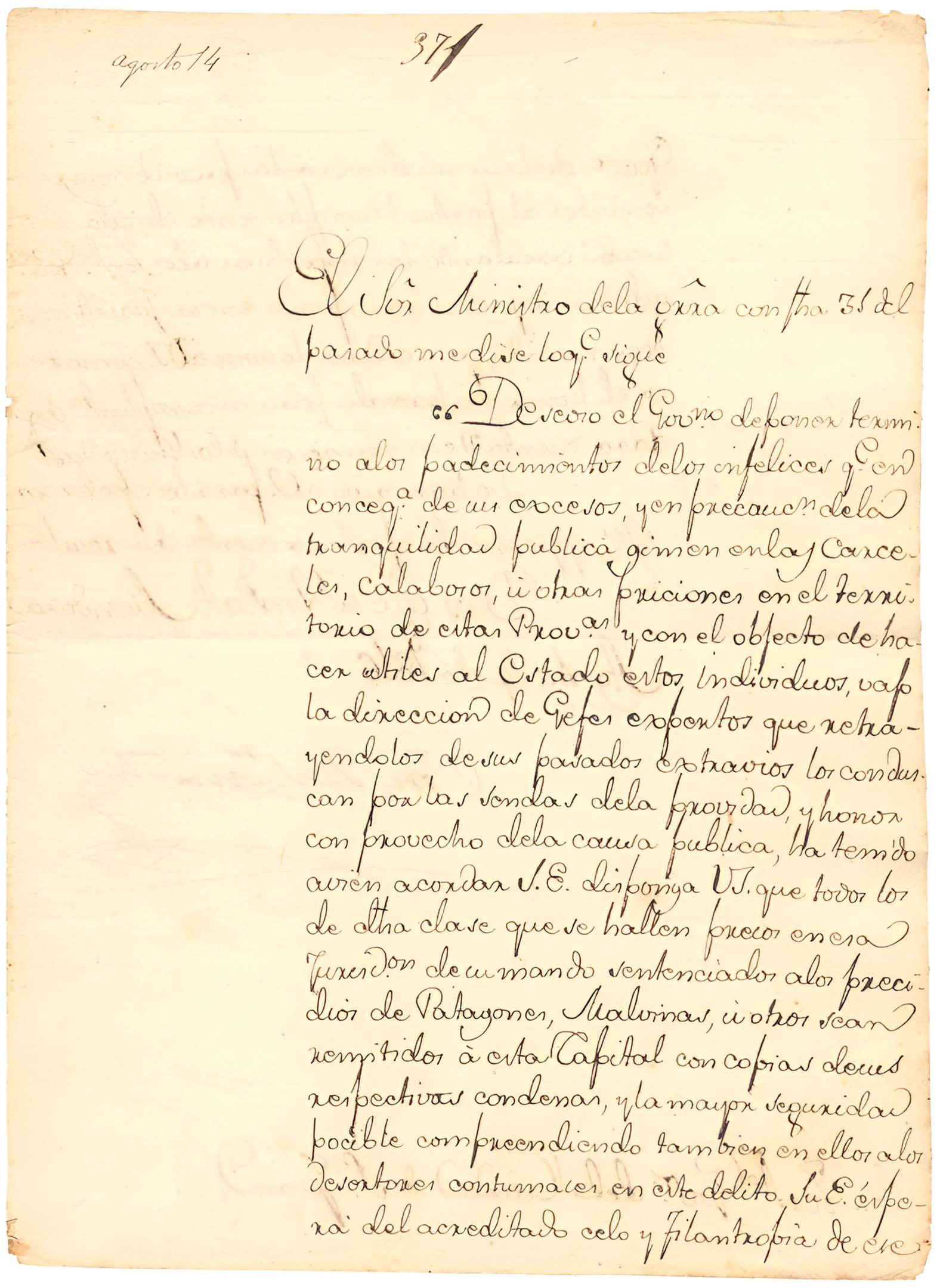
La mención expresa de San Martín no es casual; refuerza la continuidad del ejercicio de soberanía sobre las islas y desmiente cualquier teoría que pretenda negar su pertenencia al espacio geográfico y político heredado de España.

La carta, adquirida en una subasta en Londres en 1988 por el cuerpo diplomático argentino y donada al Ministerio de Relaciones Exteriores, donde se conserva el original, trasciende su valor anecdótico. Se erige como un testimonio material de que, desde los albores de la Nación, las Malvinas fueron parte indisoluble del proyecto patrio, un conocimiento que el propio Libertador llevaba consigo mientras gestaba la campaña que cambiaría el destino de Sudamérica.
Tags
Otras noticias de Nacionales
Legisladores y organizaciones coinciden en la responsabilidad Melella en no desarmar el radar británico
Taiana volvió a responsabilizar a Melella por la presencia del radar británico en Tierra del Fuego
La Nación explica cómo la “Ley de Soberanía” de Milei avanza sobre la libertad de prensa y los consensos democráticos