En un escenario que evoca las épocas más oscuras de la Doctrina de Seguridad Nacional, el presidente Javier Milei participó ayer en Miami de la cumbre “Shield of the Americas” (Escudo de las Américas). Convocada por Donald Trump, la cita no fue un foro diplomático tradicional, sino el acta de nacimiento de una coalición militar regional diseñada por y para los intereses de la Casa Blanca.
El Narcotráfico como Caballo de Troya
El eje discursivo de la alianza es la erradicación de los cárteles mediante el uso de “fuerza militar letal”. Sin embargo, detrás de la retórica contra el crimen organizado, se esconde la verdadera ingeniería geopolítica de Trump: la criminalización de las naciones sudamericanas —productoras de la materia prima que demanda el mayor mercado de consumo del mundo, EE. UU.— para justificar la intromisión en sus fuerzas armadas.
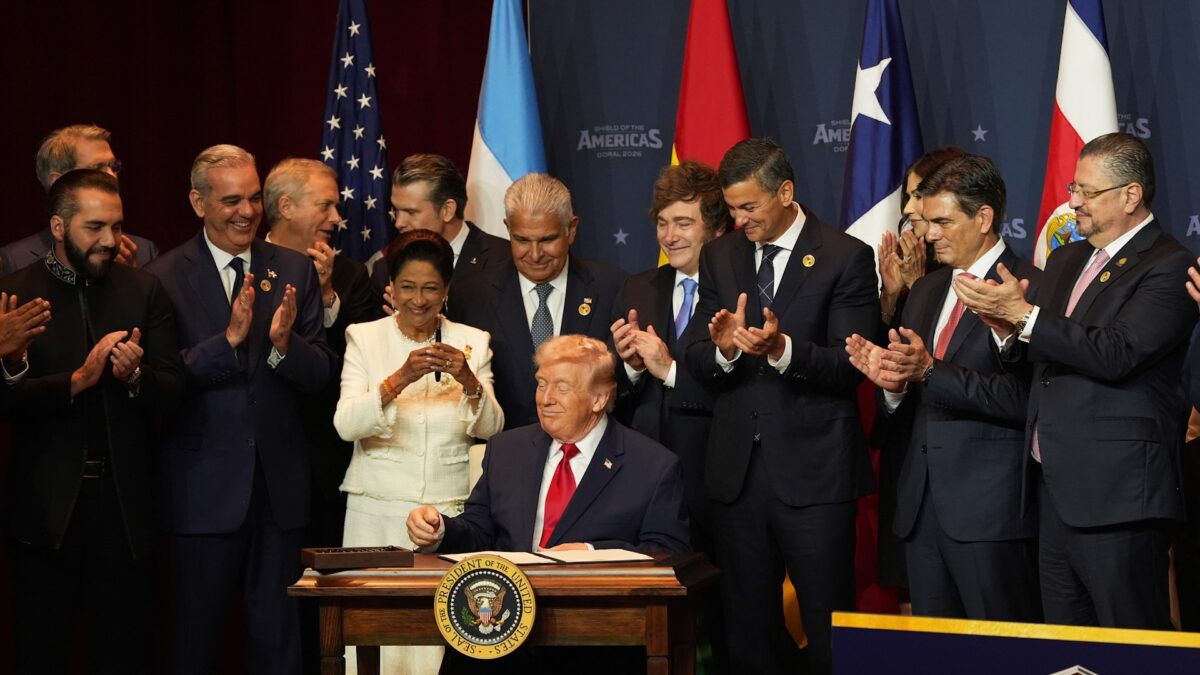
Para Argentina, esta "ayuda" no es gratuita. El pacto busca desplazar definitivamente la influencia de China en la región y asegurar el acceso preferencial de las corporaciones estadounidenses a recursos críticos: litio, petróleo y alimentos.
El Peligro en el Atlántico Sur y la Antártida
Este alineamiento irrestricto de la administración de Milei —quien fue el único líder regional en apoyar oficialmente los ataques de EE. UU. contra Irán— tiene consecuencias directas sobre nuestra soberanía austral:
- Control del Comando Sur: La integración en esta alianza militar facilita el direccionamiento de las Fuerzas Armadas argentinas bajo estándares del Pentágono, perdiendo autonomía en la toma de decisiones estratégicas.
- Logística Antártica: El interés declarado de EEUU. por el control de rutas comerciales y seguridad regional pone en la mira la proyección argentina hacia la Antártida. La presencia militar extranjera bajo el paraguas del "Escudo" amenaza con convertir a Ushuaia y las bases australes en nodos logísticos subordinados a Washington.
- La Cuestión Malvinas: En un mundo donde Milei se "agacha" —en palabras de analistas críticos— ante el poder norteamericano, la histórica reivindicación por las Islas Malvinas queda desdibujada. EEUU., principal aliado de Gran Bretaña en la OTAN, difícilmente apoyará una soberanía argentina real si ésta no se ajusta a sus planes de control oceánico.
Un Bloque Fracturado
La cumbre dejó en claro la grieta ideológica en el continente. Mientras Milei, Nayib Bukele (El Salvador) y Santiago Peña (Paraguay) celebran su pertenencia al "Board of Peace", potencias regionales como Brasil (Lula), México (Sheinbaum) y Colombia (Petro) fueron excluidas o decidieron no participar, rechazando una estrategia que revive la lógica de la "Guerra Fría" en suelo latinoamericano.
"Líderes de esta región permitieron que grandes extensiones de territorio quedaran sin supervisión directa... No vamos a permitir que eso ocurra", sentenció Trump en Miami.
Esta frase es una confesión de parte: para el líder republicano, la soberanía territorial de los países del sur es "falta de supervisión" que EEUU. debe corregir.
El Regreso del Virreinato
La participación de Milei en el "Escudo de las Américas" marca un punto de no retorno en la política exterior argentina. Al aceptar el uso de fuerza letal y la intervención extranjera bajo la excusa del narcotráfico, el gobierno nacional no solo desatiende las causas estructurales del consumo de drogas en el norte, sino que entrega las llaves del Atlántico Sur a una potencia que históricamente ha visto a Sudamérica como su "patio trasero".
Tags
Otras noticias de Internacionales
Documentos oficiales de los EE.UU. ratifican el rol militar de los radares de LeoLabs
EEUU amenaza a Gran Bretaña con quitarle el apoyo por las Islas Malvinas
En Chile, el Nimitz realizó ejercicios de combate aéreo y recibió la visita del presidente Kast