El 85% de la pesca a distancia la realizan 5 Estados: China, España, Taiwán, Corea del Sur y Japón, quienes ocupan 25 millones de horas de pesca del total mundial de 37 millones horas; por el cual, es altamente probable que el mayor daño no lo ocasionen los 216 Estados restantes, si no estos cinco países, que operan -salvo Japón en los últimos años- tanto en el Océano Pacifico como en el Atlántico Sur y, por lo tanto, los esfuerzos por mejorar la administración y el cuidado de los recursos en la Zona Económica Exclusiva (ZEE) y los migratorios en alta mar, tendrán pobres resultados sino se trabaja sobre esos cinco Estados responsables de la PESCA ILEGAL y del desequilibrio de los ecosistemas, ya que juntos capturan unos 30 millones de toneladas del total 92 millones/año, es decir, el 33% del total de las capturas sobre «221 Estados y territorios que notificaron algún tipo de actividad en el comercio pesquero» (FAO, “Estado Mundial de la Pesca y la Acuicultura”, p: 18, 2020). En el Atlántico Suroccidental hay que agregar las licencias ilegales que otorga el Reino Unido de Gran Bretaña en Malvinas donde buques extranjeros extraen unas 250.000 toneladas anuales de recursos pesqueros. La Unión Europea se apresta a reducir las capturas en aguas comunitarias y a acrecentar la pesca fuera de su jurisdicción, lo que hace suponer que la situación habrá de empeorar.
La pesca es un recurso esencial para permitir el desarrollo de los pueblos que, dentro de sus actividades, tienen en la pesca un elemento de generación de empleo, alimentación, sustento de las empresas y desarrollo regional; por lo cual, los gobiernos de Latinoamérica y El Caribe debieran unirse para llevar adelante una política común destinada a erradicar la PESCA ILEGAL.
Se entiende por PESCA ILEGAL, a aquella en que se capturan especies pesqueras, sin cumplir, total o parcialmente, con la regulación internacional, nacional y/o de origen y/o sin control oficial o independiente habilitado y/o si se captura sin control del Estado de pabellón o con buques que, no obstante utilizar pabellones de terceros están sujetos a las regulaciones de sus países de origen y/o en espacios marítimos donde no se ha determinado previamente la captura máxima sostenible y/o dañando intereses de terceros Estados por realizar las operaciones pesqueras sin acuerdo previo con los Estados ribereños sobre aquellas especies que interaccionan o están asociadas o son migratorias originarias de las ZEE o migran desde alta mar a la ZEE; o, cuando la pesca se realiza en territorios de terceros Estados invadidos (caso Malvinas) y/o en disputa o, donde se realiza todo acto, de cualquier naturaleza, que atente contra la sostenibilidad de las especies pesqueras y/o contaminen el medio ambiente y/o amenacen la seguridad alimentaria y/o las fuentes de trabajo y/o la economía de los Estados; beneficiando al crimen organizado transnacional y/o realizando evasión fiscal por falta de pago de impuestos, derechos de captura o de importación o exportación y/o no declaren las mercaderías que importen o exporten evadiendo los impuestos aduaneros y/o con sus actos afecten la reputación de los países o comunidades a las que pertenecen, contribuyendo a quebrar las normativas legales que aseguran las buenas prácticas de pesca acordadas en las Convenciones Internacionales y de las Comunidades para asegurar explotaciones empresarias sustentables, biológicamente sostenibles y comercialmente equitativas.
Más allá del tecnicismo de Pesca INDNR, no hay faltas leves frente a la PESCA ILEGAL, ya que, la depredación de los recursos pesqueros y la contaminación del medio marino son hechos graves que atentan contra el ecosistema y la disponibilidad de proteínas de la humanidad. Por ejemplo, no declarar una captura al desembarque podría considerarse una mera infracción; sin embargo, cuando la pesca está cuotificada este comportamiento lleva a la sobre-explotación o la falta de disponibilidad del recurso de otras empresas que tiene igualmente un cupo otorgado. Y entre otros cientos de ejemplos, también podríamos tipificar de PESCA ILEGAL cuando se captura, sin determinar previamente las “Capturas Máximas Permisibles”, cualquiera fuese el ámbito; etc. la mayoría de las veces mediante “pesca olímpica”.
La producción pesquera mundial ha alcanzado los 223 millones de toneladas, de los cuales, 92 millones son recursos de la pesca marítima y 131 millones de toneladas proceden de la Acuicultura o Maricultura. Sin embargo, entre 16 y 24 millones de toneladas provienen de la pesca ilegal y, ello, representa de 36 a 54 mil millones de dólares (FAO, 2016, p 05-06) en favor de los países que pescan a distancia, quienes se apropian de los recursos pesqueros de las ZEE de los Estados ribereños o, en alta mar, cuando capturan los recursos migratorios originarios de las ZEE y/o asociados éstas; ello, sin tener en cuenta los descartes que se producen por la pesca con bajo o ningún control presencial, que los expertos y organismos especializados como la FAO estiman en un 30%, lo que aumenta las pérdidas a casi 28 millones de toneladas anuales.
Deberíamos también ponderar a las empresas de capital extranjero autorizadas a pescar en las ZEE de los países hacen transbordos con embarcaciones generalmente de la misma nacionalidad que operan ilegalmente en alta mar.
Por cierto, los Estados ribereños de Latinoamérica y El Caribe son afectados por la pesca ilegal subsidiada de los buques que pescan a distancia en el Océano Pacífico y Atlántico, violando todas las normas internacionales (Convención de las Naciones Unidas sobre el Derecho del Mar; Resoluciones de las Naciones Unidas (ONU); Resoluciones de la Organización Mundial de Comercio (OMC); El Programa 21 de la Conferencia de las Naciones Unidas sobre el Medio Ambiente y el Desarrollo (Brasil, 1992); El Código de Conducta para la Pesca Responsable aprobado en la Conferencia de la FAO del 28º período de sesiones del 31/10/1995; El Plan de Acción Internacional (PAI) para prevenir, desalentar y eliminar la pesca ilegal de las Naciones Unidas para la FAO, 2001; el Codex Alimentarius FAO-WHO; las normas de la Organización Mundial de la Salud (OMS); las Resoluciones de la Organización Marítima Internacional (OMI); el Acuerdo de la ONU relativo a la Conservación y Ordenación de las Poblaciones de Peces Transzonales y las Poblaciones de Peces Altamente Migratorios (Nueva York); los Pactos Internacionales de Derechos Económicos, Sociales y Culturales y Civiles y Políticos; las leyes de Pesca y Medio Ambientales de los Estados ribereños de Latinoamérica y El Caribe; los Reglamentos del Consejo de la Unión Europea en materia pesquera, aduanera, impositiva, de origen, de defensa del consumidor, sanitaria, etc.
 A ello se agregan los informes de la FAO que indican que en el Área 31 (Atlántico occidental central) el 37% de las poblaciones pesqueras son biológicamente insostenibles; en el Área 41 (Atlántico Suroeste) el 40%; en Área 77 (Pacífico Oriental central) el 14,3% y, en el Área 87 (Pacífico Sureste) el 66,7% (Percentages of Biologically sustainable and unsustainable fishery stocks by FAO Mayor Fishing Área, 2019), lo que agrava la PESCA ILEGAL, cuyos principales responsables son los Estados mencionados.
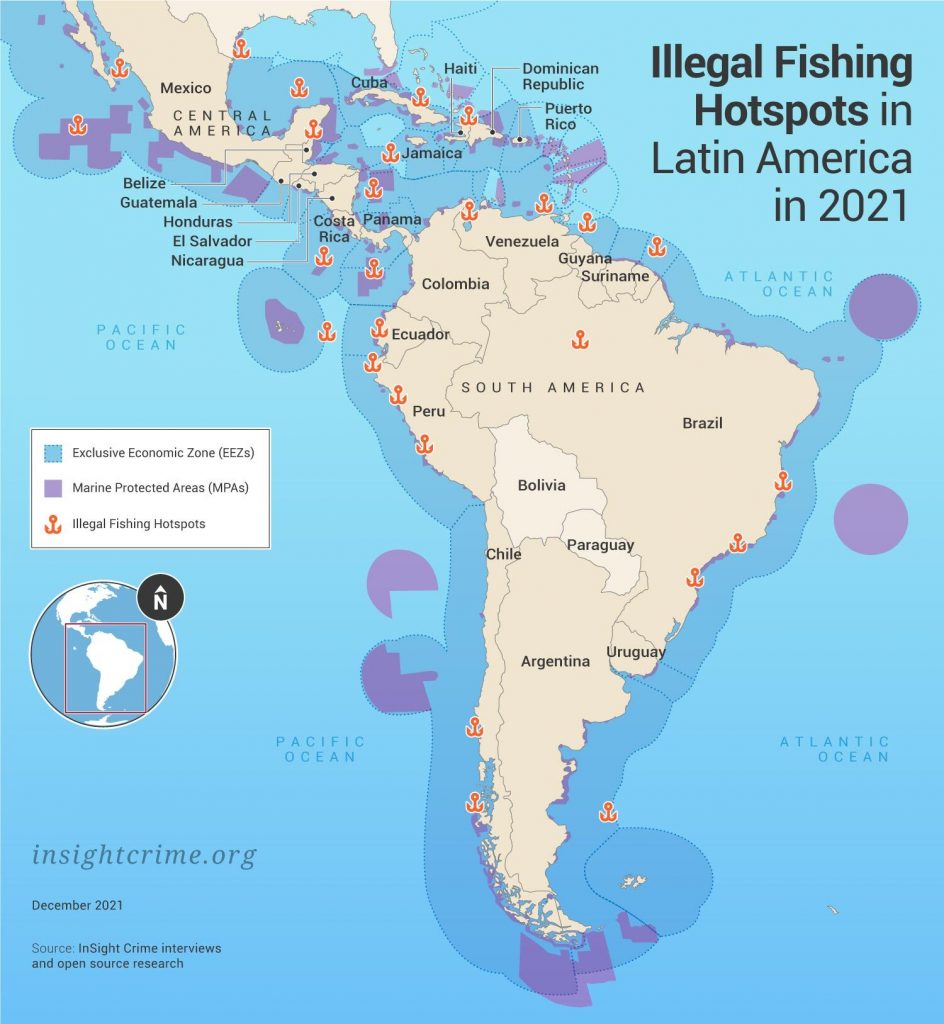
En este escenario, las distintas Convenciones, Acuerdos, Códigos y Planes aprobados por los Estados y los Organismos multilaterales con el objeto de erradicar o minimizar los efectos negativos de la PESCA ILEGAL han resultado insuficientes e ineficaces y, después de más de 30 años de aprobados, esta actividad ilegal persiste y crece, atentando contra la soberanía de los Estados, la sostenibilidad de las especies y la sustentabilidad de los pueblos menos desarrollados, su economía, trabajo, alimentación y ambiente. Tampoco, han resuelto la PESCA ILEGAL en las áreas en disputa de soberanía, atentando contra la seguridad en las áreas en conflicto, el ordenamiento pesquero regional y el ecosistema.
Además de ello, los citados institutos nacionales e internacionales relativos al mar y a la pesca, no han definido con precisión la terminología utilizada de “pesca ilegal”, “altamente migratorios”, “migratorios”, “transzonales”, “asociadas”, “transfronterizas”, “poblaciones”, etc., a partir de lo cual, resulta imposible establecer marcos normativos destinados a ordenar y conservar los recursos y establecer los derechos y obligaciones de los Estados; entendiendo, que previo a los acuerdos respecto a la limitación de los espacios, derechos y obligaciones, debería establecerse el “qué”, para finalmente abordar el “cómo” y “quiénes”.
Observamos, que mientras las obligaciones son laxas en alta mar, hay mayores exigencias en las ZEE, pese a que el ecosistema es uno e indivisible y, por lo tanto, la depredación pesquera o la contaminación marina en alta mar afecta a la ZEE y viceversa, razón por la que entendemos necesario armonizar las obligaciones relativas a la investigación, conservación y distribución integral y conjunta de los recursos en ambas zonas.
Analizamos también, que el Anexo I de la Convención de las Naciones Unidas sobre el Derecho del Mar indica solo una reducida cantidad de especies “altamente migratorias”, dejando sin tipificar en esta categoría, a cientos de especies y, con ello, resulta muy difícil llevar adelante Acuerdos sobre la captura de especies migratorias originarias de la ZEE a alta mar y de esta a la ZEE. Cuestión, que el informe de la FAO (4. La conservación y ordenación de poblaciones de peces altamente migratorias y transzonales) ya refería; al igual que los biólogos Hilborn y Sibert (1988, p. 36; FAO, 1994).
Adherimos, a la opinión de Hernán Salinas Burgos (Chile): «La jurisdicción es una expresión de la soberanía del Estado», por lo tanto, carece de todo rigor biológico y jurídico que el Estado ribereño pierda “el dominio” de sus especies originarias de la ZEE en alta mar, por solo transponer la línea imaginaria de las 200 millas.
Por otra parte, no puede considerarse “paso inocente” al transporte de recursos pesqueros considerados producto de la PESCA ILEGAL, por cuanto se han capturado sin Acuerdos con los Estados ribereños y/o se han capturado sin controles a bordo de los Estados de pabellón y, por lo tanto, debe entenderse que no está garantizada la sostenibilidad y/o puede haberse realizado depredación y descarte y/o no se disponen de registros y/o se carece del origen y la trazabilidad certificada. Del mismo modo, parece poco probable, que el auto control resuelva la pesca ilegal, como no lo ha resuelto hasta la fecha.
Unos 10 mil barcos chinos superan su jurisdicción y pescan subsidiados a distancia en alta mar junto a otros 60 mil buques de unos 24 países, entre ellos, Japón, Corea; Taiwán, España. También el Reino Unido asociado a este último país en Malvinas y, se apresta a reducir las capturas en aguas comunitarias por exigencia de la Unión Europea, lo que hace suponer que la situación empeoraría.
Entendemos, a su vez, que no son suficientes las sanciones administrativas para desalentar la PESCA ILEGAL y, que es necesario aplicar sanciones penales a quienes realizan esta práctica e implementar metodologías desburocratizadas que permitan la aplicación de sistemas ágiles y efectivos.
Evaluamos también, que la PESCA ILEGAL encuentra fundamento en la evasión fiscal, ya que pescar sin control ni acuerdos, facilita.
Consideramos, que el descarte al mar de las especies capturadas en forma incidental o con motivo de su bajo valor comercial es una práctica depredadora que atenta contra la sostenibilidad de las especies y las necesidades proteicas de las naciones, en particular, las menos desarrolladas; habiendo ello quedado de manifiesto con la prohibición de esta práctica en la Unión Europea desde 2004 e implementando desde 2019 y, en la Argentina desde 1998, al igual que en otros Estados, pese a lo cual, debido a los controles insuficientes en las ZEE e inexistentes en la pesca en alta mar los resultados son exiguos.
Valoramos el Informe III de Reglamentación de la FAO de la pesca de especies migratorias en alta mar, fuera de la jurisdicción nacional, donde se indica que «de acuerdo con el derecho internacional, un Estado puede condicionar el acceso a la pesca dentro de su jurisdicción exclusiva y, fuera de ésta, tomar determinadas medidas cuando se realicen actos que puedan influir en su zona de jurisdicción»; es decir, que tanto el Estado ribereño, como el Estado de pabellón, estarían obligados a acordar.
Verificamos, que frente a acciones de PESCA ILEGAL por parte de buques pesqueros de Estados de pabellón, resulta insuficiente que los Estados ribereños vigilen hasta el límite exterior de las ZEE para evitar el ingreso de las flotas extranjeras que pescan ilegalmente (sin control y sin acuerdo), ya que la pesca de recursos migratorios en alta mar originarios de la ZEE afecta al conjunto de los recursos del ecosistema, provocando daños biológicos, sociales y económicos que afectan a los Estados ribereños menos desarrollados, con más necesidades nutricionales y con altos índices de pobreza y desempleo. Una conducta dolosa que causa un grave daño al ambiente y afecta la sostenibilidad de los recursos pesqueros.
Reconocemos también que la PESCA ILEGAL es un delito ambiental y que, para que haya imputabilidad «los requisitos básicos son conocimiento y voluntad» (María Pazmiño; Ecuador); implica «la capacidad de conocer el alcance de los actos que realiza y, la posibilidad de acomodar su conducta a las exigencias del ordenamiento jurídico» (Allan Arburola Valverde; Costa Rica) y «la capacidad de conocer la ilicitud del obrar y de poder actuar conforme a tal conocimiento…» (Juan Bustos Ramírez; Chile) y que los peces, crustáceos y moluscos son parte del ambiente, forman parte del ecosistema y, su explotación no sostenible; depredadora; de descarte; etc., en suma, la PESCA ILEGAL, rompe el equilibrio biológico y compromete los derechos de la tercera generación.
Entendemos, que frente al aumento de la población y las necesidades crecientes de proteínas; a la modificación de las políticas por parte de los Estados de pabellón para hacerse de los recursos naturales; la creciente desigualdad entre las grandes potencias y los Estados en desarrollo; los cambios en las economías de las empresas pesqueras, los mercados y los avances tecnológicos, etc. es necesario perfeccionar las herramientas disponibles, para que sirvan con una mayor eficiencia y eficacia a la protección integral de los recursos, tanto en las ZEE como en alta mar y, una explotación con mayor equidad entre los Estados.
Hemos analizado, por su parte, toda la legislación de Latinoamérica y El Caribe referida a la PESCA ILEGAL, donde apreciamos –más allá de perfeccionar algunas normas- la voluntad de los Estados de proteger los derechos preferentes de los Estados ribereños, en especial en materia de protección de los recursos migratorios, como es el caso del Estado Bolivariano de Venezuela, que refiere a “propender a armonizar, en su ordenamiento jurídico, los criterios con los países de la región, en particular en lo referido al manejo de los organismos altamente migratorios y los recursos hidrobiológicos que se encuentren tanto en los espacios acuáticos bajo su soberanía o jurisdicción, como en las áreas adyacentes a ella”.
Tenemos presente también que la PESCA ILEGAL debe considerarse contaminante y, esta contaminación debe presumirse intencional y grave, ya que los volúmenes de captura ilegal son muy importantes, a lo que se suman los descartes, incluso los descartes de los productos desembarcados; a lo que hay que sumar lo sostenido por la FAO (“El Estado Mundial de la Pesca…”, La Sostenibilidad en Acción, FAO, 2020) de que «las especies marinas explotadas en forma biológicamente sostenible alcanzan al 65,8%, mientras que las explotadas en forma biológicamente insostenible al 34,2% en todo el mundo».
En atención a todo ello, los gobiernos de Latinoamérica y El Caribe, de conformidad con los principios internacionales y legislaciones nacionales de protección de los recursos naturales y del medio ambiente deberían llevar adelante una serie de acciones destinadas a erradicar la PESCA ILEGAL. Entre otras, definir terminológica y científicamente las siguientes expresiones: “pesca ilegal”; los recursos pesqueros “altamente migratorios”, “migratorios”, “transzonales”, “asociados”, “transfronterizos”; las “poblaciones” y otras definiciones biológicas y operativas, a partir de lo cual, establecer los marcos normativos destinados a investigar, conservar, distribuir los recursos y establecer los derechos y obligaciones de los Estados. Una vez definida la terminología correspondiente, integrar una única lista de especies migratorias, asociadas, transzonales, etc. a propuesta de los Estados y con el debido respaldo científico, de acuerdo con la distribución regional y las características biológicas de las especies.
Teniendo en cuenta el daño ecológico intencional y grave que provoca la PESCA ILEGAL y, el ataque a la soberanía política y alimentaria de los Estados, establecer con criterio de Precaución una serie de medidas de urgencia, que incluyan -al menos- la prohibición de la pesca de los recursos migratorios originarios de las ZEE en alta mar y desde ésta a la ZEE, sin acuerdo con los Estados ribereños; la pesca y transbordos en alta mar sin control de observadores independientes y, exigir a los buques que pescan fuera de sus jurisdicciones la certificación de origen y la trazabilidad por parte de los Estados ribereños en las áreas no sujetas a la jurisdicción de los Estados, que permitan garantizar la pesca sostenible y ambiental segura.
Jerarquizar las estructuras oficiales de los Estados ribereños, responsables de ejecutar una política relativa al cuidado del ambiente marino y los recursos vivos del mar, de modo de poder interactuar con los demás poderes del Estado y llevar adelante las relaciones exteriores con capacidad de acordar con los Estados de pabellón la explotación de los recursos en alta mar y, la comercialización de los productos. Al mismo tiempo apoyar técnica y económicamente a los Estados ribereños para que sus Autoridades de Aplicación a través de los correspondientes Institutos de Investigación, establezcan las Capturas Máximas Sostenibles en alta mar con el objetivo de que los Estados de pabellón puedan conocer la información relativa a los recursos disponibles y, su condición migratoria.
Instrumentar los mecanismos necesarios para facilitar los Acuerdos directos entre los Estados destinados a asegurar la titularidad de los recursos migratorios originarios en la ZEE más allá de las 200 millas y, promover un reparto equitativo, sustentable, sostenible y gratuito de éstos recursos al igual que el de las especies asociadas, con los Estados de pabellón en alta mar, de modo de armonizar el interés económico, con el desarrollo de los Estados menos favorecidos, basado en una sustentabilidad económica y sostenibilidad biológica con mayor equidad.
Establecer nuevas herramientas y profundizar las acciones técnicas, operativas y de control para erradicar el descarte al mar y posterior al desembarco de las especies capturadas en forma incidental o con motivo de su bajo valor comercial, frente a las necesidades proteicas de los Estados, en particular los menos desarrollados.
Instrumentar las sanciones penales adecuadas a quienes realizan PESCA ILEGAL, ya que las sanciones administrativas han resultado insuficientes para desalentar este flagelo que depreda el recurso y pone a esta práctica delictiva «al mismo nivel de otras amenazas, como la delincuencia organizada y el terrorismo, lo que demuestra la gravedad» (Reino Unido de Gran Bretaña e Irlanda del Norte “Documento de Estrategia de Seguridad Marítima”, 2014) y, las bajas penas impuestas para estos delitos, hace a la PESCA ILEGAL muy atractiva por las organizaciones delictivas (Haenlein, 2017, p. 08) y, se utilizan estos buques que pescan ilegalmente para el transporte de drogas, armas y la utilización de trabajo esclavo y, mientras se armoniza sobre la aplicación de las sanciones penales, propiciar multas a la PESCA ILEGAL cuyo monto supere el valor del buque y el de las materias primas incautadas, ya que no se trata solo de una extracción ilegal de recursos, sino una violación de la soberanía y de la seguridad de los Estados ribereños.
Promover la aplicación efectiva de las sanciones a los Estados, los propietarios, armadores, capitanes y oficiales responsables de los buques que realizan PESCA ILEGAL en lugar de a las embarcaciones, que son bienes que, en todo caso, debieran comisarse o establecerse el desguace;
Establecer los mecanismos para asegurar que, conforme el artículo 88º de la Convención de las Naciones Unidas sobre el Derecho del Mar, alta mar se use exclusivamente con fines pacíficos, y no debería considerarse uso pacífico utilizar alta mar para capturar sin control ni acuerdo con los Estados ribereños los recursos que migran desde la ZEE, ni tampoco podría entenderse que depredar recursos de tercera generación pueda tipificarse como un fin pacífico que se realiza en alta mar. Del mismo modo, infringir las leyes internacionales; pescar sin acuerdos de conservación; sin declarar las operaciones o haciéndolo en forma inexacta; sin control de las capturas y los transbordos en alta mar; sin observadores e inspectores inobjetables; recibiendo subsidios; utilizando redes con mallas que no liberen juveniles; descartando en el mar; sobreexplotando; usando pabellones de conveniencia para evadir penalidades; capturando recursos migratorios sin tener en cuenta las necesidades de los Estados menos desarrollados y/o afectando las economías de los Estados ribereños; contaminando el mar; realizando actividades con trabajo esclavo o sin aplicar las leyes laborales de la OIT y la Convención de Derechos Humanos; capturando sin establecer las Capturas Máximas Sostenibles; pescando recursos interceptando e impidiendo el ciclo migratorio de las especies; realizando prácticas que atenten contra la sostenibilidad de los recursos pesqueros, etc. Del mismo modo, no puede considerarse “paso inocente” al transporte de recursos pesqueros que deben considerarse producto de la PESCA ILEGAL, careciendo de registros, origen y la trazabilidad certificada;
Propiciar la formulación de Acuerdos entre los Estados para favorecer el agregado de valor a las capturas por parte de los Estados ribereños menos desarrollados, reduciendo la comercialización internacional por parte de estos de especies enteras o con escaso procesamiento, de modo de mejorar su administración, generar trabajo local y asegurar menos riesgos de pérdida de calidad por reprocesamiento indirecto.
Contribuir a precisar la tipificación de actos de “Piratería” por parte de los buques que realizan PESCA ILEGAL, ya que al realizar esta práctica se transfigura lo regulado por el artículo 87º 2 de la Convención del Mar: «serán ejercidas por todos los Estados teniendo debidamente en cuenta los intereses de otros Estados en su ejercicio de la libertad de la alta mar», por cuanto el apoderamiento en alta mar por parte de buques extranjeros de especies (semovientes) migratorias originarias de la ZEE, interfiriendo en su migración «en un lugar no sometido a la jurisdicción de ningún Estado» o mediante actos «de depredación voluntaria, cometido con un propósito económico» o por la apropiación de los recursos mediante la ocupación de territorios marítimos de otros Estados, en todos los casos deberían tipificarse como actos de piratería.
Actuar sobre aquellos Estados que ejercen ocupación en forma prepotente de espacios continentales, insulares y marítimos o explotan áreas en disputa de soberanía capturando poblaciones de especies pesqueras; atentando contra el ecosistema; el ordenamiento pesquero regional y poniendo en riesgo la sostenibilidad de las especies y la seguridad en las áreas en conflicto.
Fortalecer a los Estados ribereños en sus políticas portuarias a través del asesoramiento, la financiación para la construcción de muelles, su modernización y la aplicación de las tecnologías y medios operativos y de control indispensables, para que sus autoridades nacionales, dentro de su jurisdicción, apliquen todas las medidas necesarias para ejercer el poder de policía que les compete, con el objeto de determinar el origen y la trazabilidad de las capturas; dificultando en lo posible, el comercio de la PESCA ILEGAL.
Instar a los organismos multilaterales con la cooperación consensuada de todos los Estados a perfeccionar los sistemas de certificación de origen y los relativos a los controles de captura, en los puertos, los transportes, los procesos industriales, el almacenamiento y el comercio en general, para asegurar la procedencia y todos los procesos, de forma de reducir el comercio de productos de la PESCA ILEGAL.
Actuar en favor de la normatización efectiva y consensuada, para que los Estados más desarrollados contribuyan con los menos desarrollados, a que la pesca pueda ser un sustento de estos últimos, cumpliendo con la Convención de las Naciones Unidas sobre el Derecho del Mar y con los artículos 24º a 26º del Acuerdo de Nueva York: «Los Estados reconocerán plenamente las necesidades especiales de los Estados en desarrollo en relación con la conservación y ordenación de poblaciones de peces transzonales y poblaciones de peces altamente migratorios y el desarrollo de pesquerías para tales especies» y, entendiendo, que la pesca no debe ser de subsistencia sino que debe asegurar una “Unidad Económica Pesquera” que les permita a los pescadores -por pequeños que sean- una actividad económicamente sustentable y, que, mediante una administración adecuada, los Estados menos desarrollados puedan disponer de los recursos pesqueros necesarios para proveer a las industrias, generar trabajo y desarrollo de los pueblos y ciudades del litoral marítimo.
Finalmente, la Unión Europea, el Reino Unido de Gran Bretaña e Irlanda del Norte y Estados Unidos desde 2014 consideran a la pesca ilegal como una cuestión de Seguridad Nacional. China y Rusia, sin declararlo operan en ese sentido.
Latinoamérica y El Caribe deberían llevar adelante un proyecto común para terminar con la PESCA ILEGAL en la ZEE y sobre los recursos migratorios originarios de la ZEE en alta mar.
Dr. César Augusto Lerena[1]
Experto en Atlántico Sur y Pesca
Presidente de la Fundación Agustina Lerena
Presidente del Centro de Estudios para la Pesca Latinoamericana
www.cesarlerena.com.ar
1 de agosto de 2025 (1 de agosto de 1816 nace el Ejército de los Andes que da libertad a los pueblos de Chile y Perú).
[1] El autor es Doctor en Ciencias Veterinarias. Presidente de la Fundación Agustina Lerena (fundada el 21/10/2002). Presidente Centro de Estudios para la Pesca Latinoamericana CESPEL (fundado el 2/4/1989); Experto en Atlántico Sur y Pesca; ex Secretario de Estado; ex Asesor en el Senado de la Nación Argentina y la Cámara de Diputados de la Nación; ex Prof. de Universidades FASTA y UNNE. Autor entre otros de los libros “Malvinas. Biografía de la Entrega. Pesca la moneda de cambio” (2009); “Pesca. Apropiación y depredación” (2014); “Atlántico Sur, Malvinas y Reforma Federal Pesquera” (2019) y “Malvinas 1982-2022. Una gesta heroica y 40 años de entrega. Pesca la Moneda de Cambio” (2022) y “El Saqueo. La apropiación de la nación de los recursos pesqurros de Buenos Aires (2024). Autor de la Ley de Pesca de la Provincia de Buenos Aires Nº 11.477; Autor del Proyecto de Ley Nacional de Pesca Marítima (Expte. S-2259/14). Coautor de la Ley Nacional de Marina Mercante y Fluvial Nº 27.419 y de la Ley Nacional de Industria Naval Pesquera Nº 27.418 entre otras leyes y artículos (www.cesarlerena.com.ar).
Tags
Otras noticias de Columnistas
MALVINAS Y LA EXTRANJERIZACIÓN DE LA TIERRA
La colonia británica de Malvinas suma un nodo satelital para controlar el Atlántico Sur
Cuando el Imperio habla con voz joven