Bajo el argumento de que el archipiélago ofrece un "entorno de entrenamiento único", Londres ha puesto en marcha su primer despliegue militar de gran escala en 2026. Lo que para la retórica colonial es un "desafío logístico", para Argentina representa una nueva violación a las resoluciones de la ONU y una amenaza directa a la Zona de Paz y Cooperación del Atlántico Sur.
El "Escenario Desafiante": La excusa del entrenamiento
Las fuerzas armadas británicas no ocultan sus intenciones. A través de sus canales oficiales, el Reino Unido ha destacado que las Islas Malvinas son fundamentales para la interoperabilidad tierra-aire de la Royal Navy, la Royal Air Force y el British Army. El despliegue actual incluyó ejercicios de fuego real y patrullajes en terrenos de alta complejidad.
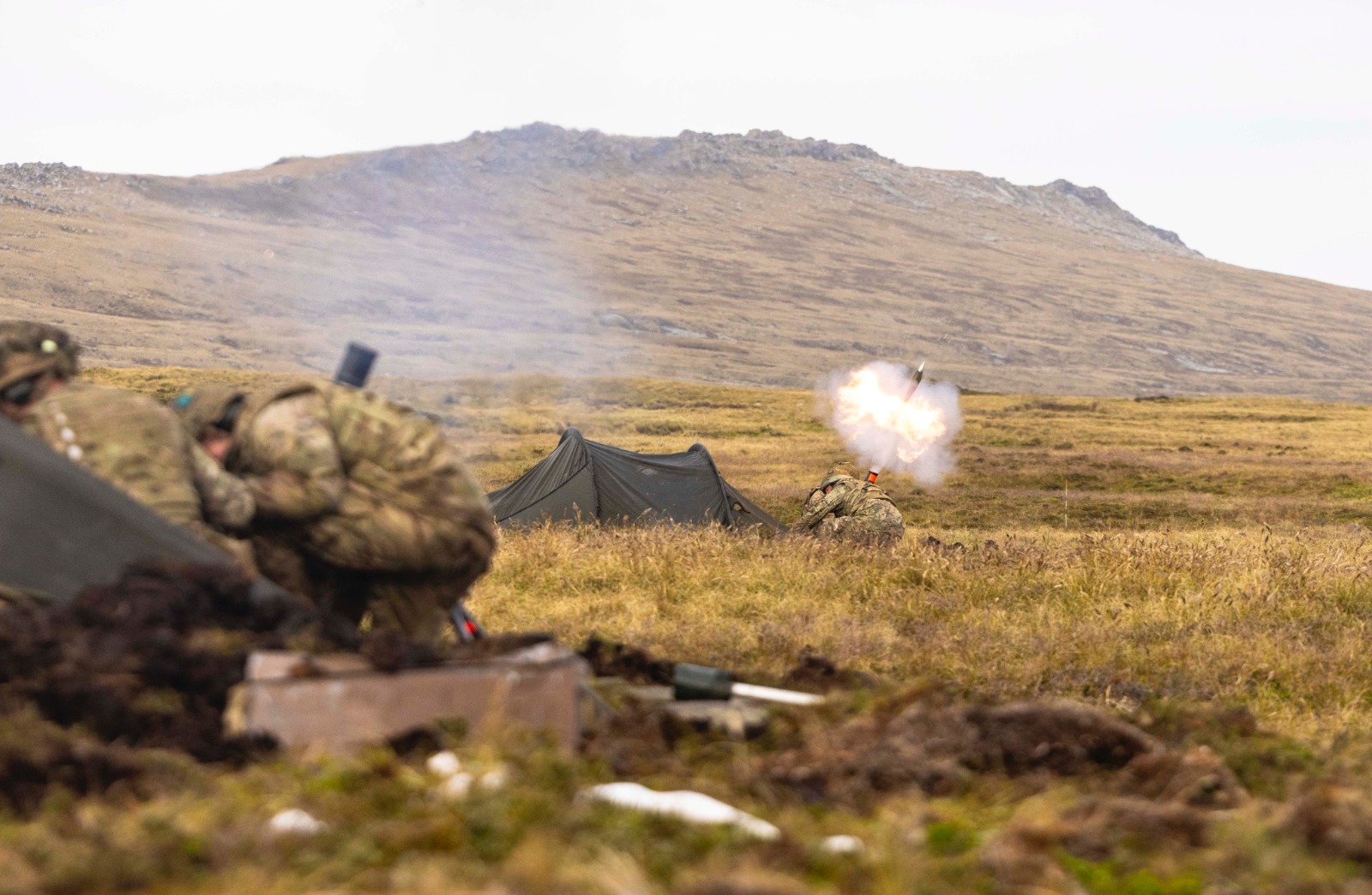
"Las Islas Malvinas ofrecen uno de los entornos más desafiantes... frío, húmedo y ventoso, con cobertura natural limitada", citan las cuentas militares británicas, celebrando la hostilidad del clima fueguino como una ventaja táctica para sus soldados.
Rotación de tropas: De los "Irish" a los Paracaidistas
La información confirmada esta semana indica que la Compañía B del 1.º Batallón del Regimiento Real Irlandés ha finalizado su despliegue, siendo reemplazada por el 4.º Batallón del Regimiento de Paracaidistas (4 PARA). Este relevo no es una simple formalidad; es la garantía de una ocupación militar permanente y tecnológicamente avanzada que incluye:
- Cazas Eurofighter Typhoon en alerta de reacción rápida (QRA).
- Sistemas de defensa aérea Sky Sabre, capaces de interceptar múltiples objetivos simultáneamente.
- Logística de largo alcance mediante aeronaves A400M Atlas y el apoyo del buque patrullero HMS Forth.
La importancia estratégica: El Atlántico Sur como tablero
Para la administración colonial, las islas han dejado de ser solo un enclave pesquero para consolidarse como una plataforma de proyección de poder. Los ejercicios de este febrero de 2026 repiten el patrón del año anterior, demostrando que la militarización es una política de estado inamovible para el Reino Unido, independientemente de los llamados al diálogo de la comunidad internacional.
Mientras el discurso británico se enfoca en la "resiliencia" de sus tropas en el barro malvinense, la realidad es la consolidación de una base militar de la OTAN en el hemisferio sur, en abierta contradicción con la Resolución 2065 de las Naciones Unidas.
Tags
Otras noticias de Malvinas
Rockhopper y Navitas compran una segunda plataforma petrolera para su explotación en Malvinas
La asamblea colonial de Malvinas bloquea el referéndum sobre las salmoneras y se reserva la decisión final
Carlos III respaldó la construcción de un puerto de aguas profundas en Malvinas